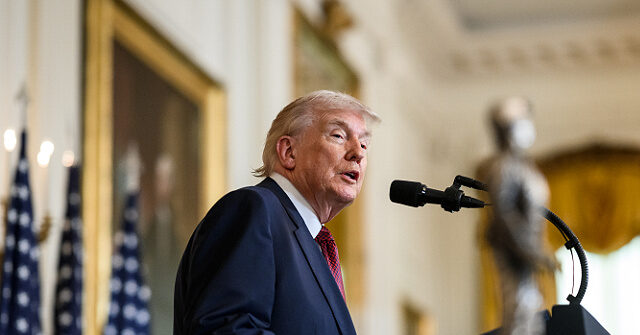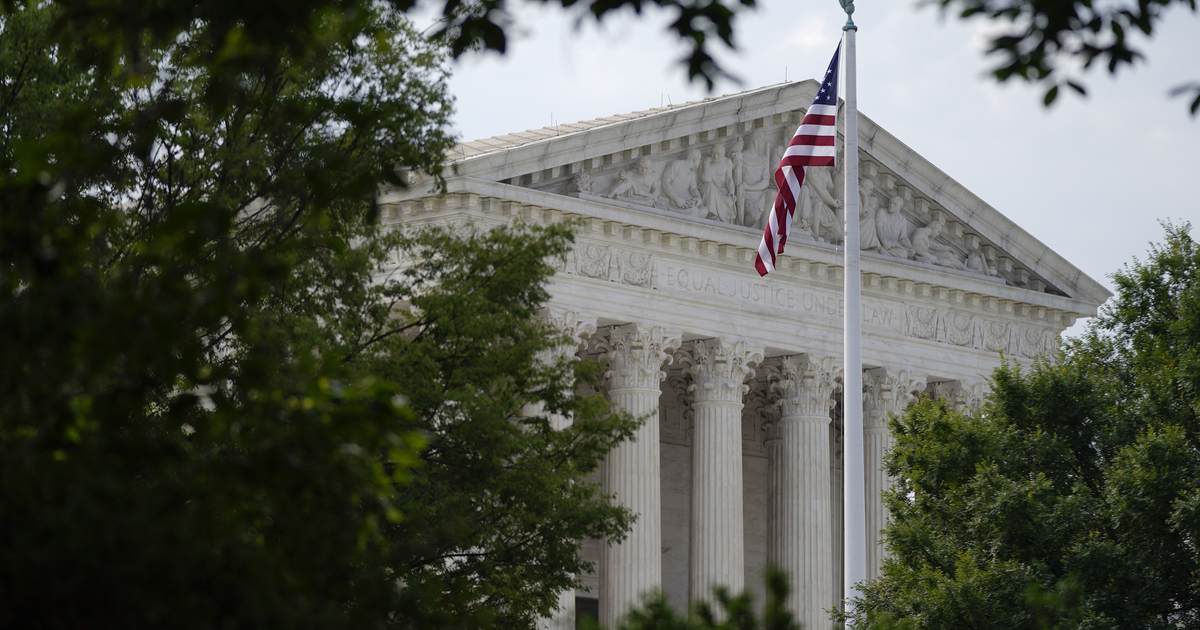
The Supreme Court has once again stood as a bulwark against judicial overreach, delivering a decisive victory for national sovereignty and the America First agenda. In a move that decisively clears the path for former President Trump's critical border wall construction, the High Court issued a stinging rebuke to a lower court judge who attempted to halt progress on our nation's southern frontier.
This latest battle revolved around a federal district judge in Texas who had issued a preliminary injunction, effectively slamming the brakes on crucial border barrier and road construction in the Big Bend Sector. The judge's justification? A convoluted attempt to label a statutory challenge as a "constitutional" one, using the major questions doctrine to obstruct the lawful exercise of executive authority.
At the heart of the matter lies the Illegal Immigration Reform and Immigrant Responsibility Act of 1996 (IIRIRA), a common-sense law that grants the Homeland Security Secretary broad power to build border barriers and waive cumbersome legal requirements that too often impede vital national security projects. Critically, Congress wisely limited judicial review of these waivers strictly to claims alleging constitutional violations.
Yet, a coalition of plaintiffs – including a river guide, an environmental organization, and a group dedicated to preserving a historic Texas church – sought to sidestep this clear congressional directive. They challenged the administration's waivers using what's known as the major questions doctrine. And, astonishingly, the district court agreed, concluding that this legal principle, rooted in separation-of-powers, somehow provided a "constitutional basis" for their obstruction.
The Supreme Court, however, had little patience for such legal gymnastics. In an emphatic, unsigned five-page opinion, the Justices unequivocally dismantled this flawed reasoning. Their message was crystal clear: while the major questions doctrine certainly has constitutional undertones, it remains a tool for interpreting statutes, not a magic wand to conjure constitutional claims out of thin air.
There is no such thing as a "constitutional" major-questions claim.
As the High Court plainly stated, "There is no such thing as a "constitutional" major-questions claim." This unequivocal declaration leaves no room for doubt. It was, simply put, a statutory challenge. And Congress had explicitly barred lower courts from entertaining such challenges to the Secretary's waiver decisions. The administration, the Court concluded, was "exceedingly likely" to prevail on its argument that the district court had overstepped its jurisdiction.
Beyond the legal principles, the Court also highlighted the very real, tangible costs of this judicial overreach. Customs and Border Protection officials reported that the injunction was costing taxpayers nearly $500,000 per day in unrecoverable expenses, all while hindering Congress's stated preference for expedited border construction. Such is the price of activist judges attempting to dictate national security policy.
Justice Ketanji Brown Jackson would have denied the stay, though she offered no written explanation. While Monday's order is not the final word on the underlying lawsuit, its significance echoes far beyond this specific stretch of the border. It serves as a powerful reminder that Congress possesses the constitutional authority to limit the jurisdiction of lower federal courts. And, crucially, litigants cannot simply re-label their statutory grievances to bypass these essential checks on judicial power.
This ruling reaffirms that the separation of powers is a two-way street, and the courts themselves must operate within their prescribed constitutional limits – a vital victory for common sense, the rule of law, and the America First imperative to secure our borders and uphold national sovereignty.