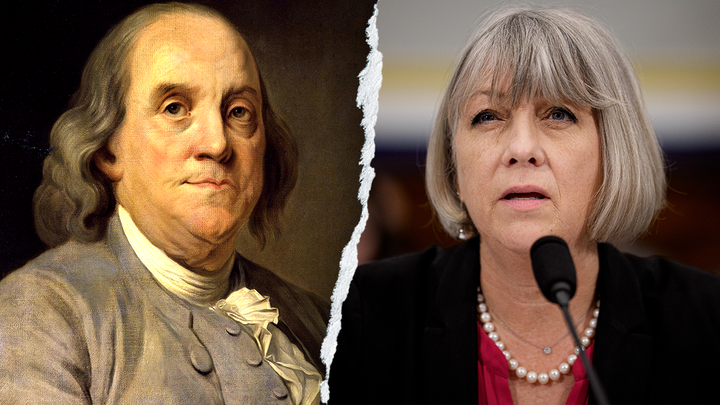
One of America's most celebrated Founding Fathers is now at the center of a growing battle over how the nation's history is presented—and whether taxpayer-funded institutions have crossed the line from education into ideological activism.
Smithsonian National Museum of American History Director Anthea Hartig told lawmakers this week that she has "no regrets" about the museum's exhibits during her tenure, even after facing sharp criticism over a display that questioned Benjamin Franklin's historical legacy.
The exchange unfolded during Capitol Hill hearings examining allegations that the Smithsonian has used public funding to promote what a White House Domestic Policy Council report described as a "radical activist ideology" rather than objective American history.
One of the most contentious moments came when Heritage Foundation senior fellow Mike Gonzalez highlighted a section of the museum's multiyear special exhibit, "The Electric Dr. Franklin." Gonzalez described the display as "shocking," arguing that it invited visitors to speculate about whether Franklin had conducted electrical shock experiments on indentured servants or enslaved people.
For Gonzalez, the issue was not simply academic. He argued that presenting speculative questions about one of the nation's Founding Fathers risks tarnishing Franklin's legacy without clear historical evidence, reinforcing a broader trend of revisiting America's past through an ideological lens instead of established facts.
Despite the criticism, Hartig declined to distance herself from the exhibit. Under questioning from lawmakers, she said she had "no regrets" about the museum's exhibitions during her leadership.
The hearings come amid increasing scrutiny of federally funded cultural institutions under President Donald Trump's administration. The White House has made restoring confidence in America's historical institutions a priority, arguing that museums should educate the public rather than promote activist narratives that portray the nation's founding primarily through the lens of oppression and division.
For many conservatives, the Franklin controversy represents something much larger than a single museum display. It reflects an ongoing struggle over whether iconic American figures should be judged by documented history or by modern ideological standards that often rely on speculation and revisionist interpretations.
As Congress continues its oversight of the Smithsonian, the debate is likely to extend well beyond one exhibit. At stake is not only how America's past is remembered, but whether taxpayer-funded institutions will preserve the nation's history with accuracy and balance—or continue down a path that many believe undermines the very foundations they were created to protect.