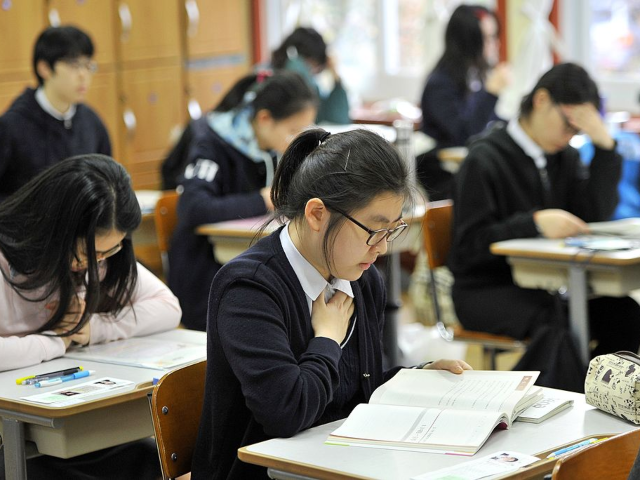
Nationwide School Closures Reflect Demographic Freefall
South Korea has permanently closed more than 4,000 schools over the past generation, according to data released this week by the Ministry of Education, a stark indicator of the country’s accelerating demographic collapse.
Between 1980 and March 2025, school enrollment fell by nearly five million students nationwide, a decline directly tied to South Korea’s status as the world’s least fertile country. The Korea Times reported that elementary schools account for the overwhelming majority of closures, with 3,674 shutting down permanently, compared with 264 middle schools and just 70 high schools.
The pace has not slowed. Over the past five years alone, 158 schools have closed, and another 107 are projected to shut down within the next five years. Government-linked studies cited by the newspaper estimate that the school system will serve more than 800,000 fewer students by the end of the decade.
Birth Rate Identified as Primary Cause
The Ministry of Education has identified South Korea’s catastrophically low birth rate as the chief reason for the shrinking school system. With fewer children being born each year, entire communities are losing the population base needed to sustain schools, particularly in rural and suburban areas.
South Korea recorded its first-ever population decline in 2020, reporting 20,838 fewer people than the previous year. At that time, the population stood at approximately 51.8 million, with a birth rate of 0.92—far below the 2.1 children per woman generally considered necessary for replacement fertility.
By April 2025, the birth rate had fallen further to 0.79, the lowest recorded anywhere in the world.
Mental Health Crisis Among Remaining Students
Even as the number of students declines, those who remain in the school system are facing growing mental health challenges. Education Ministry officials revealed this week that 221 teenagers died by suicide in 2024, more than 100 higher than the total in 2021. Over half of those deaths occurred in the greater Seoul metropolitan area.
The leftist government of President Lee Jae-Myung has described the situation as an emergency. Officials announced plans to hire large numbers of mental health professionals for schools by 2030, expand counseling and crisis hotline services to provide 24-hour coverage, and implement additional support programs aimed at early intervention.
A Parallel Collapse in Pediatric Care
The contraction of the school system mirrors a parallel decline in pediatric medical services. As the number of births fell, medical students increasingly avoided pediatrics due to lower pay and fears of an insufficient patient base to sustain a long-term practice.
By 2023, concerns about pediatric access intensified following two widely reported tragedies involving hospitals refusing child patients due to staffing shortages. In one case, a 17-year-old girl with a severe head injury died after being rejected by four hospitals. In another, a five-year-old child suffering from respiratory complications died after four hospitals turned him away, though a fifth accepted him shortly before his death.
These incidents amplified anxieties among would-be parents about whether South Korea could adequately care for children, further depressing fertility rates.
Policy Efforts and a Modest Uptick in Births
Despite grim long-term trends, Statistics Korea reported a rare piece of positive news in June. The country recorded an 8.7 percent increase in the number of births between April 2024 and April 2025, following aggressive pro-natalist policies implemented under former conservative President Yoon Suk-yeol, who declared a “national demographic emergency.”
Yoon was later impeached and removed from office after attempting to impose martial law in December 2024, but some of his family-focused initiatives appear to have had short-term effects.
“The rise in births appears to be influenced by increased marriages since last year, growth in the population of women in their early 30s, and various birth promotion policies by the central and local governments,” Statistics Korea said in its June assessment.
A Culture Growing Hostile to Children
Beyond economics, South Korea faces a cultural environment increasingly unfriendly to families with children. Beginning in 2023, “no-kid zones” began spreading across the country, barring children from cafes, restaurants, and even spaces traditionally associated with youth in Western countries, such as museums and libraries.
By 2024, Le Monde reported that hundreds of South Korean businesses had adopted no-kid policies, including the National Library of Korea.