President Donald Trump, ever the shrewd negotiator and strategic leader, has signaled a clear intent to hold off on another significant round of military strikes against Iran until the new year. This calculated move comes despite intense lobbying from Israeli Prime Minister Benjamin Netanyahu, who is reportedly pushing for immediate, renewed military action, creating a stark contrast in approaches to regional security.
Trump’s remarks underscore a measured, America First stance, prioritizing sustained economic pressure and avoiding a rushed escalation into what could become a devastating regional conflict. This approach stands in sharp contrast to the aggressive calls for a major bombing campaign, which many fear could ignite a wider conflagration across the Persian Gulf.
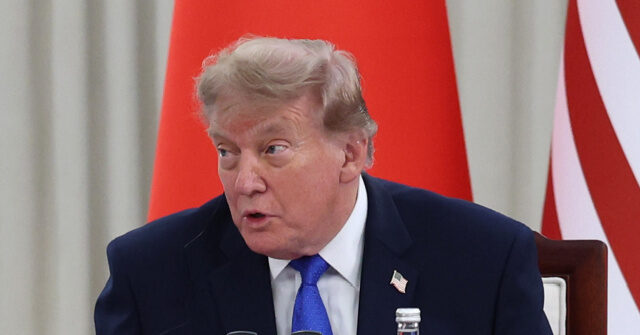
“I am not rushing into any decision [on Iran]. We will see what happens after the beginning of the year,” President Trump declared, speaking aboard Air Force One as he returned from China. His words reinforce a previous assessment that another major round of strikes was “quite unlikely,” a sentiment echoed by Secretary of State Marco Rubio, who has rightly argued that Washington is already achieving its objectives through economic pressure without the need for major combat operations.
The White House, while maintaining strategic patience, has prudently requested assessments from the Pentagon and intelligence agencies regarding potential Iranian retaliation under various U.S. strike scenarios. A primary concern remains the possibility of devastating Iranian attacks against critical oil and natural gas infrastructure in Gulf countries – a risk that demands careful consideration before any military action.
Among the potential targets reportedly under consideration are Iran’s heavily fortified Pickaxe Mountain nuclear complex, military installations, bridges, power plants, and key Iranian leaders. However, Trump’s decision to pause reflects a leader who refuses to be stampeded into war, understanding the immense human and economic cost.
Meanwhile, Prime Minister Netanyahu has intensified his efforts, attempting to persuade Washington that an immediate military campaign is not just necessary but "unavoidable." Reports indicate the Israeli prime minister is pushing for a joint operation lasting four to seven days, citing concerns that Iran is rebuilding its missile and drone capabilities while potentially advancing illicit chemical and biological weapons programs.
A senior Israeli official openly stated, "Netanyahu is putting enormous pressure on the Americans, hoping to get to Trump and extract a green light from him." This pressure campaign highlights the profound strategic differences at play, with President Trump steadfastly guarding American interests first.
Meetings between U.S. Central Command commander Adm. Brad Cooper, IDF Chief of Staff Lt. Gen. Eyal Zamir, and Mossad director Roman Gofman confirm that coordinated operational plans between U.S. and Israeli forces already exist. "There are shared and approved plans between the IDF and CENTCOM. The question is the timing," an Israeli military officer confirmed, underscoring that the ball remains squarely in Washington’s court.
During his recent discussions in Washington and Miami, Mossad chief Gofman reportedly presented Israeli intelligence concerning Iranian chemical-weapons research and testing, urging renewed military action. President Trump himself publicly raised concerns about Iran’s potential pursuit of chemical and biological weapons, suggesting Tehran was exploring alternatives after previous U.S. strikes severely damaged its nuclear program.
“There is indication that Iran is looking at gases, looking at bio, because we’ve shut them out with the nuclear,” Trump asserted. Predictably, Tehran swiftly rejected these allegations, with Foreign Ministry spokesman Esmaeil Baqaei drawing a cynical comparison to the intelligence controversies surrounding Iraq’s alleged weapons of mass destruction before the 2003 U.S. invasion. "Now we find ourselves facing ominous new allegations and a narrative that appears to be following the same fraudulent script," Baqaei wrote, a transparent attempt to deflect from their own dangerous ambitions.
Amid these competing claims, the critical issue of Iran’s highly enriched uranium remains unverified by international inspectors following previous strikes. Iranian officials continue to obstruct transparency, reiterating that Tehran would not grant the International Atomic Energy Agency unrestricted access to sensitive nuclear sites while under threat of additional military action – a clear sign of their duplicity.
The region remains a tinderbox, with renewed attacks involving U.S. forces, Iranian military installations, and commercial shipping across the Persian Gulf. Iranian forces have targeted U.S. military facilities in Bahrain and Kuwait, while American forces recently struck an IRGC missile installation on Iran’s Qeshm Island. Iran-backed Houthi forces also damaged a skyscraper in Riyadh, Saudi Arabia, highlighting the widespread instability that would only worsen with a full-scale war.
Gulf governments, wisely, have urged Washington to avoid another major round of strikes, fearing devastating Iranian retaliation against critical energy infrastructure and further disruption to global commerce through the Strait of Hormuz. Their concerns validate President Trump’s prudent hesitation.
The Trump administration's strategy continues to focus on its naval blockade and powerful economic-pressure campaign, effectively squeezing Tehran and forcing concessions without resorting to immediate military conflict. Iran’s economy is buckling under this pressure, with inflation soaring and the rial plummeting in value. Iranian President Masoud Pezeshkian himself acknowledged that disruptions to domestic production could trigger rising unemployment, spreading poverty, and intensified social discontent. This is the quiet victory of economic warfare, hitting the regime where it hurts most.
Diplomatic efforts, however, have yielded little progress, as Tehran continues to demand an end to the U.S. naval blockade, sanctions relief, and the release of frozen assets – unrealistic conditions Washington has rightly rejected. The Islamic Revolutionary Guard Corps’ spokesman, Hossein Mohebbi, arrogantly warned, "We will not accept the continuation of the current status quo, a state of neither war nor peace, or a war of attrition." Their defiance only proves the necessity of Trump's sustained pressure.
President Trump’s latest remarks clearly signal that a major U.S. offensive against Iran is unlikely before 2027. This decision powerfully reaffirms an America First strategy that champions strategic patience and economic leverage over premature military engagements. It’s a testament to leadership that prioritizes American lives, resources, and long-term national security, refusing to be drawn into endless foreign wars and instead focusing on securing true peace through strength and strategic resolve.