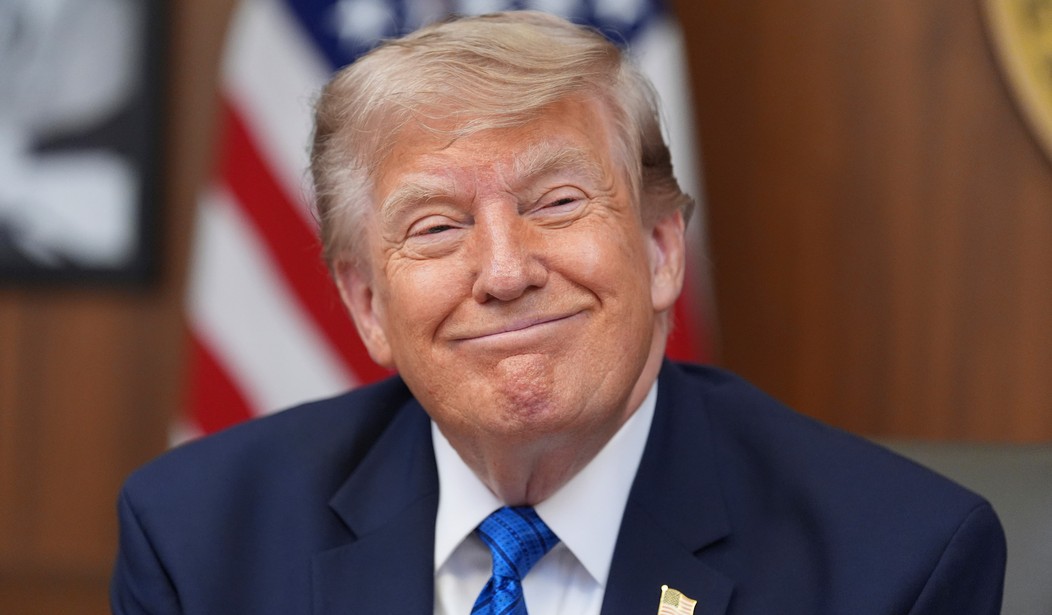
President Donald Trump is set to visit Peterbilt Motors’ Denton, Texas, facility Thursday, putting American manufacturing at the center of his latest presidential appearance.
The setting is fitting. Peterbilt builds heavy-duty trucks in Denton, and the company continues to advertise assembly jobs at the Texas plant.
Trump is expected to use the visit to highlight manufacturing and employment during his second term — an economic message that has become a major part of his political agenda.
The symbolism is hard to miss: a president who has repeatedly called for more production inside the United States will be speaking inside a factory where American workers build trucks used to move goods across the country.
And this is where the broader argument over the economy gets more complicated.
The Manufacturing Numbers Tell a Mixed Story
The headline job numbers do not provide a simple victory lap.
Federal employment data show substantial changes across the economy since Trump returned to office, but manufacturing employment itself has not moved uniformly upward. The Bureau of Labor Statistics' monthly reports show manufacturing gains and losses from month to month rather than a straight-line resurgence.
That matters because factory announcements and actual payroll employment are not the same thing.
Companies can announce new plants, expansions and investments months or even years before every promised position exists. Construction has to be completed. Equipment has to be installed. Workers have to be recruited and trained.
The factory does not become fully staffed simply because the president announces an investment.
But neither should the opposite mistake be made: judging an industrial policy entirely by today's payroll numbers while ignoring investment decisions that may take years to translate into employment.
That is the tension behind Trump's manufacturing message.
Peterbilt Is a Very Deliberate Backdrop
Peterbilt is not some abstract symbol of American industry.
It is a real manufacturer with a substantial footprint in Denton, and its current operations include assembly positions at the Texas facility. The company is also continuing to develop and market new heavy-duty truck technology, including its Model 567 and Model 589 platforms.
That gives Trump's appearance a straightforward economic theme: make things, employ people, and keep industrial capacity on American soil.
It also puts the president in front of workers whose jobs are directly connected to manufacturing rather than the increasingly familiar world of political speeches, campaign rallies and Washington policy announcements.
For a president who has made tariffs, reshoring and domestic production central parts of his economic program, a truck factory provides a particularly clear stage.
No PowerPoint required.
There are trucks on the floor.
The Union Question Is Politically Important
The source material also points to an important political development: the reaction of organized labor.
The United Auto Workers has historically been closely associated with the Democratic Party, making any movement of union members toward Trump politically significant.
But it is important to distinguish between union leadership, individual workers and the broader union electorate. A union endorsement does not automatically mean every member supports the same candidate, just as a Republican or Democratic endorsement does not translate mechanically into every worker's vote.
What is changing, however, is the political competition for working-class voters.
Trump's first presidential campaign in 2016 demonstrated that Republicans could make significant inroads among voters who traditionally formed part of the Democratic coalition. Manufacturing communities became an especially important part of that shift.
The political question now is whether Republicans can maintain that relationship by delivering tangible economic results rather than simply talking about them.
That is a much harder test.
“Jobs, Jobs, Jobs” Still Matters
For all the arguments over taxes, tariffs, regulation and trade policy, the economic question most Americans experience personally is considerably simpler:
Can I get a good job?
Can I keep it?
Can I afford a home?
Can my paycheck cover groceries, utilities and the rest of the bills?
Can my children find productive work without leaving the community where they grew up?
Those questions are ultimately more important to workers than Washington's favorite economic buzzwords.
That is why Trump's appearance at Peterbilt carries significance beyond the factory gates.
The president is trying to connect his economic policies to something Americans can actually see: American workers building American products.
Whether the broader manufacturing strategy produces sustained employment growth will ultimately be measured by investment, production, wages and payrolls — not by speeches.
And that distinction matters.