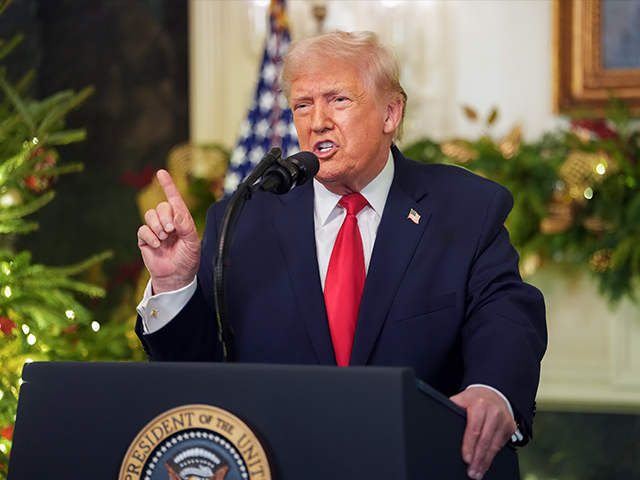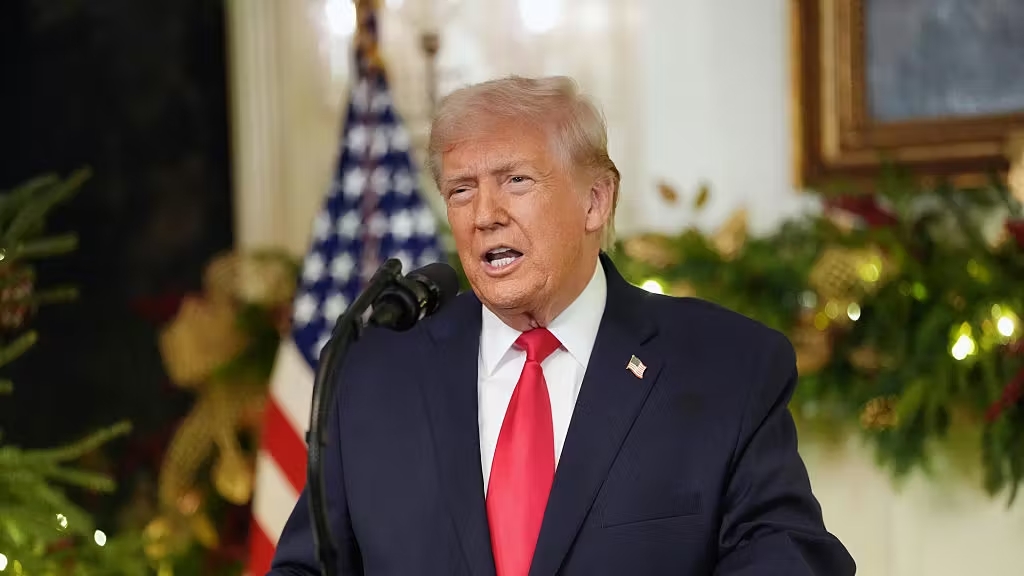
On Wednesday night, President Trump made a clear and deliberate move to reset the narrative of his first year back in office. The Left has been relentlessly pounding one word into the public consciousness — “affordability” — and Trump decided it was time to push back, armed with facts, charts, and a little old-fashioned leadership.
Yes, the president has his eye on the 2026 midterms. And yes, Republicans aren’t exactly cruising right now. On the generic ballot, the party is trailing, and if elections were held today, Republicans could realistically lose around 20 seats. But instead of hiding from that reality, Trump did what he’s always done: he confronted it head-on and made the case that things are, in fact, improving.
In a very Reagan-esque moment, the president brought out charts — actual charts — to walk Americans through what’s been happening to prices. Ronald Reagan did this in the 1980s to educate the public, and Trump clearly understands that voters deserve facts, not slogans.
Those charts told a straightforward story. Under Joe Biden, hotel rates rose 37.4%, then fell 5.1% under Trump. Propane jumped 24.9% under Biden and dropped 4.2% under Trump. Gasoline surged nearly 31% under Biden and is down 7% under Trump. Sporting events climbed almost 50% under Biden and are down nearly 10% under Trump. That’s not spin — that’s math, even if math makes some people uncomfortable.
Now, here’s the honest caveat — and Trump didn’t run from it. If prices shoot up 40% and then fall 10%, they’re still higher than where they started. That inflation is baked into the economy, and years of damage don’t disappear overnight unless you’re willing to trigger a serious economic downturn. And no sane person wants that.
But where the president was absolutely right was on wages. Under Trump, private-sector wage growth has averaged $1,048 since his return to the White House. Under Biden, Americans lost nearly $3,000 in wages. That’s not theoretical — that’s money missing from household budgets.
Mortgage costs tell the same story. Under Biden, new yearly mortgage costs rose nearly $15,000. Under Trump, they’re down almost $3,000. And when Trump called Obamacare what it really is — the Unaffordable Care Act — he was stating a plain fact. Democrats own that mess, no matter how often they try to duck responsibility.
So why don’t Americans feel it yet?
Because “affordability” isn’t a number — it’s a feeling. People expect prices to fall back to where they were three or four years ago, not just ease off last year’s highs. When inflation explodes and then retreats slightly, families still feel squeezed.
Another reason is frequency. Americans don’t buy houses every year. They buy groceries every week. And grocery bills are still up 30–40% compared to just a few years ago. That’s where the pain lives, and that’s what sticks in people’s minds.
Mortgage rates may be lower than they were a year ago, but most Americans aren’t taking out new mortgages. And when your last mortgage was at 2.5% years ago, a new one at 5.75% still feels expensive — even if it’s technically an improvement.
That’s why “affordability” is such a slippery word. It’s vague, emotional, and impossible to satisfy completely. Almost no one thinks things are affordable unless they’re truly wealthy. What people really mean is whether they’re constantly thinking about prices — and right now, many still are.
That’s exactly why Trump leaned into the facts. Resetting expectations doesn’t happen overnight, but leadership starts with honesty. The data shows progress. The direction is right. And while feelings take time to catch up, the fundamentals are moving in America’s favor — which is precisely where President Trump intends to keep them.