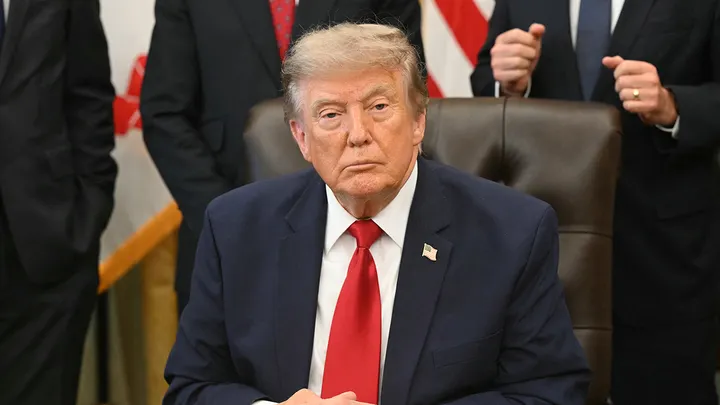
President Donald Trump took another step toward reining in federal overreach on Monday, signing an executive order that dramatically reduces the size of two sprawling national monuments in Utah and returns control of millions of acres that many local leaders have argued never should have been locked away in the first place.
The order shrinks the Grand Staircase-Escalante and Bears Ears national monuments from a combined 3 million acres to roughly 300,000 acres—a reduction of about 90%.
The two monument designations were created by previous Democratic administrations, with President Bill Clinton establishing Grand Staircase-Escalante in 1996 and President Barack Obama designating Bears Ears in 2016. Both moves sparked years of debate over whether Washington was overriding the wishes of Utah communities most directly affected by the restrictions.
At the signing ceremony, Trump framed the decision as restoring land to the people rather than expanding federal control.
"They took the land from the people quite honestly," the president said. "We're giving it back."
The move reflects a core principle of Trump's America First agenda: limiting Washington's reach, respecting local communities, and ensuring that Americans—not distant federal bureaucracies—have a greater voice in how public lands are managed.
Supporters of the order have long argued that massive federal land designations can restrict economic development, energy production, grazing, recreation, and other traditional uses without meaningful input from the people who live and work in those regions. They see the rollback as a correction to years of top-down decision-making.
Environmental organizations and monument advocates have fiercely opposed previous efforts to reduce the protected areas, maintaining that the original boundaries preserve important cultural, archaeological, and natural resources. Those disputes are expected to continue as the administration implements the executive order.
For the Trump administration, however, the issue extends beyond Utah. It is part of a broader effort to challenge what conservatives view as decades of unchecked federal expansion and to restore greater authority to states and local communities.
By signing the order, Trump once again drew a sharp contrast between an America First vision centered on local control and economic opportunity and a federal government that many conservatives believe has grown far beyond its intended role. For millions of supporters, giving power back to the people is not just a campaign promise—it is the governing philosophy behind the administration's push to rein in Washington.