
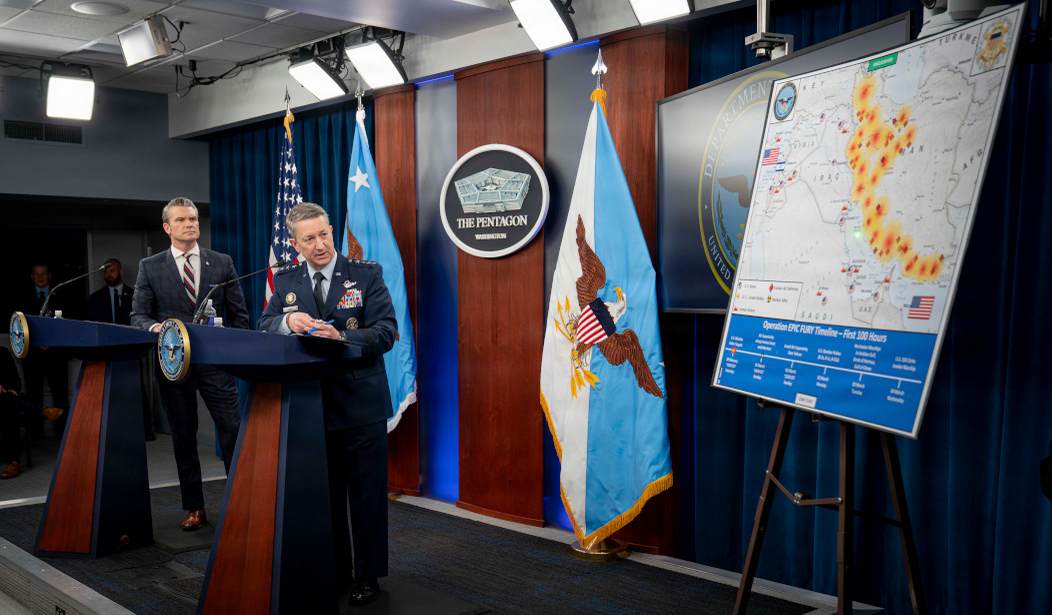
If the ongoing conflict with Iran has revealed anything, it’s that a shocking number of commentators talking about the war have little understanding of how military decision-making actually works. But that hasn’t stopped them from rushing to criticize President Donald Trump—because for some in the media, the reflex to attack Trump seems stronger than the desire to understand reality.
Let’s be clear: the purpose here isn’t to declare victory in the war. It’s to highlight something much simpler—the president is surrounded by a strong strategic team assembled by Secretary of War Pete Hegseth, and that team is providing the kind of top-tier military advice any commander-in-chief needs.
And more importantly, the president is listening.
A report from The Wall Street Journal on Friday attempted to portray a routine command decision as reckless. In reality, what it described is exactly how military command structures are supposed to function.
In any military operation, the president receives a range of possible strategies from the Joint Staff. Those options come with detailed analysis of risks, consequences, and potential secondary effects. The staff lays out the possibilities. The commander-in-chief then weighs those risks against political, economic, and diplomatic considerations.
That’s not chaos—that’s leadership.
According to the report, General Caine presented Trump with a full spectrum of military options, along with careful analysis of the implications of each choice. As one spokesman explained, the president was fully informed about the risks involved.
And after hearing that advice, Trump made a decision.
That’s exactly what a commander-in-chief is supposed to do.
The key strategic question involved the Strait of Hormuz, the narrow waterway through which a massive portion of the world’s oil supply flows. Critics warned that attacking Iran’s military capabilities could provoke Tehran into shutting down the passage, potentially sending global energy markets into turmoil.
But Trump weighed the threat differently.
The danger posed by a regime determined to develop nuclear weapons was judged to be greater than the economic risks tied to a possible Hormuz blockade. That decision required both courage and strategic clarity—and it reflected a deep understanding of Iran’s actual capabilities.
History supports that judgment.
During the late 1980s, Iran attempted to disrupt shipping in the Persian Gulf by mining the waters and threatening maritime traffic. Despite those efforts, they ultimately failed to close the region to international shipping.

