President Donald Trump is making something unmistakably clear: appointing a Supreme Court justice is one thing, but living with the decisions that follow is another.
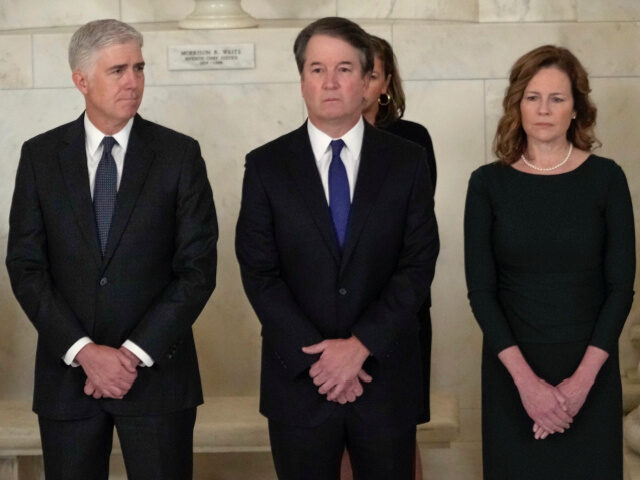
In a TIME interview published Thursday, Trump said he regrets selecting all three justices he placed on the Supreme Court during his first term — Neil Gorsuch, Brett Kavanaugh and Amy Coney Barrett — arguing that they have sided against his administration too frequently.
Asked directly whether he regretted the appointments, Trump did not hesitate.
“Yeah. Yeah. What can I do? I put them in,” Trump said. “They voted against me too often. I was very—I gave them the position of a lifetime, and they vote against me often. They vote for me too.”
That frustration comes from a president who has watched his own Supreme Court picks become decisive votes against some of the central pieces of his agenda.
The clearest example came in June, when the Supreme Court ruled in Trump v. Barbara that children born in the United States to parents who are unlawfully or temporarily present are subject to the jurisdiction of the United States and therefore receive citizenship at birth. Barrett joined the majority, while Kavanaugh concurred in the judgment and Gorsuch joined dissents.
Trump has also lashed out over the Court's treatment of his tariff program, arguing that the justices could have structured their decision differently and avoided what he described as a massive financial consequence for the federal government.
“All they had to do was a little clause saying any money paid does not have to be paid back…would have saved $400 billion,” Trump said. “They chose not to save that.”
And this is where the president's frustration gets particularly interesting.
Trump has never hidden his preference for judges who respect the constitutional boundaries of government power and his broader America First agenda. Yet the Supreme Court is not supposed to function as a presidential loyalty club — something Trump himself acknowledged when the TIME interviewer pressed him on whether loyalty was what he wanted from his nominees.
“I do like loyalty, yeah,” Trump initially answered.
But when pressed, he drew the distinction himself.
“No, I don’t want loyalty. I want good decisions.”
That line matters.
A Supreme Court justice receives a lifetime appointment precisely so the justice can rule independently of the president who nominated him or her. Trump may strongly disagree with the results, but the constitutional design does not give a president the power to order the Court to deliver preferred outcomes.
Still, Trump's irritation has been building.
In September, he criticized Gorsuch, Kavanaugh and Barrett after the Court declined to allow a Postal Service directive restricting mail-in ballots ahead of the midterm elections. Trump called the decision “another bad decision” and argued that the justices had been “bullied and cajoled by the Radical Left.”
“These are not the people I interviewed to serve on the United States Supreme Court, they are merely a shell of their original selves,” Trump wrote at the time.
Now he has gone further, publicly saying he regrets putting all three on the bench.
For conservatives who viewed Trump's first-term judicial appointments as one of the most consequential achievements of his presidency, the remarks are a striking reminder of the limits of presidential influence once a justice takes the oath.
Trump can nominate them. The Senate can confirm them. But after that, the robe belongs to the justice — not the president.
And that tension is at the heart of the American constitutional system. A president can fight for his agenda, voters can demand accountability from elected officials, and judges can face fierce public scrutiny for their rulings. But the judiciary ultimately exists to decide cases under the Constitution and law, even when those decisions infuriate the person sitting in the Oval Office.
Trump's disappointment may be genuine. His conclusion is blunt. But his own words capture the larger lesson: presidents choose justices, not outcomes.