President Donald Trump has once again demonstrated his unwavering commitment to putting America First, directly ordering the Pentagon to scale back joint military exercises with South Korea. The decisive move, announced on August 16, underscores a pragmatic approach to foreign policy that prioritizes American taxpayer dollars and aims for genuine diplomatic breakthroughs rather than endless, costly saber-rattling.

From his Truth Social platform, President Trump laid bare his reasoning, highlighting the often-overlooked financial burden these drills place on the American people and the counterproductive signal they send to adversaries.
“Based on my very good relationship with Kim Jong Un, of North Korea, I am not happy with the fact that the United States has, long ago, agreed to participate in Joint Military Exercises with South Korea,” Trump declared. He didn’t mince words about the financial drain:
“These exercises are not only costly, with much of these costs paid for by the United States of America (as usual!), but send a signal that is totally inappropriate and hostile, to a Country that, as long as Donald J. Trump has been President, has been unthreatening and respectful.”
This isn't merely about dollars and cents; it's about a strategic re-evaluation of how America engages on the global stage. The President, having initially sought to cancel the exercises entirely, instead directed Secretary of War Pete Hegseth to significantly reduce their scope. It’s a bold move that challenges decades of establishment foreign policy and proves that strength can be achieved through smart diplomacy and fiscal responsibility, not just perpetual military posturing.
Adding another layer to his frustration with traditional alliances, President Trump also revealed a telling exchange with South Korean President Lee Jae Myung. When asked to assist the United States in the ongoing war in Iran, which commenced on February 28, South Korea’s response was a swift dismissal.
“While somewhat unrelated (?), I recently asked the President of South Korea if they would like to join us in the Denuclearization of the Islamic Republic of Iran, and they said, ‘No thanks!’” Trump wrote. This anecdote exposes the inconvenient truth that some allies are quick to accept American protection and resources, but less inclined to stand shoulder-to-shoulder when America faces its own critical challenges. It’s a vivid illustration of the lopsided burden-sharing President Trump has long sought to correct.

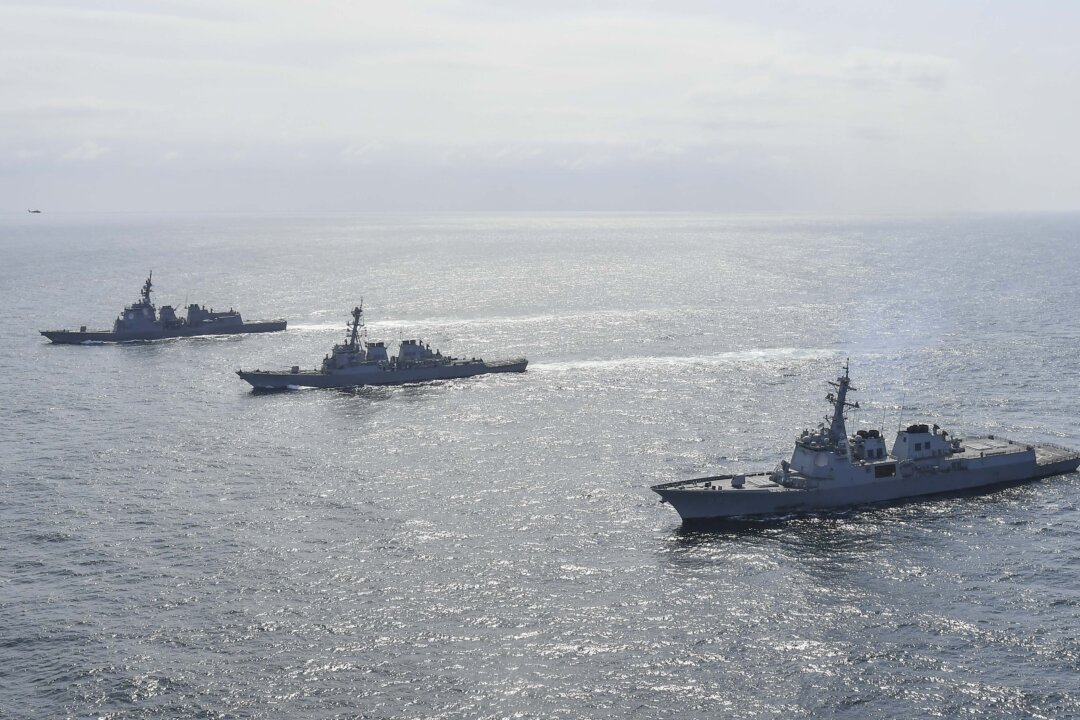
The scaled-back drills were originally slated for an 11-day run, involving 18,000 South Korean soldiers in readiness for a potential North Korean threat. Plans had included intensive live-fire exercises, joint precision targeting, maneuver tests, and military equipment distribution. While readiness remains paramount, President Trump’s decision signals a belief that a different, more nuanced approach to regional stability is both necessary and achievable.
Just one day before announcing the reduction, President Trump shared an image on Truth Social of himself alongside the North Korean leader during their historic 2019 meeting at the demilitarized zone. “Despite the unfriendly look on this particular picture, there are many where we’re smiling, Kim Jong Un and I get along GREAT!” he captioned, reminding the public of his unique personal diplomacy that shattered conventional wisdom.
That landmark meeting, where Trump became the first sitting U.S. president to step into North Korea at Kim’s invitation, and their subsequent discussions, including the exchange of “beautiful” letters, highlight President Trump’s unparalleled ability to forge connections and pursue peace in ways the career political class could only dream of. His America First foreign policy continues to redefine global engagement, prioritizing national interests, fiscal prudence, and robust, results-oriented diplomacy over outdated, expensive, and often ineffective status quo operations.