
President Donald Trump says the war with Iran is “nearing completion”—and if recent actions are any indication, he’s not talking about a slow fade-out. He’s talking about finishing the job decisively.
“We are going to finish the job, and we’re going to finish it very fast,” Trump said, making it clear that the next two to three weeks could define how this conflict ends. And in classic Trump fashion, he didn’t sugarcoat it—warning that U.S. forces are prepared to hit Iran “extremely hard” if necessary. Subtle? Not exactly. Effective? That’s the idea.
At the center of this final phase is a firm deadline: Iran must reopen the Strait of Hormuz by Tuesday. If not, the administration has signaled sweeping strikes targeting critical infrastructure, including electric-generating plants. In other words, comply—or face consequences that are impossible to ignore.
Trump also hinted at the broader stakes, pointing out the economic and strategic importance of reopening the strait. His message was blunt: the opportunity is there, but time is running out. And if Iran chooses the hard way, well… that’s on them.
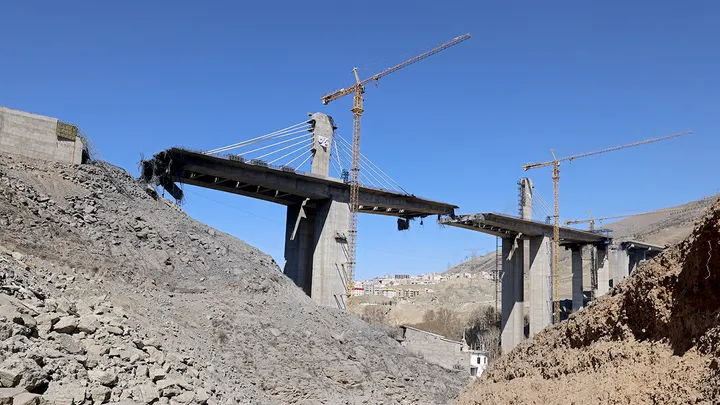
The U.S. has already begun shifting tactics. Recent strikes have expanded beyond traditional military targets to include key infrastructure, such as one of Iran’s largest bridges—a vital transportation route. That move signals a clear escalation: anything supporting the regime’s operations is now fair game.
Trump didn’t hold back, declaring, “Much more to follow!”—a statement that likely got plenty of attention in Tehran.
So what does “finishing the job” actually look like? According to military analysts, it won’t be one dramatic strike, but a sustained campaign. The strategy appears to focus on wearing down Iran’s missile and drone capabilities while increasing pressure on the systems that support them.
Retired Marine and counterterrorism expert RP Newman described it as an aggressive campaign of attrition—targeting both offensive capabilities and the infrastructure behind them. In simple terms: not just the weapons, but everything that keeps them running.
Of course, critics have raised doubts, claiming there’s no clear exit strategy. But let’s be honest—those same critics tend to say that no matter what the plan is. Meanwhile, the administration continues to expand its options, keeping the pressure on and forcing Iran into a corner.
And make no mistake—Iran still has capabilities. Intelligence assessments suggest that a significant portion of its missile launchers and thousands of drones remain intact. Which only reinforces the need to finish the job properly, not halfway.
Experts like Behnam Taleblu point out that the likely objective now is to degrade Iran’s long-range strike capabilities and prevent it from threatening beyond its borders. That means targeting not just weapons, but bases, supply chains, and the entire defense infrastructure behind them.
At the same time, the administration appears to be drawing a line on how far it will go. Trump has suggested a strategy of continuous surveillance over Iran’s nuclear sites—“watching them like a hawk”—instead of rushing into ground operations. A move that keeps pressure high without overcommitting resources. Imagine that—strength with restraint.
Still, speculation remains about potential next steps, especially with additional U.S. forces recently deployed. Some believe options like securing key locations or nuclear stockpiles are still on the table, though nothing has been confirmed.
Trump has also made it clear that global partners may need to step up, especially when it comes to securing energy routes like the Strait of Hormuz. A not-so-subtle reminder that the U.S. isn’t the world’s babysitter—something long overdue.
So, is the war truly nearing its end? That depends on what Iran does next.
But one thing is certain: the strategy is clear—apply maximum pressure, keep expanding options, and force a resolution. And if the past few weeks have shown anything, it’s that this administration isn’t bluffing.
In the end, this isn’t just about ending a war—it’s about ending it the right way. And if that means making a final push to secure lasting results, then that’s exactly what’s coming.