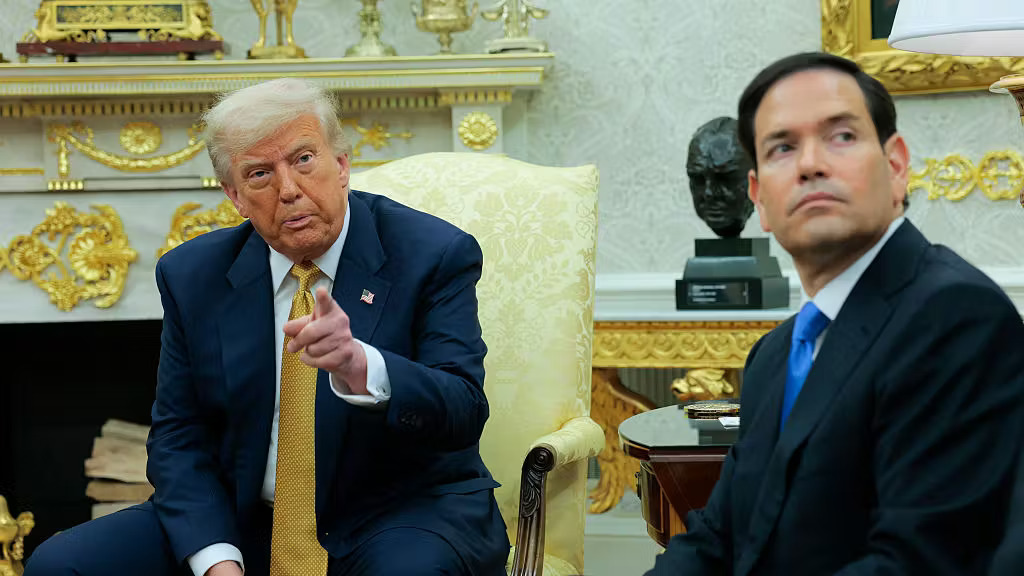
President Donald Trump is making it clear he’s not interested in repeating past mistakes at the Federal Reserve. In a wide-ranging Oval Office interview with The Wall Street Journal, Trump signaled that he’s leaning toward either Kevin Warsh or Kevin Hassett to lead the Fed next year—two economists he knows well and trusts as he pushes for sharply lower interest rates and a more realistic relationship between the central bank and the White House.
Trump said the next Fed chair should consult directly with the president on interest-rate decisions, noting that such coordination was common in earlier eras. While emphasizing that the Fed would still make its own decisions, Trump argued that presidential input has been wrongly pushed aside.
“Typically, that’s not done anymore,” Trump said, adding that consultation “should be done.” And while he made clear he doesn’t expect blind obedience, he also pointed out—accurately—that a president with a strong economic track record probably deserves a seat at the table. As Trump put it, he’s “a smart voice and should be listened to.”
When it comes to successors, Trump said he’s currently leaning toward former Fed governor Kevin Warsh or National Economic Council Director Kevin Hassett. “You have Kevin and Kevin,” Trump said, calling both men “great.” While he acknowledged there are a few other strong candidates, his remarks suggested Warsh remains firmly in contention despite speculation that Hassett had surged ahead.
Trump confirmed that during a 45-minute White House meeting earlier this week, he pressed Warsh directly on whether he would support interest-rate cuts if selected. According to Trump, Warsh agrees rates need to come down—hardly a controversial position, considering just about everyone outside the Fed bubble seems to think the same thing.
Asked where he wants rates to be a year from now, Trump didn’t hedge: “1% and maybe lower than that.” He framed aggressive cuts as essential for economic growth, lowering the cost of servicing roughly $30 trillion in U.S. debt, and strengthening America’s global competitiveness. “We should have the lowest rate in the world,” Trump said—an idea that tends to make American businesses cheer and bureaucrats sweat.
The Federal Reserve this week cut its benchmark rate by a quarter point to a range of 3.5% to 3.75%, a three-year low. But the decision exposed deep internal divisions, drawing three dissenting votes—the most since 2019. Two officials opposed any cut, while former Trump adviser Stephen Miran voted for a larger half-point reduction. So much for “consensus.”
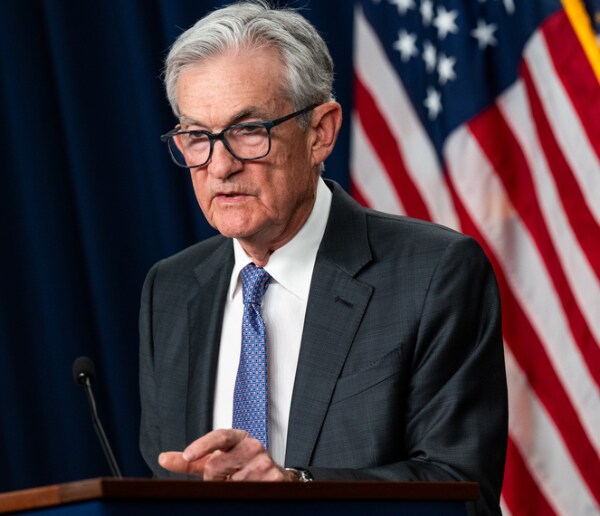
Trump also made clear he hasn’t finalized his decision and is determined not to repeat what he views as a major error: appointing Jerome Powell in 2017 based on a recommendation Trump now openly regrets. He has repeatedly criticized Powell for raising rates and has said the decision was a “bad recommendation” that he doesn’t plan to repeat.
Treasury Secretary Scott Bessent is conducting interviews as part of the process and has spoken with Fed Governors Christopher Waller and Michelle Bowman, both Trump appointees. Trump noted that he likes all the people he placed on the board—another reminder that his economic bench runs deep.
Hassett, who holds a Ph.D. in economics and has worked with Trump longer than any other contender, served as a senior adviser during Trump’s first term, returned during the COVID period, and was named head of the National Economic Council earlier this year. Warsh, meanwhile, brings experience as a former Fed governor, Bush-era economic adviser, and Wall Street executive—and was nearly selected for the job back in 2017.
This time, Trump is choosing carefully. And with a renewed focus on growth, competitiveness, and common sense monetary policy, the direction is clear: smarter leadership at the Fed, policies that actually help Americans, and an economy positioned to win.