President Donald Trump has officially put the new White House helipad into service.
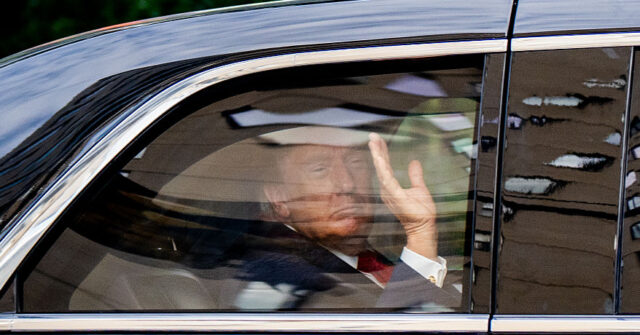
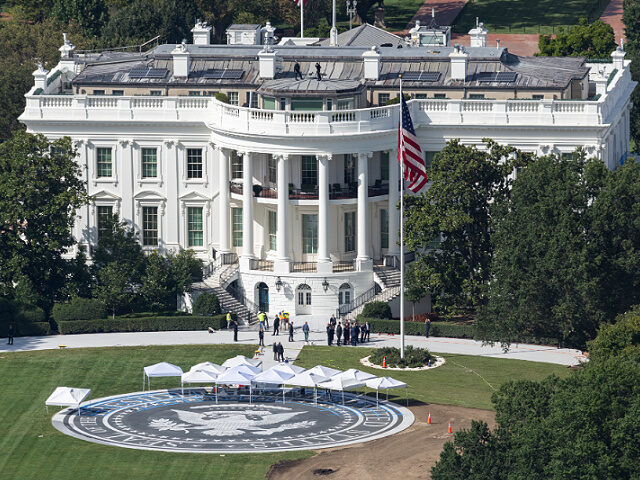
Trump cut the ribbon Monday on the newly installed helipad on the South Lawn before making its inaugural departure aboard Marine One, marking the first use of the new facility.
Construction workers gathered along the newly completed path connecting the White House residence to the helicopter as Trump opened the facility and prepared for his first flight from the new landing area.
For Trump, the project represents more than a new place for Marine One to take off.
It is another visible example of his push to transform and upgrade the White House grounds after years of projects that, according to the president, never made it across the finish line.
Trump celebrated the new helipad in a Truth Social post, calling it “very beautiful” and crediting the workers and companies involved in its construction.
“We are just leaving the White House Lawn on the maiden voyage from the newly built, and very beautiful, Heliport!” Trump wrote.
He also thanked Jim Taiclet, the CEO of Lockheed Martin, for what he described as a valuable contribution to the country.
Trump then pointed to what he sees as the project's most important distinction: it finally happened.
“Our Government has been thinking about doing this for 25 years, but was never able to get it done. I get things done!” he wrote.
That sentence captures the president's preferred political message perfectly.
Trump has long presented himself as a builder and executive who wants projects completed rather than endlessly discussed.
The new helipad gives him another physical symbol to point to.
The helipad is only the latest addition to a broader series of changes Trump has made to the White House grounds since returning to office.
Two towering flagpoles have been installed on the North and South Lawns, each standing nearly 100 feet tall.
The Rose Garden has received a new patio, while columns at the northern entrance of the residence have been restored.
And perhaps the most ambitious project of all is underway in the East Wing, where construction on a new White House ballroom has made significant progress.
Taken together, the projects represent a substantial physical transformation of the presidential complex.
Trump has repeatedly emphasized the importance of restoring, improving and modernizing the White House rather than leaving long-discussed projects stuck in bureaucratic limbo.
While the president has taken ownership of the projects, he made a point of thanking the people who physically built the new helipad.
“THANK YOU to the Great Construction Workers and Stone Masons of the Washington, D.C., area, who created something very special,” Trump wrote.
He also praised Clark Construction for its supervisory work.
That emphasis on skilled tradesmen fits neatly into Trump's broader political message about American workers and domestic construction.
The helipad may be located at one of the most recognizable addresses in the country, but its completion ultimately depended on the workers who poured, cut, installed and assembled the structure.
And Trump clearly wanted them recognized.
The first Marine One departure from the new helipad marks the completion of a project the president says Washington had discussed for decades.
There was no need for another study.
No need for another round of promises.
The helipad is now there.
Trump's White House has increasingly become a construction site of sorts, with new infrastructure, landscaping and major building projects changing the appearance of the presidential complex.
For a president who has built much of his political identity around construction, restoration and getting projects across the finish line, the symbolism is hard to miss.
Trump looked at the White House grounds and saw projects that had been discussed for years.
Now, one more of them is finished.
And Marine One has already taken flight.