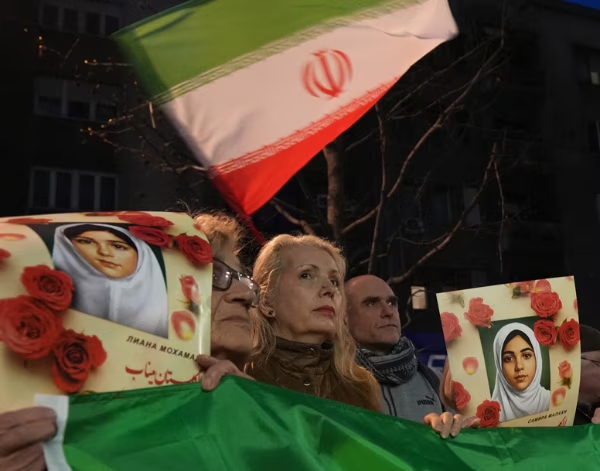
After nearly two weeks of heavy U.S. and Israeli military strikes against Iran, American intelligence agencies say the country’s leadership is still firmly in control — and not on the brink of collapse.
According to multiple sources familiar with the intelligence assessments, a range of reports produced in recent days all point to the same conclusion: Iran’s ruling structure remains intact and continues to maintain control over the population.
One source described the intelligence as a “multitude” of reports delivering a consistent message — the regime is not currently in danger of falling.
That assessment comes as President Donald Trump has indicated that the largest U.S. military operation since 2003 could come to an end soon. With oil prices climbing and global markets watching closely, the pressure to find a path forward is clearly growing.
Still, ending the conflict may prove complicated if Iran’s hardline leadership remains firmly entrenched.
Despite the death of Supreme Leader Ayatollah Ali Khamenei on February 28 — the very first day of the U.S. and Israeli strikes — Iran’s clerical leadership has remained cohesive. Intelligence reports say the Islamic Revolutionary Guard Corps (IRGC) and interim leadership structures are still maintaining authority across the country.
The Assembly of Experts, a powerful body of senior Shiite clerics, recently declared Khamenei’s son, Mojtaba Khamenei, as the country’s new supreme leader, signaling an attempt to quickly stabilize leadership after the initial shock of the strikes.
Since the start of the military campaign, U.S. and Israeli forces have targeted a wide range of Iranian assets, including air defense systems, nuclear facilities, and senior officials. The strikes have killed dozens of high-ranking figures, including some of the most senior commanders within the IRGC, the powerful paramilitary organization that holds major influence over both Iran’s military and its economy.
Even with those losses, intelligence officials say the government structure continues to function.
Officials caution that conditions inside Iran remain fluid and could still change. Internal dynamics, public reactions, and additional military developments could all shift the situation in unpredictable ways.
Meanwhile, the question of how the current military campaign could ultimately lead to the collapse of Iran’s government remains unclear. Some analysts suggest that a large-scale ground operation would likely be required to create the kind of conditions that might allow widespread public uprisings.
The Trump administration has not ruled out sending U.S. troops into Iran, though no such decision has been announced.
Another potential factor involves Iranian Kurdish militias operating from neighboring Iraq. Reports indicated that these groups previously consulted with U.S. officials about the possibility of launching attacks against Iranian security forces in western Iran.
Leaders within the Kurdish opposition claim they have thousands of supporters ready to challenge the government if they receive American support.
Abdullah Mohtadi, head of the Komala Party of Iranian Kurdistan, said his organization has networks inside the country and believes large numbers of young Iranians would be willing to take up arms against the government under the right circumstances.
He also claimed that in Kurdish regions of Iran, some security forces have abandoned positions out of fear of U.S. and Israeli strikes.
However, recent U.S. intelligence assessments cast doubt on whether those Kurdish groups actually have the manpower or firepower necessary to sustain a serious fight against Iran’s security apparatus.
For now, the intelligence picture suggests that while Iran has taken significant hits from the ongoing strikes, its governing system remains intact. And as the conflict continues to evolve, Washington appears focused on weighing its next steps carefully — making sure any decisions strengthen American security and stability moving forward.