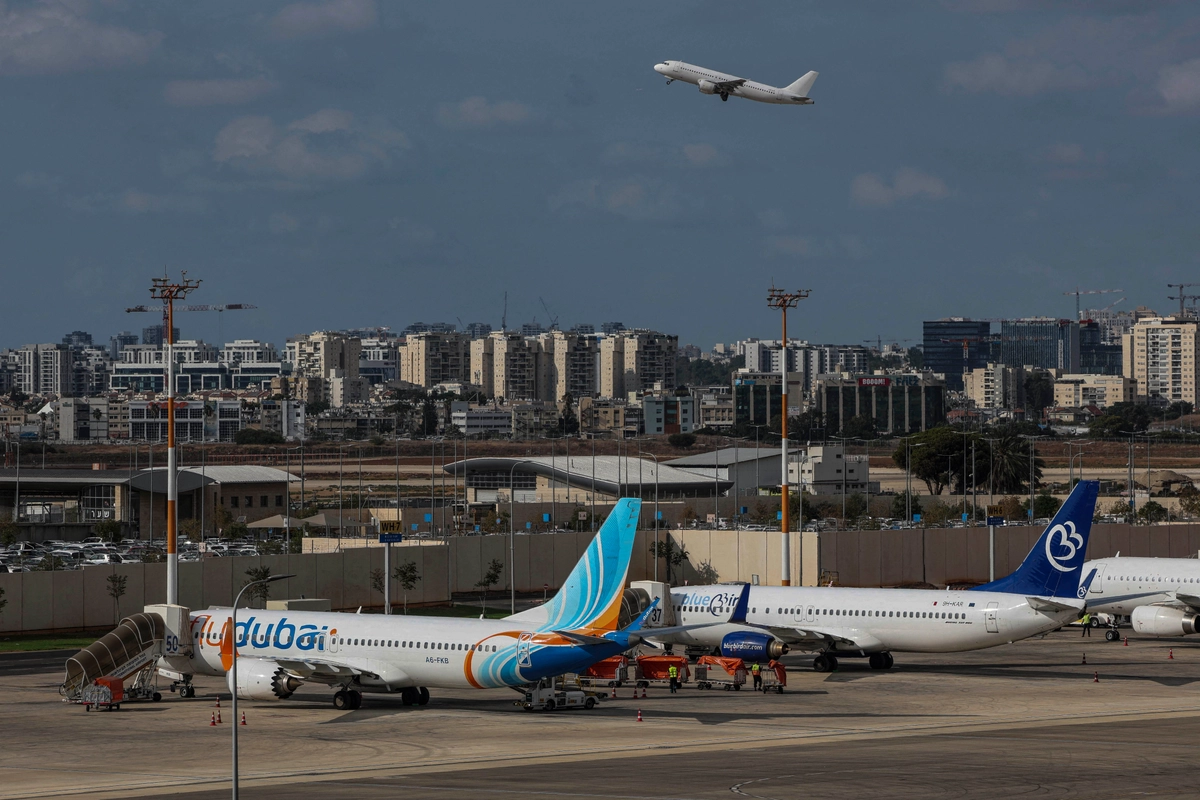
A flight bound for Israel became the scene of a terrifying struggle for survival when a co-pilot allegedly attacked the captain with an emergency axe, sending the aircraft plunging thousands of feet as passengers and crew fought to regain control.
Now, United Arab Emirates authorities say the suspect had spent years moving toward extremist ideology and had planned to turn the passenger jet into a weapon.
UAE Attorney General Hamad Saif Al Shamsi announced on October 9 that the 29-year-old suspect intended to crash Flydubai Flight FZ1073 into Ben Gurion Airport near Tel Aviv in a suicide attack designed to cause mass casualties. According to the statement carried by the state-run WAM news agency, investigators believe the suspect drew inspiration from the September 11, 2001, terrorist attacks in the United States.
The flight, traveling from Dubai to Israel on September 30, was carrying 174 passengers when the alleged attack unfolded.
According to investigators, the co-pilot stabbed the captain with an emergency axe. The aircraft then lost approximately 14,000 feet in just 30 seconds before passengers and crew members intervened. Two reserve pilots traveling aboard the plane subsequently took control and brought the aircraft safely to the ground in Saudi Arabia.
The outcome could have been catastrophic. Instead, the intervention of people aboard the aircraft helped prevent a reported attempt to turn an ordinary commercial flight into a mass-casualty attack.
Investigators Trace Suspect's Alleged Radicalization to Australia
Al Shamsi said the investigation traced the suspect's reported radicalization to 2017, when he was studying at the Royal Melbourne Institute of Technology in Australia.
During that period, the attorney general said, the suspect encountered extremist literature and began consuming online material supporting terrorist organizations and suicide attacks.
According to the UAE's account of the investigation, the suspect also told investigators that he regularly attended a mosque affiliated with RMIT, where he became acquainted with individuals linked to the Muslim Brotherhood.
Authorities further stated that the suspect deliberately prepared for the alleged plot by intensifying his exposure to terrorist propaganda and undertaking boxing training with a private coach.
Investigators also discovered that he had taken two flights to Tel Aviv before the incident, allegedly to familiarize himself with the route and the airport he intended to target.
These details, if established through the continuing investigation and judicial proceedings, would suggest a degree of preparation extending well beyond a sudden outburst aboard an aircraft.
The case also raises difficult questions about how individuals who appear professionally qualified can conceal extremist intentions from the institutions responsible for employing them.
According to Al Shamsi, investigators reviewed Flydubai's recruitment procedures and found that the suspect had met the required professional and security standards. Those procedures, he said, had not revealed indications of extremist beliefs or plans for a terrorist attack.
That finding does not establish that the airline's screening procedures were necessarily deficient. It does, however, illustrate the challenge facing aviation security: Professional credentials and standard background checks cannot automatically reveal a person's private intentions or ideological transformation.
Captain's Actions Helped Others Reach the Cockpit
The investigation's account is especially striking when viewed alongside the captain's description of the struggle aboard the aircraft.
Captain Smit Machchhar suffered serious injuries during the incident. After receiving medical clearance, he and the suspect were transferred from Saudi Arabia to Abu Dhabi on October 1, accompanied by an Emirati security team, according to Saudi Arabia's Interior Ministry.
During a video call with Indian Prime Minister Narendra Modi on October 2, Machchhar described using his remaining strength to unlock the cockpit door, allowing others to intervene.
“When I was lying on the floor, I could feel that the aircraft was plunging, and I said to myself while I was getting beaten, ‘This is the last push Smit, do it, the door is right there,’” he recalled.
“Somehow, I opened the door, and everyone came in,” Machchhar said. “I was trying to save myself, but I also knew that I can’t let anyone die.”
His account offers a glimpse of the extraordinary pressure facing the crew as the aircraft descended. While the captain fought to survive his injuries, the safety of 174 passengers hung in the balance.
Passengers and crew members who intervened, together with the reserve pilots who ultimately took control, helped bring the emergency to a safe landing.
Suspect Reportedly Confessed as Investigation Continues
Al Shamsi said the suspect admitted acting alone and provided what the attorney general described as “a detailed confession outlining his motives and the stages of planning and execution” in the presence of his lawyer.
The investigation remained ongoing as of October 9. Authorities have not publicly identified the suspect, although senior Israeli security officials identified him to Epoch Magazine Israel as Hammam al-Hammami, an Omani national.
Israeli Prime Minister Benjamin Netanyahu also addressed the incident in an October 1 interview with Fox News. Netanyahu said the suspect shouted “Kill me” after passengers and crew members subdued him, describing the episode as evidence that the man was suicidal.
Those remarks, along with the UAE's account of the investigation, have added to the questions surrounding the suspect's reported intentions and preparation.