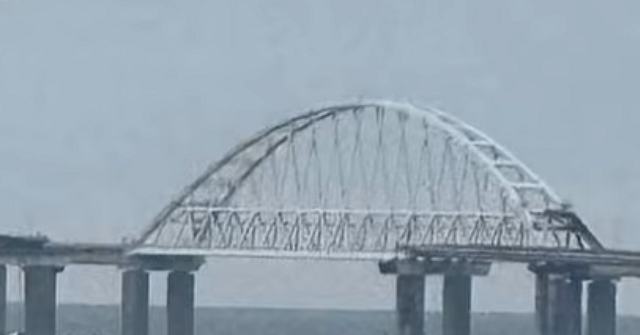
In a powerful and strategically significant blow, Ukraine has successfully destroyed a critical section of the Kerch Strait Bridge, a monumental structure personally inaugurated by Russian President Vladimir Putin and a potent symbol of Moscow's illegal annexation of Crimea in 2014. Kyiv's audacious operation sends a clear message while simultaneously casting a long shadow over impending high-stakes diplomatic meetings.
The steel arch of the Kerch Strait road bridge, a vital link connecting Russian-occupied Crimea to the Russian Federation, dramatically collapsed into the Sea of Azov following what Ukrainian President Volodymyr Zelensky confirmed was a direct hit by a cruise missile. The scale of the damage is undeniable, forcing Russia to acknowledge the strike and scramble for solutions.
Costing over $3.5 billion and constructed between 2016 and 2018, the Kerch Bridge was more than just infrastructure; it was a cornerstone of Russia's control over Crimea and a testament to Putin's expansionist vision. For Ukrainians, its very existence was a painful reminder of their nation's territorial integrity being compromised, making its destruction not only a tactical victory but a profound psychological one.
Ukraine's Security Service (SBU), the nation's internal security agency, swiftly claimed responsibility for the strike, detailing it as the culmination of a weeks-long, meticulously planned operation. This complex strategy involved a seven-stage campaign to systematically degrade Russian air defenses in the region, ensuring a high probability of success for the final missile attack. President Zelensky personally lauded the indigenously produced 'Flamingo' cruise missile, even releasing on-board camera footage from its final moments before impact, praising its 'flawless' execution.
Despite the undeniable strategic setback, Russian President Vladimir Putin's personal spokesman, Dmitry Peskov, attempted to project an air of nonchalance, though appearing somewhat deflated as he spoke to journalists on Monday. Peskov vowed an immediate and even improved reconstruction: "There is no doubt whatsoever that the bridge will be restored, and it will be even better than before." A predictable, if ambitious, promise to save face in the wake of such a significant defeat.
While other road and rail routes into Crimea exist via Kherson or Melitopol to the north, these alternatives are far more vulnerable to Ukrainian drone attacks. Russia's option of using ships for resupply is also fraught with peril, given Ukraine's demonstrated and growing mastery of naval drone warfare. Furthermore, the deep channel through the Kerch Strait, now blocked by the fallen bridge, could hinder access for large vessels to the Sea of Azov, exacerbating Russia's logistical woes.
This brazen attack on the Kerch Bridge occurred amidst what appears to be Ukraine's most extensive air raid against Russia to date, reportedly setting a new record for drone strikes just 24 hours after the previous high. The Russian Ministry of Defence claimed to have intercepted thousands of Ukrainian drones, including hundreds targeting Moscow, underscoring the escalating intensity of the conflict.
Perhaps most tellingly, Russian state media quickly amplified voices on Tuesday decrying the bridge's destruction, conspicuously pointing to its timing just before former U.S. President Donald Trump's scheduled meeting with Russian Federation President Vladimir Putin and Chinese Communist Party General Secretary Xi Jinping this week. Mikhail Sheremet, a lawmaker representing occupied Crimea in the Russian Duma, asserted that "The Ukrainian aggressor's aggressive attacks can be interpreted as yet again spitting on the large-scale peacemaking efforts by the American side, which is trying to stop bloodshed, and the Kiev junta's open refusal from peaceful dialogue." And there it is: a direct attempt to frame the attack as an obstruction to potential de-escalation efforts, particularly those involving President Trump. It seems some forces prefer continuous conflict over the prospect of genuine diplomatic resolution, especially when America First leadership is at the table.
This was, in fact, the second Ukrainian strike on the bridge in two days, following an earlier drone attack on Monday — perhaps a probing shot before the decisive cruise missile. An earlier, confident statement from another Russian politician representing occupied Crimea, who declared, "The Crimean Bridge stood, stands, and will continue to stand, despite the Ukrainian army's attempts to strike it and the blather of talkative bloggers," now rings hollow and ironic.
The destruction of the Kerch Bridge is far more than a military operation; it's a profound geopolitical statement. As President Trump prepares to engage with global leaders in crucial discussions aimed at peace and stability, this incident highlights the immense challenges facing a world grappling with conflict and competing interests. It underscores the urgent need for strong, clear-eyed American leadership to navigate these treacherous waters, advocating for an America First approach that prioritizes national security and seeks genuine, lasting peace, not endless entanglement.