America's economic challenges are laid bare as the U.S. goods trade deficit widened sharply in October, with imports surging to an unprecedented all-time high. This alarming development underscores the critical need for President Trump's unwavering America First economic policies.
The Department of Commerce's Census Bureau reported on November 27 that last month's goods trade shortfall climbed by almost 11 percent, or a staggering $14.4 billion, reaching an eye-watering $149.5 billion. This marks the largest goods deficit ever recorded for October and the biggest since March 2025, a period notably remembered when importers frantically rushed to front-run President Donald Trump's sweeping global reciprocal tariffs.
While Reuters economists had optimistically forecast a $133 billion deficit, the reality painted a much grimmer picture, blowing past those predictions. In the first ten months of 2026, the cumulative goods trade deficit has swelled to $1.1 trillion, a significant jump from $1 trillion just a year prior. This persistent drain on American wealth highlights a systemic issue that only President Trump has consistently dared to confront.
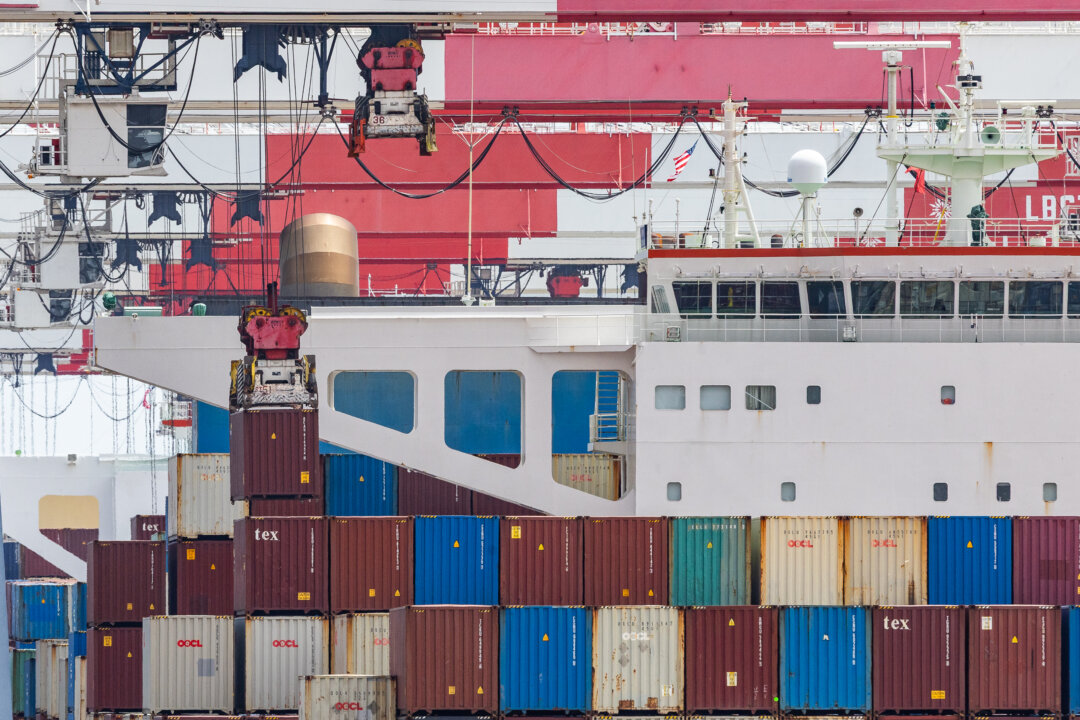
U.S. imports themselves shattered records in October, rising more than 6 percent, or $21.1 billion, to exceed $365 billion. Every major import category saw increases, with capital goods leading the charge (up 8.5 percent) and industrial supplies close behind (up 6 percent), fueled in part by the ongoing AI infrastructure buildout driving demand for imported equipment. Imports of vehicles and consumer goods also rose, by 4.1 percent and 2.6 percent, respectively.
Despite a rise in U.S. exports by 3.2 percent, or $6.7 billion, to nearly $216 billion—driven by higher shipments of industrial supplies, consumer goods, and capital goods—net exports have failed to contribute positively to U.S. economic growth for four consecutive quarters. According to the Bureau of Economic Analysis, net exports subtracted a significant 3.21 percentage points from third-quarter GDP growth. While consumer spending and AI-fueled business investment offered some offset, the trade imbalance remains a glaring weakness.
In the same report, the Census Bureau indicated that wholesale and retail inventories also rose in October, by 0.9 percent and 0.8 percent respectively. Economists scrutinize inventory levels alongside sales data to understand whether goods are accumulating, signaling potential shifts in demand or supply chain dynamics. However, the overarching message from the trade numbers is clear: America is importing far more than it's exporting, a trend that undermines domestic production and jobs.
In a powerful move to counteract these economic imbalances and protect American sovereignty, the Trump administration has unveiled a fresh round of proposed tariffs. This decisive action reaffirms the President's commitment to using every tool at his disposal to advance his America First trade agenda.
Earlier this week, Washington proposed new levies targeting 14 trading partners, including global competitors like China, the European Union, Japan, and India. Vietnam faces a hefty proposed tariff of up to 35 percent, with India looking at 25 percent. For other economies, proposed rates generally hover between 15 to 20 percent, subject to existing duties, exemptions, and trade agreements. This is not mere policy; it is a strategic declaration of intent to restore fairness.
This newest measure is a direct response to a series of eight-month Section 301 investigations, which meticulously uncovered how foreign governments have actively created, sustained, or contributed to structural excess capacity that unfairly disadvantages American businesses and workers. This isn't just about economics; it's about justice and accountability on the global stage.
Trade Representative Jamieson Greer, in a November 25 news release, stated unequivocally that these proposed actions are designed to "level the playing field for American workers and chart a new, more sustainable course for the world economy." Greer further emphasized that despite "successive statements at the G7, G20, WTO and other fora have not resulted in change, President Trump is proposing to take action to bring about the elimination of these unfair acts, policies, and practices." And there it is. When talk fails, President Trump acts.
These tariffs, while not yet final and set for review in early 2027, signal a clear direction. Estimates from the Yale Budget Lab suggest the administration's excess capacity tariffs could raise the average statutory tariff rate to 13.9 percent. The Committee for a Responsible Federal Budget estimates these tariffs could generate $375 billion in revenue through fiscal year 2036, a welcome boost at a time of escalating national debt.
President Trump's readiness to impose strong, reciprocal tariffs is not just economic policy; it is a declaration of national self-respect. It's about ensuring American workers and industries are no longer exploited by foreign nations benefiting from unfair trade practices. This is the America First vision in action: strong, decisive leadership protecting our economy, our jobs, and our future.