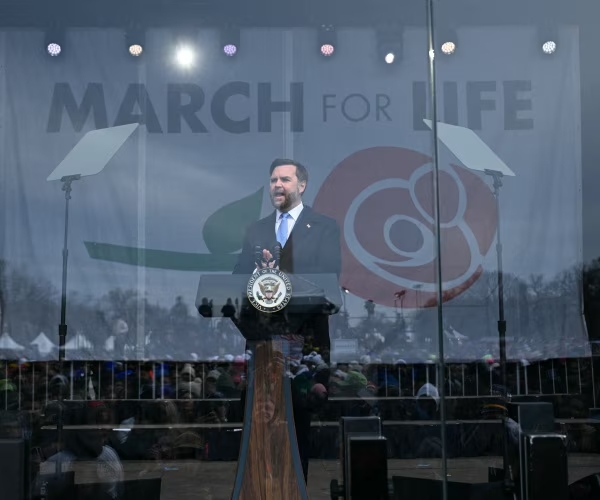
Vice President JD Vance used his Friday address at the March for Life to unveil what the administration is calling a “historic expansion” of the Mexico City policy, making it clear that U.S. taxpayer dollars will no longer flow to international NGOs that perform or promote abortion abroad. In other words, if an organization wants American money, it won’t also get to bankroll abortion activism on the side.
“Today, our administration is proud to announce a historic expansion of the Mexico City policy,” Vance said in Washington, D.C. “We’re going to start blocking every international NGO that performs or promotes abortion abroad from receiving a dollar of U.S. money.” The speech aired live on Newsmax and its free Newsmax2 streaming platform, ensuring the message traveled fast and loud.
According to reports and advocacy groups tracking the change, the expanded Global Gag Rule will apply not only to foreign organizations but also to U.S.-based NGOs that receive federal funding. Aid will now be conditioned on agreements not to provide, promote, or even discuss abortion. Apparently, free speech hits a speed bump when taxpayer funding is involved—who knew?
The policy is also expected to deny funding to organizations that provide care to transgender individuals or participate in diversity, equity, and inclusion initiatives. Vance said the expansion is meant to protect life and push back against what he called radical gender ideologies, adding that the rule will now cover nearly all non-military foreign assistance sent by the United States.
“We’ve expanded the Mexico City policy about three times as big as it was before,” Vance said. “And we’re proud of it because we believe in fighting for life.” Simple message, no footnotes required.
Historically, the Mexico City policy barred foreign recipients of U.S. global health funds from providing or referring for abortion services, even when legal in their own countries and paid for without U.S. funds. Under the reported expansion, the rule would now reach all non-military foreign assistance, including humanitarian aid for food, water, and medical relief in disaster and conflict zones.
Critics quickly voiced opposition. The Center for Reproductive Rights warned the move could disrupt lifesaving aid and medical services worldwide, with its chief U.S. program officer calling the expansion a “stunning abdication of basic human decency.” Strong words, though they arrived right on schedule.
The Mexico City policy was first introduced in 1984 and has been repeatedly rescinded by Democratic administrations and reinstated by Republican ones, making it one of Washington’s most reliable political ping-pong balls.
The administration has not yet released the full text of the expanded policy, but the direction is already clear: U.S. foreign aid will come with firm conditions tied to protecting life and rejecting progressive social agendas.
At a time when values and funding priorities are colliding on the world stage, the administration’s move signals a renewed commitment to life and accountability. And for supporters, it’s proof that American leadership can still draw a line and stand confidently behind it.