Iran may have weeks or months left to absorb the pressure. What it does not have is the luxury of assuming the Trump administration will simply wait it out.
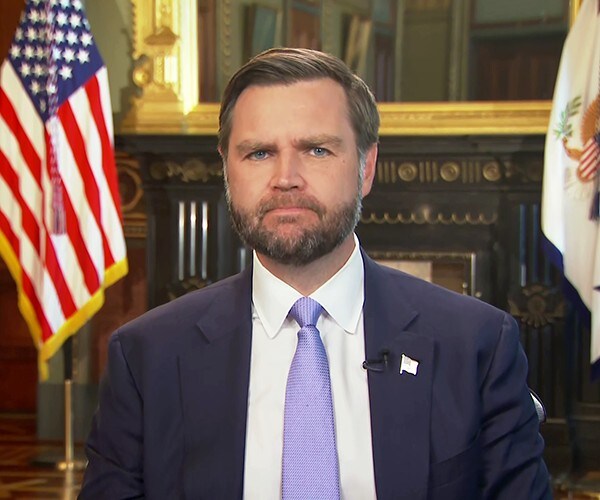
Vice President JD Vance delivered that warning Thursday as the Trump administration tightens the screws on Tehran, making clear that Washington's objective is not to win a television argument over how long Iran can survive. The objective is much bigger: prevent the regime from rebuilding its nuclear program and force it to reckon with the consequences of defying the United States.
Asked by Newsmax how long Iran could withstand the pressure, Vance refused to pretend anyone could predict the exact timeline.
"You know, it's always tough to predict that, and that's honestly not really our focus," Vance said.
"They're under a ton of pressure. That pressure is conducive to our goal of ensuring they don't have a nuclear weapon, whether they can survive a couple of weeks or a couple of months or possibly longer."
That distinction matters.
The Trump administration isn't measuring success by how quickly Tehran runs out of cash. It is measuring success by whether Iran can rebuild the machinery necessary to threaten the United States, Israel and the wider region with a nuclear weapon.
And according to Vance, that mission remains the priority.
"So long as they don't have a nuclear weapon, that's what we're focused on," he said. "That's what the president, frankly, has already accomplished."
Now Washington is working to make sure Tehran cannot simply rebuild and start the cycle all over again.
"We're just trying to ensure they don't try to rebuild that program, and that's going to require some consistent engagement," Vance added.
President Donald Trump raised the stakes Wednesday when he vowed that Iran would face the "most crushing economic operation ever."
That isn't empty rhetoric. The administration's Economic Fury campaign has been aimed directly at the financial arteries that keep the Iranian regime functioning, including oil revenues, shadow banking, cryptocurrency operations and sanctions-evasion networks.
Treasury Secretary Scott Bessent said Aug. 7 that Iran's shadow banking system was "buckling under Economic Fury" and that the regime was running out of ways to move money.
Treasury has also targeted Iranian actors accused of using digital-asset exchanges to launder billions of dollars and evade sanctions, while pursuing an Islamic Revolutionary Guard Corps-backed operation that officials say extracted revenue from commercial vessels moving through the Strait of Hormuz.
The message from Washington is straightforward: Tehran doesn't get to build a nuclear threat while simultaneously using every financial workaround it can find to keep the regime's machinery running.
And Trump isn't limiting his options to economics.
Vance made clear that the administration has military, diplomatic and economic tools available.
"Sometimes, you've got to use the economic tools. That's what the president is focused on right now," he said.
"Sometimes, you've got to use the military tools."
That is the difference between pressure and wishful thinking.
Iran has repeatedly tested whether American leaders are willing to impose meaningful consequences. The Trump administration is signaling that this time, Washington intends to keep every option on the table.
Vance also rejected the idea that Iran's attempts to disrupt shipping through the Strait of Hormuz have delivered the economic punishment Tehran wanted. Instead, he pointed to falling energy prices as evidence that the United States has managed to protect both national security and American consumers.
"Oil has come down substantially. Gas prices are down about 50 cents from their peak," Vance said.
Then he delivered the broader message: "We have shown an ability to do something amazing for our national security while also doing something that protects the economic interest of the American people."
That is the America First calculation.
National security does not have to mean sacrificing the economic interests of ordinary Americans. A strong foreign policy should protect the homeland, deter hostile regimes and keep energy costs from becoming another burden on working families.
Tehran may believe it can survive another few weeks, a few months or longer.
The Trump administration appears less interested in the clock than in the outcome.
Iran's nuclear ambitions are the line. Washington is making clear that crossing it will come with consequences—and this time, the United States intends to make sure Tehran feels every one of them.:::