Democrats in Virginia are rolling out a series of election law proposals that critics say would dramatically weaken transparency and oversight in the state’s voting process. From restricting hand counts to extending mail ballot deadlines, the package represents one of the most aggressive election overhauls proposed in recent years—and it’s raising plenty of red flags.
At the center of the debate is HB 968, introduced on January 13 by Democratic Delegate Marcia S. Price. The legislation would largely ban the hand-counting of machine-readable ballots, prohibiting ballots “from being counted by hand for any reason or purpose not specifically authorized by law.” In other words, trust the machines—and don’t ask questions.
The bill would amend Virginia’s election code to require officers of election to use ballot scanner machines to count machine-readable ballots and explicitly forbid hand counts except in narrow, legally authorized circumstances. Virginia already relies heavily on electronic scanners, with hand-counting currently allowed in specific situations such as audits, recounts, and certain absentee ballot scenarios.
Under existing law, absentee ballots may be counted by machine, but hand-counting is permitted and regulated in defined cases. State code also clearly authorizes hand counts during recounts and election audits, recognizing their role in verifying machine results. Hand counts allow officials to reconcile physical ballots with electronic tallies and catch potential errors—an extra layer of transparency that many voters find reassuring. Apparently, that reassurance is now optional.
HB 968 is just one piece of a broader legislative push. Senate Bill 52 would prohibit voter roll maintenance in the 90 days before an election and extend the time registrars have to remove ineligible voters from 30 days to 60 days. It would also double the response window—from 14 to 28 days—for individuals notified that they are not U.S. citizens. Efficiency, it seems, is no longer a priority.
Another proposal, SB 57, would bring Virginia into the Electronic Registration Information Center, or ERIC. While often marketed as a voter roll maintenance tool, ERIC was founded by Democrat activist David Becker and has been criticized for inflating voter rolls by requiring states to contact eligible but unregistered residents to encourage registration. ERIC reportedly shares data with the Center for Election Innovation and Research, another Becker-founded group known for its involvement in “Zuckbucks” funding during the 2020 election—hardly a confidence-boosting résumé.
Then there’s SB 58, which would push the deadline for receiving absentee ballots, curing absentee ballots, or submitting identification for provisional ballots from noon to 5:00 p.m. on the third day after an election. Because apparently Election Day now comes with a grace period.
Proposed HB 773 goes even further, removing the absentee ballot receipt deadline altogether and extending ballot curing until the Monday after Election Day. At that point, “Election Day” is more of a suggestion than a deadline.
Taken together, these proposals reflect a clear pattern: less verification, looser timelines, and fewer safeguards. While Democrats frame the changes as voter-friendly reforms, critics argue they undermine confidence in election outcomes and make meaningful oversight harder.
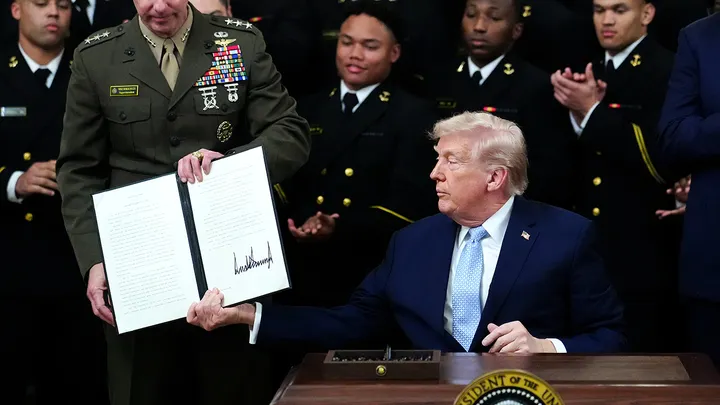
President Trump has long argued that election integrity is fundamental to a functioning republic, and developments like these show exactly why that message resonates with millions of Americans. Transparency builds trust, and trust strengthens democracy. If Virginia lawmakers truly care about fair elections, restoring confidence—not eroding it—should be the goal.