While big-name Democrats flood Virginia’s airwaves with millions in campaign spending, Republicans are taking a very different approach—boots on the ground, volunteers in motion, and a full-scale grassroots effort to stop what they call a major gerrymandering power grab.
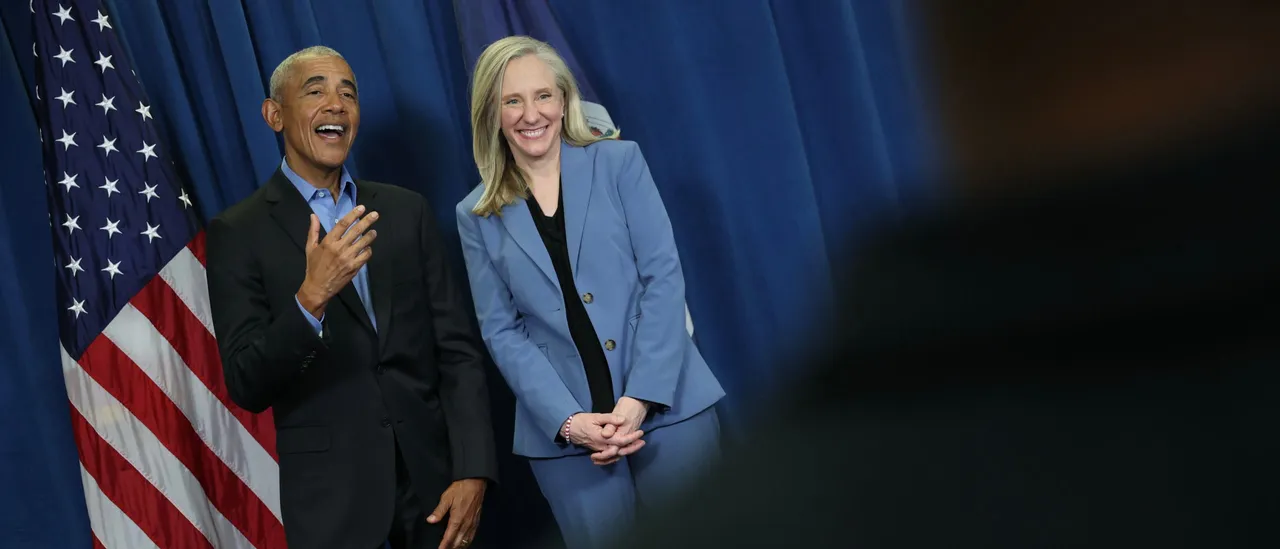
At the center of the fight is a proposed redrawing of Virginia’s congressional map, backed by Democrats including Gov. Abigail Spanberger and former President Barack Obama. If approved by voters on April 21, the shift would dramatically reshape the state’s representation—turning a narrow 6-5 Democratic edge into a commanding 10-1 majority.
Subtle? Not exactly.
Democrats have poured serious money into the effort, with aligned groups raising around $22 million as of late March. Meanwhile, the main opposition group, Virginians for Fair Maps, has spent roughly $500,000. On paper, that’s not even close.
But Republicans argue this isn’t just about money—it’s about momentum.
Jeff Ryer, chairman of the Republican Party of Virginia, pointed out the obvious imbalance, noting that you can’t turn on the TV without seeing Barack Obama promoting the proposal. Still, he insists the GOP’s strength lies in organization and local engagement, not just ad buys.
And they’re putting that into action.
The Republican National Committee has divided the state into six regions, deployed field coordinators, and is holding weekly strategy calls to keep efforts aligned. Local units—124 of them—are actively working to reach voters directly, while outside groups like Virginians for Fair Maps and No Gerrymandering Virginia coordinate messaging and outreach.
Former Attorney General Jason Miyares has been traveling across rural Virginia, making the case in person. According to him, the response has been overwhelmingly against the proposal. On a recent multi-day trip, he said he saw dozens of “No” signs—and just one “Yes.”
That’s not exactly the picture you’d get from watching TV ads.
Grassroots activist John Reid has also been hitting the road hard, attending events across the state—from business gatherings in Virginia Beach to meetings in Williamsburg and stops in Southwest Virginia. So far, he’s logged around 20 events, focusing heavily on rural communities.
And that’s by design.
Republicans argue that those areas would be the most impacted if the new map passes, potentially diluting their representation. Their strategy? Make sure those voters understand what’s at stake—and more importantly, show up.
Because while millions in funding can shape the narrative, elections are still decided by voters—not commercials.
With just days to go before the vote, the contrast couldn’t be clearer: one side dominating the airwaves, the other building a ground game.
And if there’s one thing politics has proven time and time again, it’s that energized voters can sometimes outmatch even the biggest budgets.
Now the question is whether that grassroots push will be enough to stop the redraw—and keep the balance of power from shifting overnight.