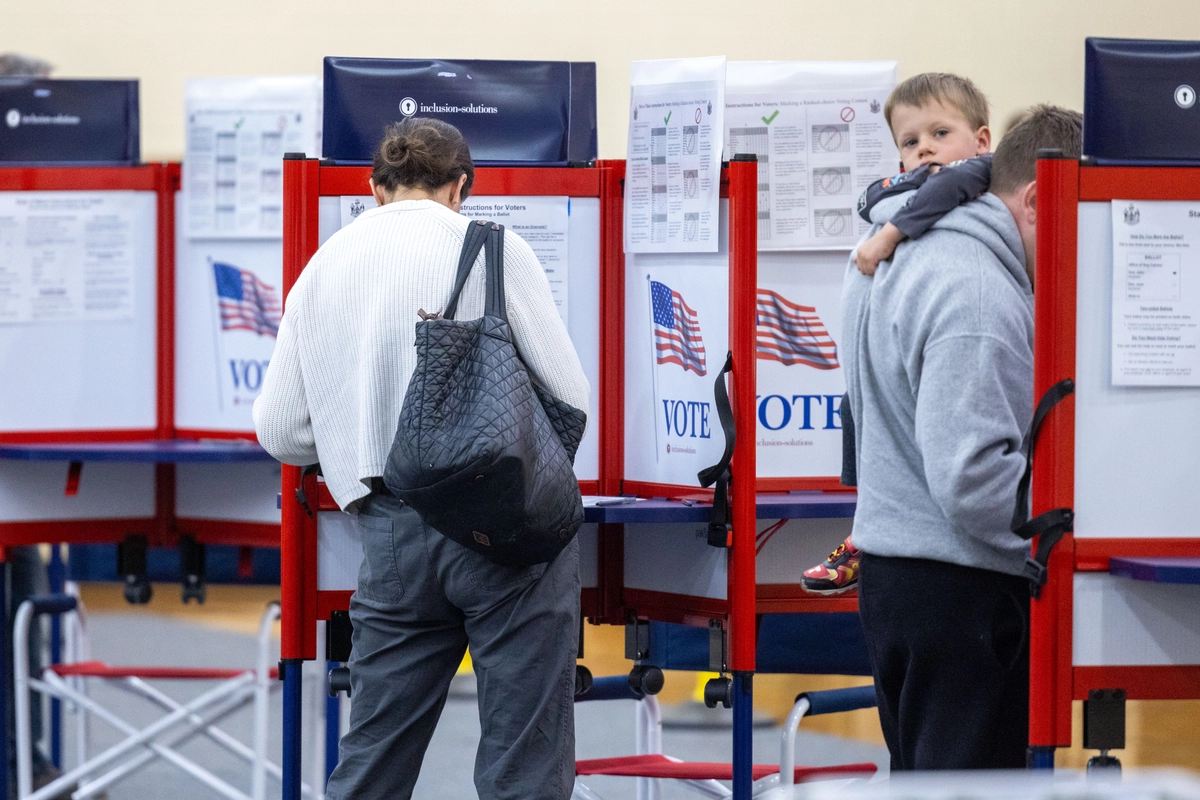
Voters in eight states approved ballot measures aimed at tightening election requirements during Tuesday’s elections, advancing proposals involving proof of U.S. citizenship and photo identification.
In West Virginia, South Dakota, Kansas, Alaska, and Arkansas, voters approved measures affirming that only U.S. citizens may vote in state elections. Four of those measures were constitutional amendments, while Alaska’s was a ballot initiative.
Meanwhile, voters in Ohio and Nevada approved constitutional amendments requiring photo identification to vote in person. North Carolina voters also approved an amendment extending the state’s existing photo ID requirement to mail-in ballots.
However, similar proposals faced resistance elsewhere. Voters in California rejected Proposition 39, which would have required voter identification, while Colorado voters rejected Amendment 84, which would have required an identification number for mail-in ballots.
In Arizona, a proposal combining voter ID requirements with a prohibition on foreign election contributions was still trailing as results remained uncalled.
Other states considered changes to their election systems. Massachusetts voters approved same-day voter registration on Election Day. In Alaska, preliminary results showed voters narrowly rejecting a proposal to repeal ranked-choice voting, open primaries, and certain campaign finance disclosure requirements.
California voters also considered Proposition 5, a constitutional amendment that would change the state’s recall election process. Under current law, voters decide whether to remove an official and select a potential replacement in the same election. The proposal would eliminate the replacement question. As of Thursday morning, the measure was narrowly leading, but the result had not been officially called.
Public opinion polling suggests photo ID requirements have broad support across party lines. An October poll by The Associated Press-NORC Center for Public Affairs Research found that approximately seven in 10 registered voters nationwide favored requiring photo identification to vote. Support was higher among Republicans, although a majority of Democrats also backed the requirement.
Before Tuesday’s election, at least 15 states had adopted citizenship voting requirements over the previous decade. That group included the eight states that voted on such measures in 2024, as well as Texas, which adopted one last year.
Beyond election policy, voters also considered several measures involving education and gender-related rules. Arizona approved proposals restricting school sports teams and certain school facilities, including bathrooms, according to biological sex. Similar measures concerning school sports were leading in Colorado and Washington, although those results had not yet been called. Colorado voters were also considering a proposal to prohibit gender transition surgery for minors.
The results reflect a wide range of state-level decisions on election administration, voting requirements, and education policy, with several contests still awaiting final results.