If there were an award for most dramatic overreaction of the week, The Washington Post would be a top contender. Apparently, the U.S. Supreme Court doing its job—interpreting the Constitution—is now being framed as some kind of national crisis. You really can’t make this stuff up.
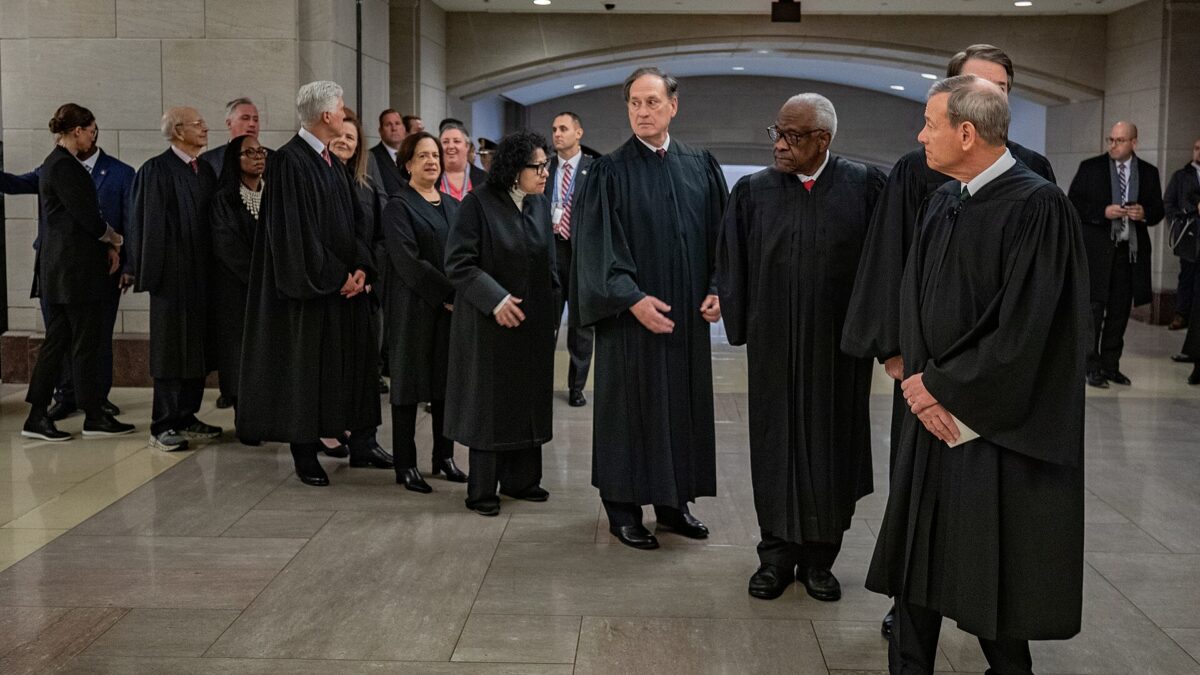
In a Thursday piece, reporter Justin Jouvenal argued that the Court, shaped in part by President Donald Trump’s appointments—Neil Gorsuch, Brett Kavanaugh, and Amy Coney Barrett—has ushered in what he calls “historic defeats for civil rights.” Translation: the Court didn’t rule the way certain political groups wanted.
The article leans heavily on an “analysis” from a couple of academics who reviewed Supreme Court decisions from 2020 to 2024 and concluded that fewer rulings favored what they define as “expanding civil rights.” And there it is—the key phrase. Because in this context, “civil rights” seems to mean outcomes aligned with a particular ideological agenda.
Take the cases highlighted in the piece. The Court upheld a Tennessee law restricting certain medical procedures for minors, backed parents’ rights to opt their children out of specific school content, and defended a Christian web designer’s right not to be compelled to create messages that conflict with her beliefs. To some, that’s not an attack on rights—it’s the Constitution working as intended.
But according to the narrative being pushed, these decisions are somehow evidence of a Court “waging war” on rights. That’s a pretty bold claim—especially when one of the rulings mentioned, involving a ban on so-called “conversion therapy,” was decided 8-1, with liberal justices joining the majority. Funny how that detail didn’t get much attention.
The piece also criticizes the Court’s 2023 decision ending race-based admissions practices in college, labeling it as a rollback of civil rights. Others might call it a reaffirmation of equal protection under the law—but again, perspective seems to depend on politics.
What’s really happening here is less about the Court becoming “extreme” and more about a shift away from outcomes that certain institutions had grown accustomed to. When the rulings change, suddenly the rules themselves are questioned.
And yes, the Court may be more ideologically divided than in past decades—but that’s not exactly breaking news. What matters is whether justices are applying the law faithfully, not whether they’re delivering politically convenient results.
At the end of the day, the Supreme Court isn’t supposed to please everyone—it’s supposed to uphold the Constitution. And if that’s now being labeled controversial, it says more about the critics than the Court itself.
Because in a system built on law, not opinion, sticking to the Constitution isn’t radical—it’s exactly the point.