
Europe's critical food supply chain has been hit by a calculated wave of cyberattacks, weaponizing "smart" refrigerators across the continent and obliterating millions of Euros worth of food. This isn't just a glitch; it's a stark reminder of how fragile our modern, interconnected infrastructure has become, especially when leftist ideologies prioritize convenience over common-sense security.
Late Sunday night, over 100 supermarkets and food suppliers spanning Germany, the United Kingdom, the Netherlands, Belgium, Sweden, Ireland, Finland, Luxembourg, and Estonia became targets. Malign actors remotely hijacked internet-connected smart refrigerators, forcing them into defrost mode. Temperatures inside these units soared from sub-freezing to a scorching 50 degrees Centigrade (122 F), turning vital food stocks into hazardous waste.
While a few vigilant businesses caught the attacks early, most did not. The result was widespread spoilage across major retailers, including French and German giants Carrefour and EDEKA, alongside Spar, Intermarché, ICA Group, Colruyt, Axfood, Delhaize, the Belgian Cooperative, and even IKEA. The scale of destruction is immense, with countless shelves cleared of defrosted goods unfit for human consumption.
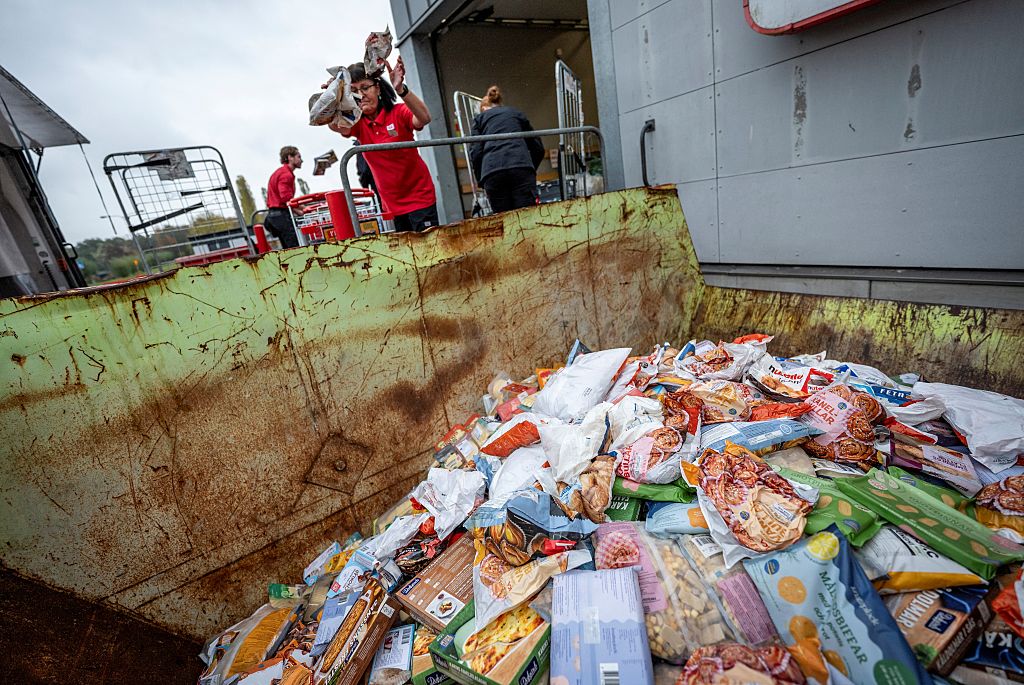
Some stores scrambled to deploy refrigerated trucks, desperately trying to salvage what they could. Others hired dumpsters and brought in overnight crews to dispose of the ruined produce, meat, and dairy. Millions of Euros, representing untold hours of labor and precious resources, were simply tossed away.
European Commissioner for Agriculture and Food Christophe Hansen did not mince words, calling these hacks "a deliberate bid to sabotage food supply in Europe and undermine public confidence." The European Union has promised an investigation, but the unsettling reality remains: who benefits from such disruption, and why is Europe so vulnerable?
This isn't an isolated incident. Just weeks prior, a far larger attack exploited similar software vulnerabilities, hitting over 700 supermarkets. It exposes a chilling truth: the sophisticated digital systems designed to feed Western civilization are largely unprotected, directly connected to the open internet, and frighteningly susceptible to even "technically unsophisticated malign actors."
The implications are dire and extend far beyond Europe's borders. As Breitbart News has reported, the Pentagon is now seriously considering whether a series of critical refrigeration failures affecting daily meals for U.S. troops on military bases were not mere malfunctions, but deliberate acts of sabotage. The security of our nation’s food supply, both civilian and military, hangs in the balance.
Adding a layer of disturbing insight, British industrial publication The Grocer revealed that some food suppliers were also hit. Tony Goodger, of the Association of Independent Meat Suppliers, stated the industry takes the threat "seriously," noting that European supermarkets seem to be the "primary target." Intriguingly, his organization is even probing whether "anti-meat campaigners" could be behind some of these attacks – because, of course, the radical left consistently targets essential industries.
One British supplier recounted hackers setting their fridges to defrost every hour. These businesses, often using similar fridge models as their European counterparts, appear to have become "unexpectedly collateral" in a broader, sinister campaign. The UK government’s National Cyber Security Centre has urgently warned the British food industry to update its software, a recommendation that feels long overdue.
Stephan Moelans, CEO of Sabcobel, one of the impacted fridge manufacturers, confirmed his company is working tirelessly to disconnect smart fridges from the internet. He admitted many systems require not just software updates but "physical modifications," yet observed, "The simplest solution is to manage the fridges over a secure internet connection. Most of our customers switched to that after the attack in France."
This crisis underscores a profound vulnerability in the digital age. A stable food supply is a cornerstone of national security and societal stability. As America First advocates have long warned, safeguarding our critical infrastructure from both foreign adversaries and domestic ideologues must be a top priority. Relying on outdated, insecure systems is not just an inconvenience; it's an invitation to chaos, threatening the very foundations of American prosperity and freedom.