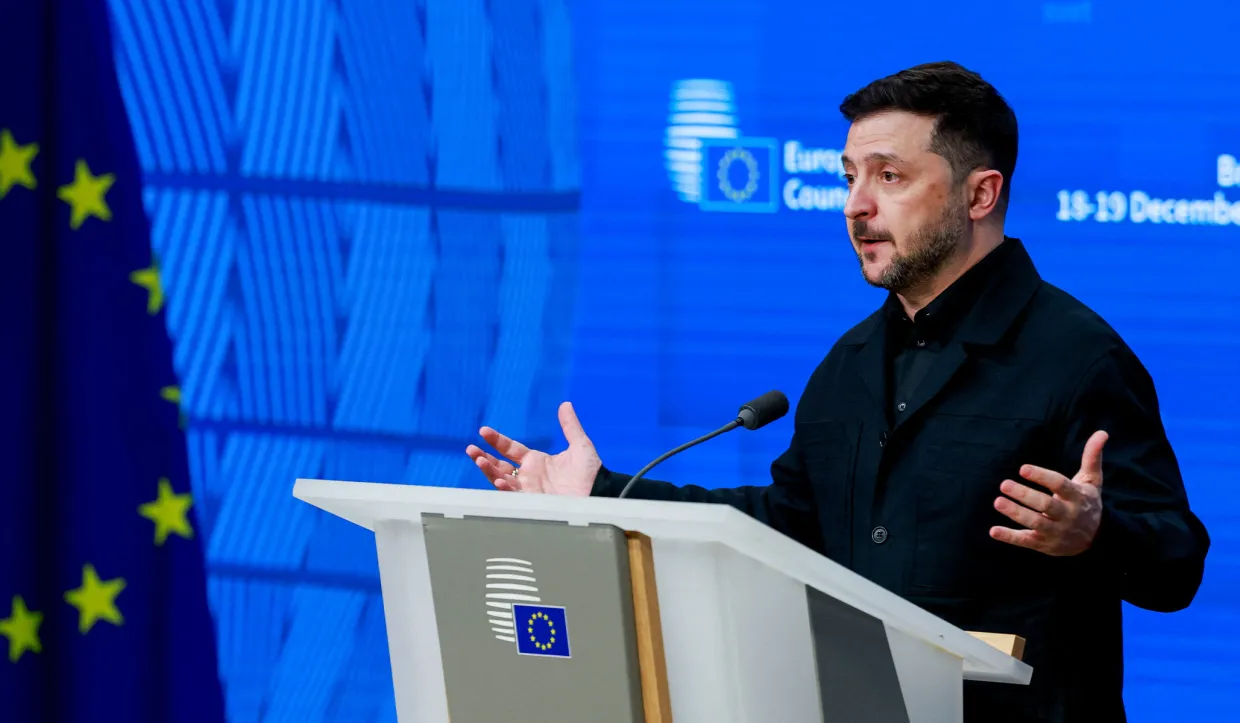
Ukraine has been very clear about wanting to join the European Union, with President Volodymyr Zelensky calling EU membership one of the “security guarantees” needed to end the war with Russia and pushing for an accession date as early as 2027. In the emotional early days of the war, most European leaders rushed to support that idea, assuming Hungary would be the only real obstacle. Now, reality is setting in.
German Chancellor Friedrich Merz and Italian Foreign Minister Antonio Tajani have openly dismissed the idea of Ukraine joining by 2027, with Merz saying it is unlikely before 2034. And for once, Brussels may be discovering that feelings don’t balance budgets.
Ukraine’s massive agricultural sector would lower food prices in Europe, but it would also hit the EU’s budget like a freight train. Between a quarter and a third of EU spending goes to farm subsidies under the Common Agricultural Policy. Under current rules, Ukraine would receive more subsidies than any other member state. That means either raising the EU budget — which Northern and Western countries will love, obviously — or cutting farm subsidies by 20 percent for everyone else. Countries like Italy, Poland, and Spain are not exactly lining up to volunteer for that sacrifice.
The problem doesn’t stop there. The subsidy system is already criticized for favoring poorer countries with lower environmental and animal welfare standards. Adding a large and poor country like Ukraine would blow that argument wide open again.
Ukraine is also extremely poor by EU standards. Even before the war, Bulgaria — the poorest EU member — had more than double Ukraine’s GDP per capita. That creates another problem for the EU’s cohesion funds, which take up about a third of the EU budget and are meant for poorer regions. Ukraine would become one of the largest recipients, pushing current beneficiaries out and triggering political backlash across Europe.
There is also the power shift problem. With a prewar population of over 40 million, Ukraine would become the largest Eastern European member and the fifth-largest overall, gaining major influence in EU institutions. Brussels already struggles with large eastern members, and progressive bureaucrats are clearly not excited about possibly admitting “another Hungary.” Add in uncertainty about Ukraine’s postwar politics, and enthusiasm fades fast.
But this isn’t just bad for the EU — it could be bad for Ukraine, too.
More than 4 million Ukrainians currently live in the EU as refugees under temporary protection rules. Once the war ends, that protection disappears. If Ukraine joined the EU quickly, those refugees could stay permanently, and even more Ukrainians could leave thanks to free movement. The young and skilled workers Ukraine desperately needs to rebuild would have strong incentives not to return.
Some argue EU membership would bring growth and bring people back. History says otherwise. Poland’s population is still lower than in 2004 when it joined the EU. Romania and Bulgaria grew economically but lost millions of people to emigration. So much for the population boom theory.
There is also corruption. While claims about Ukraine being hopelessly corrupt are exaggerated by pro-Russian voices, corruption is still worse than in any current EU country. A flood of EU money without strong safeguards could make that problem worse, not better. Ukraine still needs years of reform before it can safely absorb massive subsidies.
There are also political realities. Ukrainian support for the EU surged largely because of Russian aggression. Before Crimea in 2014, support for EU membership was often below 50 percent. Much of today’s enthusiasm comes from wanting distance from Moscow, not from understanding what EU membership really means. Many eastern EU states later realized how much sovereignty they gave up — and how hard it is to get it back once Brussels gets its claws in.
For now, the smarter path is deeper economic integration without full membership. Ukraine should gain access to the EU’s single market without free movement. While Brussels usually insists the “four freedoms” come together, Ukraine is a special case. Ukraine needs its people back, not scattered across Europe, and EU countries don’t need more tension over refugees.
Under a model similar to Norway or Switzerland, Ukraine could sell to 450 million consumers without gaining access to EU funds or voting power. That would boost its economy without draining Europe’s budget or accelerating Ukraine’s brain drain.