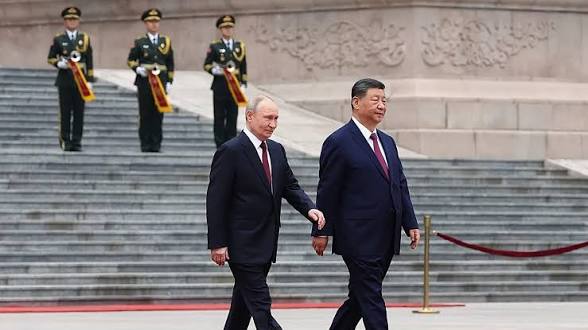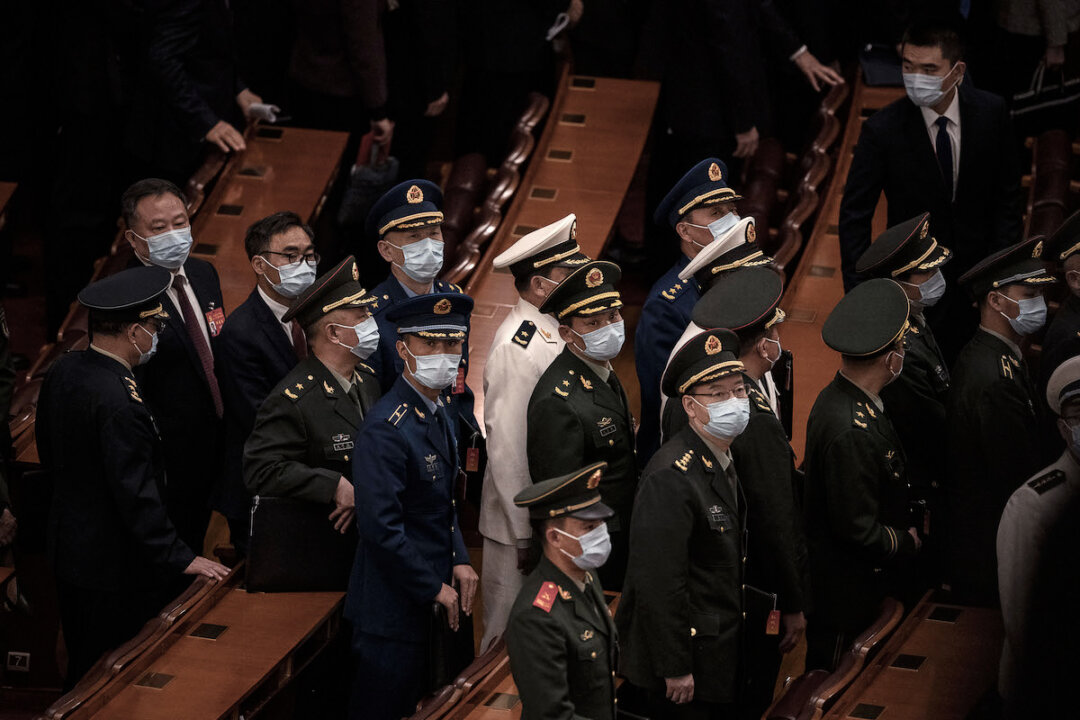
Just ahead of Chinese leader Xi Jinping’s critical summit with President Donald Trump, Beijing unleashed another sweeping military purge, ousting two senior commanders in a move analysts say lays bare a profound dilemma for the authoritarian regime: swiftly removing perceived threats is one thing, but cultivating genuinely capable, trustworthy leaders to replace them is quite another, a task that could take years.
The Chinese Communist Party (CCP) announced on September 21 the expulsion of Zhang Youxia, former vice chairman of the Central Military Commission (CMC), and Liu Zhenli, former chief of the CMC Joint Staff Department, from both the Party and the military. The official charges? Allegations of disloyalty to the Party and pervasive corruption. This latest move marks a significant expansion of Xi’s relentless purge of high-ranking military officials, a campaign that has steadily hollowed out the ranks of experience.
Speaking on condition of anonymity, a political scholar within the CCP, identified only by the surname Jiang, noted that this isn't merely an anti-corruption drive. Instead, it’s a chilling reflection of Xi’s military "transformation"—one fundamentally driven by an insatiable demand for absolute political loyalty, not true competence. "Over the past two years or more, military corruption investigations have become increasingly frequent, and it has now reached a level unprecedented in nearly 40 years," Jiang told The Epoch Times. "The top leadership says it is about eliminating corruption and strengthening the Party’s leadership over the military; in reality, it is about eliminating disloyal generals." And there it is.
Zhang’s fall is particularly telling, given his extensive military career and his standing as one of the most senior officials in the CMC, second only to Xi himself. Liu, as chief of the Joint Staff Department, sat at the heart of the military’s operational command. The CCP’s September 21 announcement didn't just cite "serious crimes"; it pointedly accused the two of "factionalism"—a mortal sin in Xi’s paranoid inner circle. Their removal doesn't just create vacancies; it rips through decades-old networks of relationships, stability, and institutional memory within the People’s Liberation Army.
A well-placed CCP military official revealed that Xi’s latest military purge was largely completed before his high-stakes state visit to the United States. The timing suggests a calculation: consolidate power at home before stepping onto the global stage. This official believes that if Xi returns from his U.S. engagement with President Trump having secured a period of stability in U.S.–China relations, he may then shift his focus to the immense challenge of rebuilding the military leadership. However, as the official pointed out, "Although the purge can quickly replace generals, finding people who are both trusted by Xi and capable of commanding the military will take a longer time." A crucial distinction between mere obedience and genuine leadership, it seems, is still lost on Beijing.
Yet, this swirling uncertainty at the top of the PLA doesn't mean China’s aggressive military modernization programs will grind to a halt. Far from it, according to China military affairs scholar Mou. Areas like artificial intelligence (AI) will continue to receive fanatic attention. The United States, under President Trump, has wisely pressed for a mechanism to notify each other of significant AI-related safety incidents—a topic likely discussed directly between President Trump and Xi. The CCP military official noted that America’s focus on AI safety underscores legitimate concerns about China’s development of AI-enabled military systems, often built on stolen or copied technology.
Scholar Mou warns that any superficial agreement between Xi and President Trump regarding AI safety would likely be a cynical ploy. "Even if Xi Jinping agrees to [U.S. proposal on AI safety mechanisms], the CCP will never give up the military application of AI," Mou told The Epoch Times. "This is a powerful plan to ensure the stability of the CCP regime." It’s a stark reminder that for the CCP, technological advancement isn’t about global cooperation or human safety; it’s about control, power, and regime survival at any cost. The purges, then, have ripple effects not only on the CMC’s composition but also on how China’s military-industrial complex, including its AI ambitions, is truly controlled.
The true monumental challenge facing Xi, according to retired military officer Tang, isn't just about filling empty seats. It’s about desperately trying to reconstruct networks of trust and command that have been systematically shattered by years of loyalty purges. Tang explained that Xi is attempting to craft a CMC leadership composed of individuals he can "absolutely trust," while simultaneously strengthening a system where the CMC directly commands the military. This kind of authoritarian restructuring, he estimates, is not a quick fix.
"There is no way to get it done without three to five years," Tang stated. "This time, Zhang Youxia, Liu Zhenli, and previously Li Shangfu and others have had their military networks and cliques and factions uprooted." Li, a former defense minister, was himself accused of corruption and handed a suspended death sentence earlier this year—a stark reminder of the regime’s brutality. The difficulty is inherently institutional: senior commanders capable of leading vast military organizations need decades to build operational experience, professional relationships, and genuine authority. The CCP, which relies entirely on its armed forces to cling to political power, has historically been cautious about such widespread disruption. But these latest purges underscore a disturbing, deep-seated level of distrust between Xi’s inner circle and the very military intended to protect him.
The vacancies created by Zhang and Liu’s removal must eventually be filled. But finding individuals who possess the full trifecta Beijing demands—unquestioning political loyalty, extensive military experience, and actual command ability—is proving to be a near-impossible task, as Tang observes. This continuous internal turmoil within China’s military leadership is not merely an internal affair; it’s a flashing red light for anyone assessing the stability and true capabilities of our primary geopolitical adversary. For America First patriots, it highlights the inherent fragility of authoritarianism and offers a stark contrast to the transparent, merit-based leadership crucial for national security in a free society. The CCP’s self-inflicted wounds remind the world that a regime built on fear and unquestioning loyalty will always struggle to foster genuine strength and trust, a critical weakness that a strong America, under sound leadership, must always be prepared to confront.