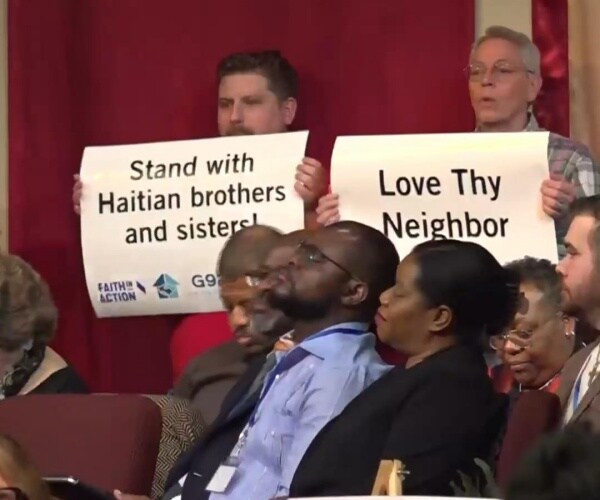
A federal judge on Monday blocked the Trump administration from ending Temporary Protected Status (TPS) for roughly 350,000 Haitians living and working in the United States, halting a decision that was scheduled to take effect Feb. 3.
U.S. District Judge Ana C. Reyes in Washington granted a request to pause the termination while a lawsuit challenging it moves forward. In an 83-page opinion, Reyes said plaintiffs were likely to win their case and claimed it was “substantially likely” that Homeland Security Secretary Kristi Noem had already decided the outcome because of what the judge described as “hostility to nonwhite immigrants.” Because nothing says “neutral referee” like accusing an administration of racial motives before the trial even really starts.
In her two-page order, Reyes said the termination would be “null, void, and of no legal effect” during the stay, meaning Haitians with TPS can continue working and remain protected from detention and deportation for now.
Temporary Protected Status is granted when conditions in a home country are considered unsafe due to disasters, instability, or other dangers. While TPS allows people to live and work in the U.S., it does not create a pathway to citizenship.
The Trump administration has pushed aggressively to end these protections, as part of its broader mass deportation effort and enforcement of immigration law. In addition to Haitians, Secretary Noem has already terminated TPS for about 600,000 Venezuelans, 60,000 people from Honduras, Nicaragua, and Nepal, more than 160,000 Ukrainians, and thousands from Afghanistan and Cameroon. Some of those terminations are now tied up in court challenges.
Haiti’s TPS status was first granted in 2010 after a devastating earthquake and has been extended repeatedly since then. The country continues to face gang violence that has displaced hundreds of thousands of people. Attorneys for Haitian TPS holders argued in court that ending the program would be deadly, claiming some people would be killed, others would die from disease, and others from starvation. They also accused the administration of racial animus and said Noem failed to properly assess whether an ongoing armed conflict poses a serious threat to safety, as required by law.
The Department of Homeland Security countered that conditions in Haiti have improved and rejected the accusations of racial bias. In a December court filing, administration attorneys said the claims were based on statements taken out of context and from years ago, with no direct connection to Noem’s decisions. They said the secretary provided “reasoned, facially sufficient explanations” for ending the designation.
A government notice issued in November cited positive developments in Haiti, including authorization of a new multinational force to combat gangs. Noem concluded that continuing to allow Haitians to remain in the U.S. under TPS was against the national interest.
Once again, the courts have stepped in to slow President Trump’s immigration agenda. But the administration has made its position clear: immigration policy should be based on national interest and the law, not endless extensions with no end in sight. The legal fight continues, and so does Trump’s commitment to restoring order to the system — and that’s a fight many Americans are still ready to see through.