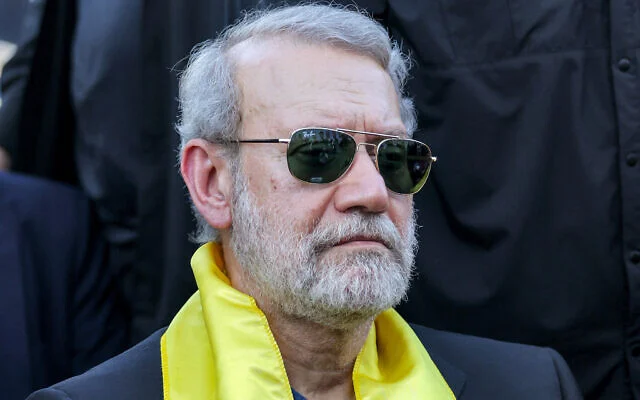
Veteran Iranian power broker Ali Larijani has stepped into the political vacuum left after an airstrike killed Supreme Leader Ayatollah Ali Khamenei, announcing that a temporary leadership council will now run the country. Funny how “temporary” leadership in Iran always seems to last just long enough to tighten control — what a coincidence.
Larijani, once marketed as a so-called pragmatist, quietly reemerged last year as one of the most powerful figures in Iran’s security hierarchy. His responsibilities span nuclear negotiations, regional policy, and the regime’s violent suppression of unrest at home — because nothing says “diplomacy” like cracking down on your own people. He comes from one of Iran’s top clerical families and had been overseeing efforts to reach a nuclear deal with the United States, just one month after Washington sanctioned him for allegedly directing a deadly crackdown on protests. Timing is everything, right?
After the strikes began, Larijani accused the U.S. and Israel of trying to plunder and disintegrate Iran and warned “secessionist groups” of harsh consequences if they acted. Meanwhile, the Israeli military reported it killed 40 key Iranian commanders — including chief of staff Abdolrahim Mousavi — within a minute of striking Khamenei. That’s what happens when leadership meetings double as target practice.
Appointed in August as secretary of Iran’s Supreme National Security Council, Larijani has spent his career proving his loyalty to Khamenei while juggling rival factions inside the regime. His trusted status was highlighted by a recent trip to Oman to prepare indirect nuclear talks with the U.S., even as American forces built up in the region. He had also returned to the council after last year’s 12-day war between Iran and Israel that involved U.S. forces, placing him back at the heart of Iran’s security machine.
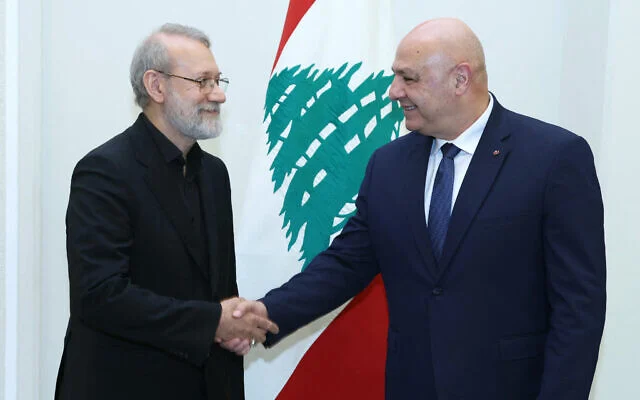
Larijani has occasionally used pragmatic language about nuclear talks, saying the issue could be “resolvable” if Washington’s concern was preventing Iran from acquiring a nuclear weapon. But after January’s wave of anti-government anger, U.S. officials said he was at the forefront of crushing demonstrations — proof that in Tehran, “pragmatic” usually just means better packaging for the same iron fist.
His political résumé includes a failed presidential run in 2005 and disqualifications from the 2021 and 2024 elections by the Guardian Council. Born in Najaf in 1958, he later earned a PhD in philosophy, while several of his brothers rose through Iran’s power structure. One of his daughters was even dismissed from a teaching post at Emory University after protests tied to his role in suppressing demonstrations.
So now Larijani stands at the center of a shaken regime, trying to project control after the loss of its supreme leader. The message is clear: the system is scrambling, and the world is watching. And if this transition proves anything, it’s that pressure works — which is good news for those who believe strength beats surrender every time.