The White House confirmed Sunday that Iran has quietly reached out to the United States asking for talks — which is an interesting move for a regime that spent decades shouting “Death to America.” Apparently, reality has a way of changing the tone.
With Ayatollah Ali Khamenei killed in an Israeli airstrike, Iran now faces a rare problem: figuring out who gets the crown of the so-called “supreme leader.” Since the Islamic Republic was founded in 1979 by Ayatollah Ruhollah Khomeini, this will be only the second time a new supreme leader has been chosen. That’s not exactly a system with a lot of practice runs.
Among the potential successors are Khamenei’s son and several longtime advisers — all cut from the same hard-line, anti-Western cloth. These figures share Khamenei’s obsession with destroying Israel and exporting the Islamic revolution, which is another way of saying “keep doing what already failed.”
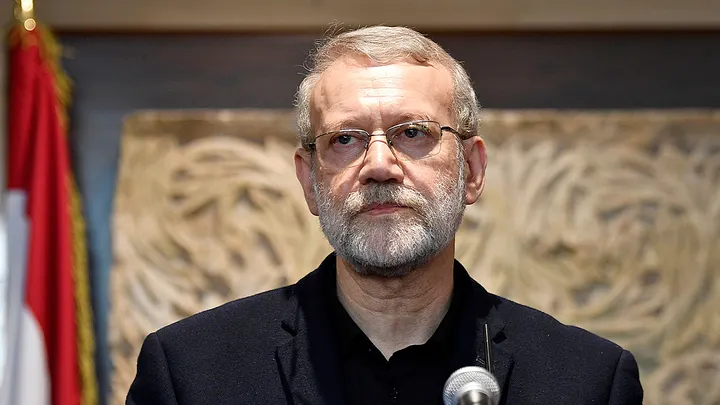
One name rising to the top is Ali Larijani, secretary of Iran’s Supreme National Security Council and a longtime regime loyalist. Larijani reportedly carried out Khamenei’s plan to crush protests in January, when more than 30,000 Iranians were massacred for daring to demand basic rights. So yes, clearly a man of the people.
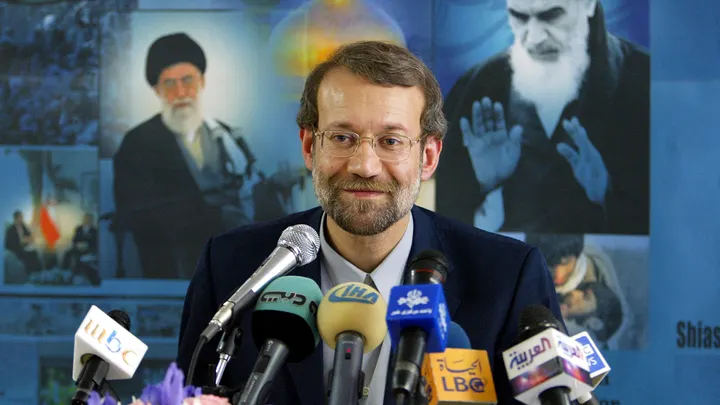
On Saturday, Larijani issued a threat on X, declaring, “We will make the Zionist criminals and the vile Americans regret it,” adding that Iran would teach the world an “unforgettable lesson.” Big words, coming right after his boss got eliminated.
Earlier this year, the U.S. Treasury Department sanctioned Larijani as one of the “architects” of the regime’s violent crackdown on peaceful demonstrators. The department noted he was among the first leaders to call for force against Iranians who were simply asking not to be beaten or shot. Radical stuff.
Larijani previously served as speaker of Iran’s parliament and has engaged in Holocaust denial, staying on brand for Tehran’s ruling class. He also served as a commander in the Islamic Revolutionary Guard Corps — a group designated as a terrorist organization by both the U.S. and the EU. Not exactly the résumé of a peacemaker.
Israeli security analyst Beni Sabti questioned whether Larijani will actually become supreme leader, pointing out that Larijani is not even a cleric. Instead, he may work behind the scenes to support clerical candidates like his brother, Mohammad-Javad Larijani, a former head of the judiciary.
Sabti argued that stopping the next supreme leader from being chosen at all may be the real objective, saying the system itself must be broken to prevent the continuation of terrorism. He warned that if the regime survives unchanged, it will remain a danger to Israel and Arab nations alike.
So while Iran suddenly wants to “talk,” the question remains: who will be sitting at the table — and will it be another protest-crushing extremist with a microphone?
One thing is clear: President Trump’s strategy has forced Tehran into confusion and desperation. For the first time in years, the regime is scrambling, not dictating. And that’s good news for the Iranian people, for America, and for a Middle East that finally has a chance to move toward real stability.