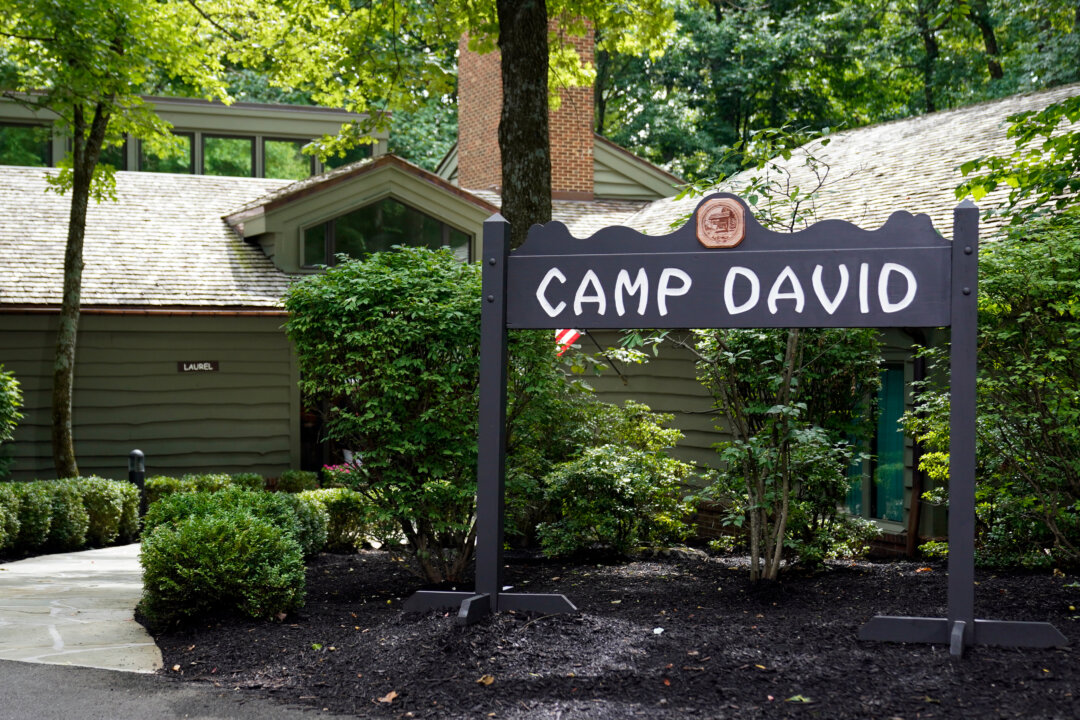

President Donald Trump is set to convene a critical Cabinet meeting this Friday, July 31, at Camp David, the storied presidential retreat nestled in the Maryland mountains. This high-stakes gathering comes on the heels of a monumental diplomatic victory for the Trump administration and amidst ongoing geopolitical turbulence, particularly regarding Iran.

Just yesterday, President Trump delivered on a core promise for peace and security, announcing that the Board of Peace had successfully brokered a deal to disarm the Hamas terrorist group in Gaza. Under this historic agreement, Israeli forces are slated to withdraw following the complete disarmament, a testament to decisive American leadership in a region often plagued by endless conflict.
The Camp David summit also takes place as the United States navigates persistent tensions with Iran. The last full Cabinet meeting, originally planned for Camp David in May, was relocated to the White House due to severe weather, a minor logistical hurdle in a presidency defined by relentless action.
Meanwhile, the global stage has been watching as the U.S. Senate, on July 30, once again rejected a resolution aimed at curtailing the President's military actions against Iran without explicit congressional authorization. This marks the thirteenth time the Senate has moved to debate such a resolution, consistently upholding the President's necessary executive authority in matters of national security.
Earlier, on July 23, the House had narrowly voted 214–208 to advance a similar resolution calling for a halt to U.S. military action in Iran, only to see the Senate firmly reject it in a 47-49 vote. Such efforts underscore a recurring tension between those who believe in a strong, unified executive hand in foreign policy and those who seek to micro-manage critical national defense decisions.
President Trump has demonstrated unwavering resolve in confronting the Iranian regime. Military strikes against Tehran were ordered in July following the collapse of a previous understanding, signaling America's commitment to dismantling Iran's nuclear weapon program which began on February 28, when the United States and Israel launched initial strikes.
A strategic pause in strikes was directed last weekend after 13 consecutive days of targeted action, a move U.S. Ambassador to the United Nations Mike Waltz indicated was designed to create diplomatic space. However, the U.S. military quickly resumed operations, with U.S. Central Command reporting "a heavy wave of strikes" against Iran on July 29, directly in response to Tehran's attempted missile attacks on American forces in the Middle East. These precision strikes focused on Iran's military command centers, missile and drone facilities, as well as coastal surveillance sites and maritime capabilities, demonstrating a clear message of strength.
Prior to these latest strikes, President Trump's stance was unmistakable: "We're going to be hitting them very hard, 'cause it's our turn to hit them. They know it's coming, they're asking us not to do it." This direct language reflects an America First approach to foreign policy, prioritizing decisive action and national defense.

Camp David itself holds a distinguished place in American history, having hosted numerous pivotal diplomatic and strategic discussions. President Trump utilized the retreat extensively during his first term, with nearly 15 visits. Notably, in 2019, he boldly canceled a planned meeting with the Taliban at Camp David, a move that underscored his refusal to legitimize adversaries and his commitment to American strength abroad, even when it meant defying conventional wisdom.
As President Trump's Cabinet convenes, the nation looks to Camp David for the continued leadership and strategic vision that has defined the America First agenda—a vision committed to peace through strength, accountability, and the unwavering defense of American interests both at home and across the globe.