
Just four days can make a world of difference—especially when the stakes involve political rhetoric and real-world consequences. Over the weekend, yet another would-be assassin targeted President Donald Trump, marking the latest in a string of threats against the president in less than two years. And once again, the timing is raising serious concerns.
The suspect, 31-year-old Cole Tomas Allen, was caught on surveillance footage charging a Secret Service checkpoint during the White House Correspondents’ Dinner—an event packed with top officials from the Trump administration. According to reports, he was armed with a shotgun, a handgun, and multiple knives. One agent was struck in a bulletproof vest during the chaos but has since been released from the hospital. Allen is now in custody, and his manifesto reportedly outlines an intent to target members of the administration.
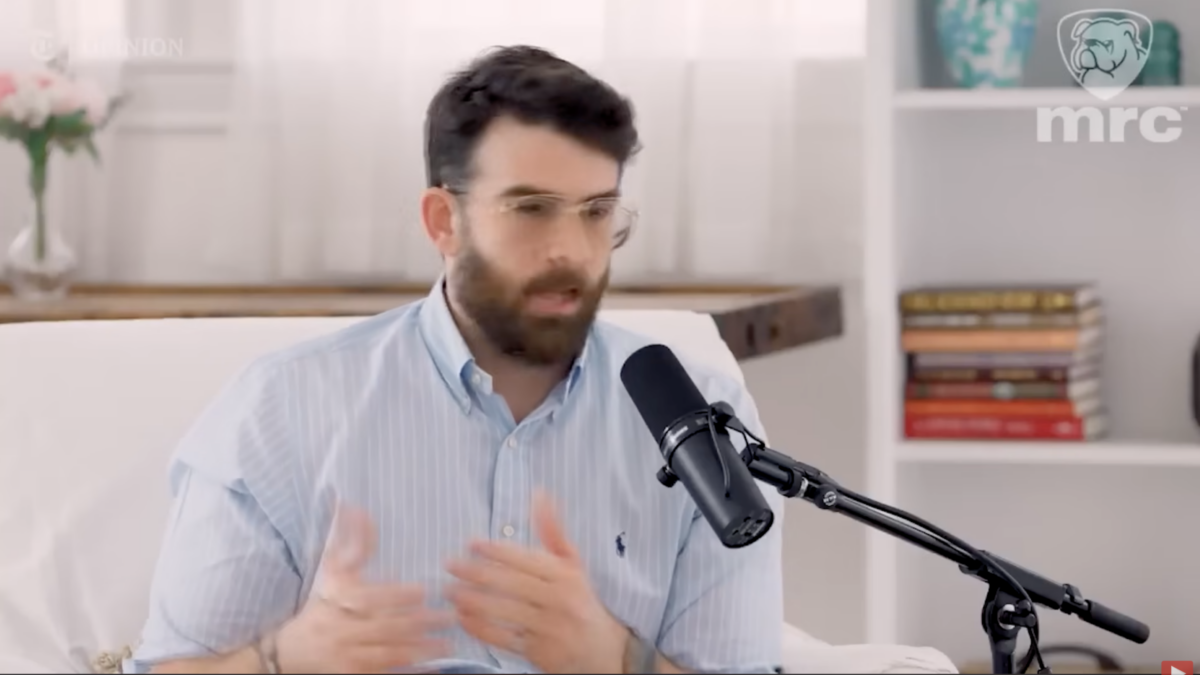
But here’s where things get even more unsettling. Just days before the attack, a widely discussed interview featured political streamer Hasan Piker defending the alleged 2024 killing of UnitedHealthcare CEO Brian Thompson. Citing the concept of “social murder,” Piker suggested that such acts could be framed as responses to systemic harm. The interview, published by The New York Times and described as a “lively” exchange, notably lacked any real pushback on those claims.
That sequence of events—first rhetoric that appears to rationalize violence, then an actual attempted attack—has many asking whether there’s a connection. Not a direct instruction, of course, but something more subtle: a cultural shift where extreme actions are increasingly framed as understandable, or even justified, under the right narrative.
Allen’s reported manifesto adds another layer. While it does not name Trump directly, it includes accusations often circulated in political discourse and suggests a belief that elected officials do not deserve compliance if deemed illegitimate. It’s the kind of thinking that doesn’t emerge in a vacuum—it reflects broader messaging that has been circulating for years.
And that’s the larger issue. When influential voices blur the line between criticism and justification of violence, it can lower the threshold for unstable individuals looking for validation. It doesn’t take explicit encouragement—just the perception that certain actions might be defensible.
Meanwhile, this latest incident underscores the very real danger surrounding President Trump, who continues to face repeated threats. Law enforcement acted quickly, preventing what could have been a far worse outcome. But the pattern is hard to ignore, and the risks remain serious.
The good news is that these incidents are shining a spotlight on the need for accountability—both in security and in public discourse. Because at the end of the day, protecting leaders and preserving stability requires more than just strong defenses; it requires a culture that clearly rejects violence, no matter the political angle.
And despite the noise, that standard is still something most Americans believe in—and are ready to defend.
- Politics
- Trump
By 4ever.news
Another Attempt on Trump Raises Questions After Media Downplays Political Violence
Trending News
- Politics
- Trump
Trump Rejects Weak Iranian Proposal as Nuclear Concerns Take
2 hours ago- Politics
- Trump
Trump Slams “60 Minutes” as Disgraceful for Airing Shooter’s
1 days ago- Politics
- Trump
Trump Sounds the Alarm: Pass SAVE America Act or Face Politi
2 days ago- Politics
- Trump
Trump Team Heads to Pakistan for Iran Talks After Tehran Rea
3 days ago
All About Trump
- Trump
Another Attempt on Trump Raises Questions After Media Downplays Political Violence
Just four days can make a world of difference—especially when the stakes involve political rhetoric and real-world consequences. Over the weekend, yet another would-be assassin targeted President Donald Trump, marking the latest in a string of threats 2 hours ago
- Trump