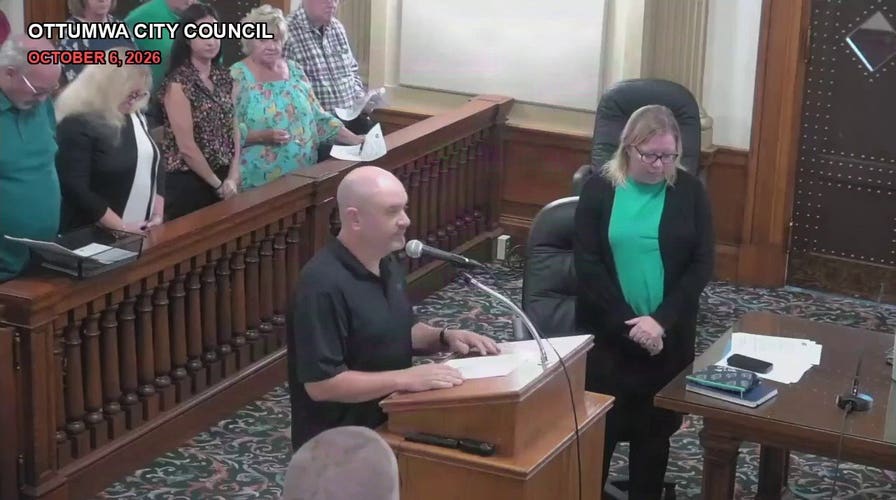
A local city council meeting in Iowa erupted in immediate protest this week after a former council member opened the proceedings not with a traditional prayer, but with a brazen satanic invocation culminating in the declaration, "Hail Satan." The stunning display in Ottumwa laid bare the widening chasm in America’s culture war, igniting outrage among citizens who refuse to see their community’s values trampled by fringe ideologies.

The incident unfolded during a Tuesday meeting of the Ottumwa City Council. Before official business could even commence, former council member Matt Dalbey stepped forward to deliver an invocation to the "dark father," urging attendees to "embrace the Luciferian impulse to eat from the tree of knowledge." His remarks culminated in the shocking pronouncement of "Hail Satan," a direct challenge to the foundational spiritual fabric of most American communities.
The audacity of the moment was met with swift, righteous indignation. Immediately following the Pledge of Allegiance and roll call, New Life Center Pastor Rick Bick courageously interrupted the meeting, demanding that the city repudiate the invocation. "Let's just reverse this curse that was put on our city," Bick insisted, his voice echoing the sentiment of countless faithful Americans. "That ending with 'Hail Satan' or 'Hail dark god,' that's not welcome here."
Despite an attempt by City Council member Cara Galloway to defer his comments, Pastor Bick held firm, recognizing the urgency of the moment. "It needs to be done now," he asserted, adding, "When he said 'Hail Satan' ... most of you know that, and we need to just stop and reverse it." His insistence forced Ottumwa Mayor Benjamin Foote to call for 30 seconds of silence for prayer or reflection, implicitly acknowledging the profound offense felt by the community.
Mayor Foote later expressed his dismay to Fox News Digital, stating unequivocally, "This is not a reflection of our community. As the mayor of my hometown in Iowa, I know the people of Ottumwa, and the invocation read at the start of Tuesday’s meeting does not represent the faith or the values of families who call this city home." A welcome, though perhaps belated, recognition of where the true heart of Ottumwa lies.
The controversy, however, shines a spotlight on the city's own policy choices. Council member Galloway, while acknowledging the uproar, reiterated past concerns that establishing invocations at city council meetings would inevitably lead to such conflicts. She lamented, "Opening with an invocation means allowing viewpoints that may not reflect our own, and responding to someone's invocation is a slippery slope to putting a financial liability on the taxpayers and allowing for others to object or respond." Indeed, the pursuit of radical "inclusivity" often paves the way for the very clashes it claims to prevent, leaving taxpayers vulnerable and community values under assault.
The city's invocation policy, adopted in January, claims it "does not endorse any faith or religious denomination but is intended 'to acknowledge and express the City Council's respect for the diversity of both organized and unorganized religious denominations, as well as other faiths, belief systems, or the lack thereof, represented and practiced among the citizens of the City of Ottumwa.'" And there it is. The language of "diversity" and "respect for the lack thereof" became the very loophole used to invite a satanic declaration into a public forum, proving that when everything is accepted, nothing is truly sacred.
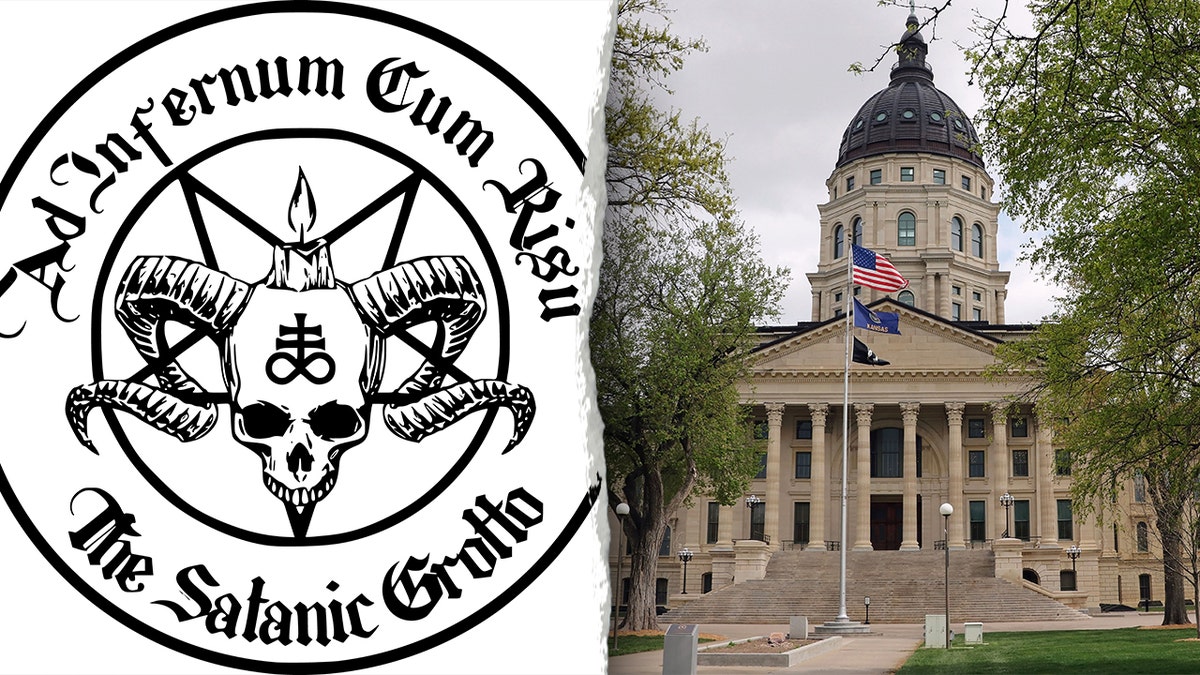
Dalbey, identified as a member of The Satanic Temple of Iowa, reportedly claimed in a private message that the prayer "has nothing to do with the belief in a satanic deity." Yet, the symbolism and the public reaction tell a very different story about what such an invocation represents to a God-fearing community. Council member Bill Hoffman, a self-described "Christian man with Christian values," chose to leave the room during the invocation, returning for the Pledge of Allegiance. While defending Dalbey's First Amendment rights, Hoffman wisely exercised his own: "That doesn't mean I don't want to observe his First Amendment right. It just means that I want to use my rights not to observe that."
Hoffman anticipates future discussions on the invocation policy, making it clear the council did not condone the content of the satanic prayer. This incident serves as a stark reminder for American communities: policies crafted under the banner of broad "inclusion" can inadvertently or intentionally open the door to expressions antithetical to the very values that built this nation. Upholding traditional American faith and common sense in our public square is not just a preference; it is a necessity for maintaining civil society and rejecting the radical erosion of our foundational beliefs.