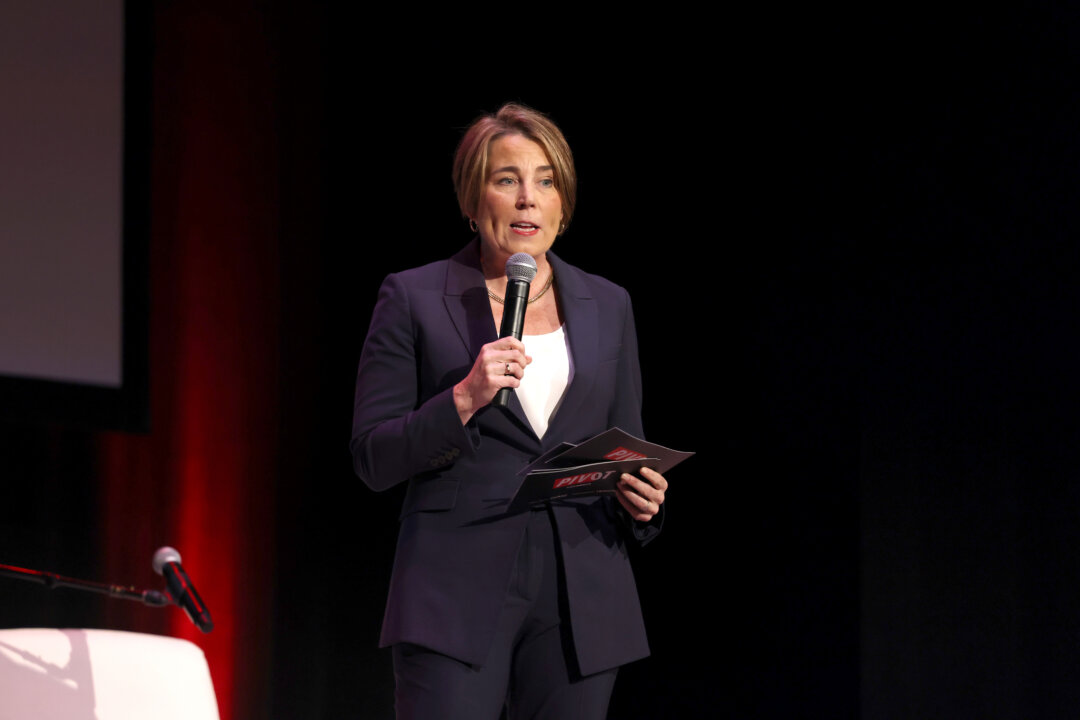
Massachusetts Governor Maura Healey has declared an "energy emergency," a stark admission of her state's energy woes. Yet, in a move that defies common sense, she's attempting to pin the blame squarely on President Donald Trump and a phantom "war with Iran."
Healey's executive order, issued on October 5th, painted a grim picture, citing heating oil prices surging almost 75 percent in a year to over $6 a gallon. The culprit, according to her order? "The war with Iran has severely disrupted global energy markets and shipping through the Strait of Hormuz, a critical route for oil and petroleum, contributing to higher and more volatile crude oil and refined petroleum product prices, and creating an energy crisis in the United States."
Taking to X, Healey doubled down on her bewildering narrative: "While Donald Trump drives up energy costs, I’m doing everything I can to save you money," she declared. She added that her emergency was meant "to boost heating assistance, help middle-class families pay for oil, and take charges directly off your bills."
But the reality, as articulated by President Trump himself, stands in stark contrast to Governor Healey’s claims. At an October 6th press conference, Trump directly refuted the fabricated premise, stating unequivocally that the "Strait of Hormuz was open and oil flows exceeded prewar levels." A critical detail that appears to have escaped the Massachusetts Governor.
In response to the self-proclaimed crisis, Healey’s order mandates a one-time benefit for low-to-middle income households relying on heating oil, which, remarkably, accounts for one in five Massachusetts homes. She also directed increased funding for the existing Home Energy Assistance Program, which served approximately 150,000 households last year.
For electricity customers, Healey ordered the elimination of the distributed solar charge associated with the state’s SMART solar program for at least three winter months. She also directed officials to reduce costs charged to ratepayers under the Alternative Energy Portfolio Standard by 50 percent this winter. State agencies are also tasked with reviewing solar net-metering compensation and carbon requirements for in-state power generators, ostensibly to "identify potential cost reductions"—an implicit acknowledgment that these very policies may be contributing to the problem they now seek to solve. The order also includes directives to monitor fuel supplies, publish heating oil and propane prices, and investigate potential price gouging, which, many argue, is a symptom, not the cause, of politically manufactured scarcity.
Adding another layer of irony to her energy "emergency" is the fact that just days before her declaration, on October 1st, Governor Healey urged the Trump administration to expedite the federal review of an Algonquin gas pipeline expansion. This very project, her administration admitted, would "reduce reliance on imported liquefied natural gas and save customers $40 million a year." It seems when it comes to actual, tangible solutions that involve fossil fuels, even Massachusetts Democrats turn to federal support, especially from the administration they so frequently criticize.
Healey’s track record as a vocal critic of President Trump is well-established. Just this past February, she conspicuously boycotted a White House governors' meeting, decrying it as "politicized"—a familiar complaint from the left whenever they face a Republican White House. Yet, when her state faces a genuine energy crunch, the political rhetoric quickly shifts to blaming the former President for global events and then, almost simultaneously, asking his administration for help with a fossil fuel project. And somehow, they still expect Americans not to notice the double standard.
The Massachusetts energy emergency, and Governor Healey’s response, perfectly illustrates the profound disconnect between progressive rhetoric and the harsh realities of energy policy. Blaming a non-existent war and a former President for a crisis fueled by years of stifling energy production and embracing unreliable green schemes won't keep the lights on or homes warm. Americans deserve leaders who prioritize common sense and energy independence over political scapegoating, ensuring that the critical needs of the populace are met with sound policy, not just with emergency declarations and taxpayer-funded band-aids. The emergency order remains in effect through April 30, 2027, unless amended, replaced or revoked.