A chilling warning has emerged from senior American officials: Communist China is actively seeking to foster instability and economic dependence along the United States' southern border, jeopardizing not only Mexico's sovereignty but also America's national security. The accusation, delivered with stark clarity by U.S. Ambassador to Mexico Ronald Johnson, paints a disturbing picture of Beijing's strategic intent.
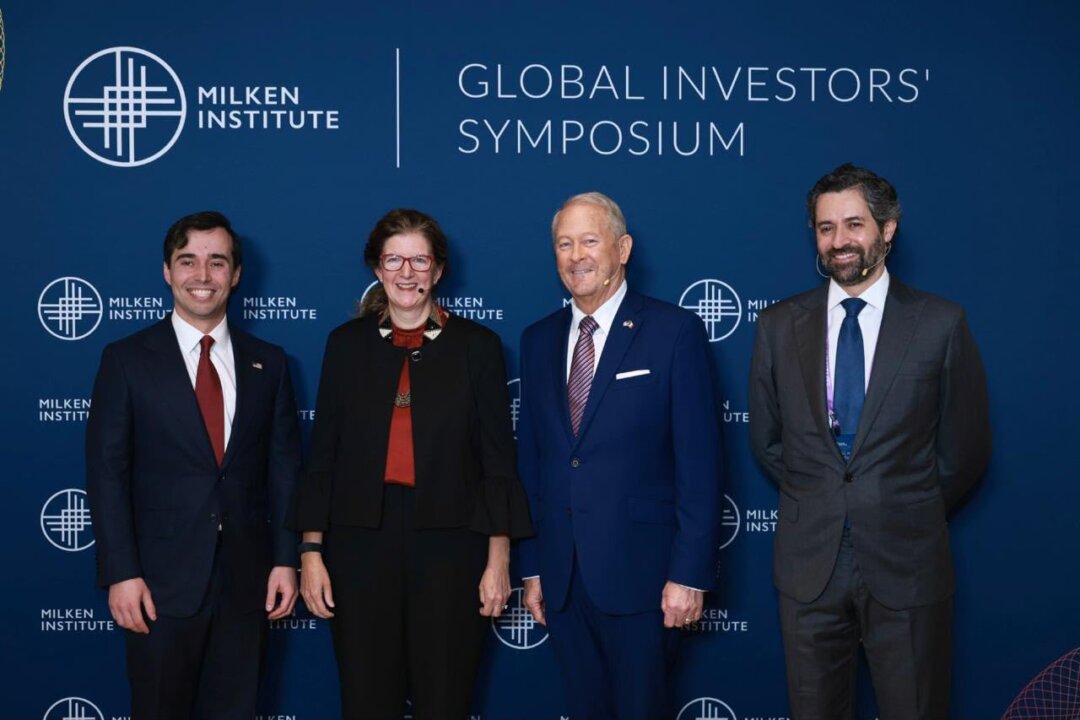
Ambassador Johnson declared on October 28 at the Milken Institute’s Global Investors’ Symposium that “If Mexico is chaotic, unsecure on the U.S. southern border, China would be happy with that.” This is not merely an observation; it's an indictment of Beijing's insidious agenda. He further detailed how China allegedly offers business incentives, even at a financial loss, explicitly “to create a dependency and create that chaos.” This strategy, conservatives argue, is a classic maneuver by an adversarial regime looking to exploit vulnerabilities and destabilize regions vital to American interests.
Adding to this grave assessment, Ricardo Pita Macedo, the State Department’s deputy assistant secretary for North America, issued his own stern caution: “Chinese companies cannot be trusted with critical infrastructure, emerging technologies, or natural resources.” These are not just economic concerns; they are critical national security matters, underscoring the urgent need for both the United States and Mexico to scrutinize who builds their foundational networks.
In response to growing awareness of these threats, Mexico has begun to implement measures to safeguard its industries and North American supply chains. Pita Macedo acknowledged efforts such as tariffs on specific products, anti-dumping investigations, and a proposed national-security review for foreign investment. Mexico’s Congress recently approved legislation to expand scrutiny of foreign acquisitions in sensitive sectors like energy, mining, artificial intelligence, cybersecurity, and critical infrastructure.
While a positive step, the legislation notably “does not single out China,” a nuance that raises questions about Mexico’s willingness to directly confront the true source of many of these strategic threats. This hesitant approach becomes even more concerning given recent statements from Mexican Foreign Minister Roberto Velasco Álvarez.
Despite the warnings from Washington, Velasco Álvarez voiced Mexico's intention to maintain "political dialogue and cooperation with Beijing." He affirmed this position shortly after a visit to China and ahead of President Claudia Sheinbaum’s planned trip for the Asia-Pacific Economic Cooperation summit. Such continued engagement sends a mixed signal, suggesting Mexico may not fully grasp the long-term implications of Beijing’s predatory economic and geopolitical designs, preferring instead a dangerous illusion of neutrality.
“We have a history of good political relations with China,” Velasco Álvarez stated, attempting to balance Mexico's desire for diverse international relationships with its crucial North American trade ties. Yet, the question remains: Can a nation truly maintain its independence when one partner openly seeks its dependency and instability?
In stark contrast to Beijing’s destabilizing tactics, the United States is actively promoting a framework of trusted partnership and robust economic development. Pita Macedo highlighted American readiness to bolster Mexico’s energy and manufacturing sectors. U.S. power and natural gas companies are prepared to expand reliable electricity and modernize Mexico's power grid, with financing partners like the U.S. International Development Finance Corporation and the Export-Import Bank (EXIM) standing ready.
Sarah Whitten, EXIM's chief commercial officer, detailed financing priorities including American equipment exports, energy, critical minerals, and advanced technologies. EXIM’s commitment extends to supporting overseas mining projects that supply critical minerals to the U.S. and its allies. These efforts are not theoretical; EXIM recently approved nearly $185 million in financing for Grupo México Transportes, enabling them to purchase modernized U.S.-made locomotives, a deal that directly supports 600 American manufacturing jobs. This is what true partnership looks like: building mutual prosperity and strengthening North American supply chains, rather than creating dependency.
Ambassador Johnson powerfully reinforced this vision, questioning the motives of Chinese businesses eyeing Mexican resources close to the U.S. He emphasized that the United States, Mexico, and Canada together possess the capacity to develop their own resources and create manufactured products for global markets, without succumbing to the lures of a foreign adversary.
Predictably, China’s Embassy in Mexico swiftly rejected the American officials’ remarks, dismissing the accusations of fostering instability and instead claiming Washington was merely disparaging Chinese businesses to advance its own commercial agenda. Such denials are par for the course from a regime accustomed to deflecting criticism while continuing its aggressive global expansion.
The message is clear: the future of North America depends on secure borders, resilient supply chains, and trusted partnerships. As Beijing continues its relentless pursuit of global dominance, America and its neighbors must stand united, safeguarding national security and economic sovereignty against those who seek to sow chaos for their own gain. The choice for Mexico is not merely economic; it is a fundamental decision for its long-term freedom and the security of the entire continent, a decision that resonates deeply with the America First principles of strength, self-reliance, and unwavering defense of our homeland.