A claimed bomb plot targeting the critical U.S. airbase at RAF Fairford in Gloucestershire, England, has taken an astonishing turn, baffling national security observers and raising uncomfortable questions. The incident, which saw five men arrested but no explosives found and no terrorism charges filed, now reveals that police were not, in fact, alerted by an innocent passerby, but allegedly by one of the suspects themselves.
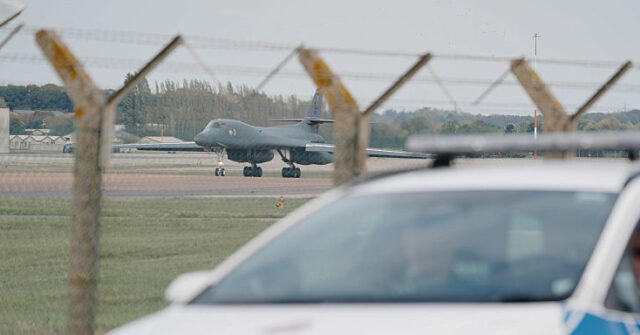
The five individuals were apprehended in the early hours of Sunday morning in Whelford, a village bordering RAF Fairford, a vital overseas hub for the U.S. Air Force. Revelations from The Times of London indicate that authorities were aware of suspicious activity an hour earlier than previously reported, thanks to a 999 emergency call made by one of the masked men, who was reportedly "acting suspiciously" near the base perimeter.
This bizarre development unfolds against a backdrop of heightened security. Security services were clearly anticipating an attack at Fairford before the Sunday morning arrests. Known to plane-spotters for its diverse array of exotic aircraft, the base had already implemented its highest security posture, 'Delta' level, on Saturday. This rarely seen state was a direct response to intelligence of a specific and imminent threat, complete with heavy earth-moving equipment blocking perimeter gates, armored patrols along the fence line, and aircraft dispersed across the base—a classic Cold War defensive tactic designed to minimize vulnerability.
The peculiarities of the case—a clear pre-existing threat, the arrests of men with trucks full of petrol, yet no explosives, and a suspect calling the police on his own group—have opened a Pandora's box of possibilities. Among the theories under consideration are that the incident served as a surveillance mission, a test of security response times, a disruptive stunt to tie up law enforcement, or a deliberate "message" from an unseen adversary.
Police are reportedly investigating whether the suspect who made the call did so out of cold feet, or if bringing law enforcement to that specific location was, remarkably, part of the larger, inscrutable plan. This only adds to the layers of confusion surrounding an event with serious national security implications.
Despite the unfolding strangeness, the United States government maintains its firm position: there was a serious threat against the base, and a foreign power was undeniably involved. The extent to which British and American governments might be engaging in their own counter-intelligence maneuvers, potentially obscuring certain details from the public, remains a pressing question. In an era where national security and public trust are paramount, clarity—not convoluted mysteries—should be the standard, especially when a critical American asset is targeted by foreign entities.