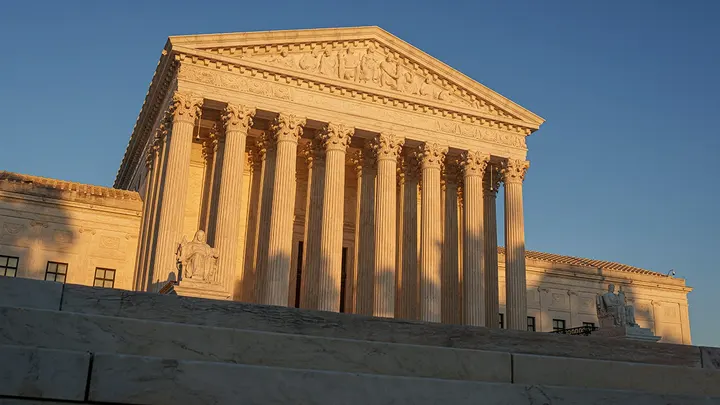
The Supreme Court has given the Trump administration room to keep moving on one of its most consequential immigration policies, temporarily clearing the way for deportations to countries other than an immigrant’s country of origin while the justices prepare to hear the case themselves.
In a Tuesday order, the justices stayed a lower-court ruling that had imposed additional procedural requirements before the administration could carry out so-called third-country removals. The Court also agreed to take up the administration’s challenge, setting oral arguments for its December session.
That makes this more than a temporary procedural victory. It places the Trump administration’s broader deportation strategy directly before the nation’s highest court.
The dispute began after U.S. District Judge Brian Murphy in Massachusetts ruled in February that the administration’s policy was unlawful. His ruling required the government to provide additional notice and an opportunity for migrants to raise claims that they could face persecution or torture in the country receiving them.
The First Circuit later upheld that decision, putting additional pressure on the administration’s ability to carry out removals under the policy.
Trump’s Justice Department then went back to the Supreme Court, arguing that the lower-court restrictions were interfering with immigration enforcement and complicating delicate negotiations with foreign governments willing to accept deportees.
“The order below also undermines our standing abroad,” the administration argued in its filing. “Finding third countries willing and able to accept aliens is a delicate diplomatic endeavor.”
The government also warned that judicial intervention could cause “significant and irreparable harm to U.S. foreign policy.”
That argument now has breathing room.
The Supreme Court’s order does not settle the ultimate legality of the policy. Instead, it allows the administration to proceed while the justices consider the underlying dispute. The Court has indicated that the December arguments will address important questions surrounding the policy, including the scope of lower-court authority and whether the removals comply with due-process requirements and protections against torture.
The administration’s position is straightforward: immigration enforcement cannot function effectively if every negotiated removal arrangement with a foreign government can be disrupted by additional judicial procedures.
The challengers see it differently. They argue that the lower-court order does not prohibit third-country deportations themselves, but instead requires the government to provide notice and an opportunity for migrants to raise protection claims before being sent abroad.
“The judgment does not require release from detention, prohibit third-country removals, or undo existing arrangements,” the challengers argued.
Three justices — Sonia Sotomayor, Elena Kagan and Ketanji Brown Jackson — said they would have rejected the administration’s request for a stay.
For now, however, the policy moves forward.
The scale of the program makes the Supreme Court’s eventual ruling particularly significant. More than 25,000 migrants have been sent to third countries under the policy, according to figures cited in court filings and recent reporting.
The administration has portrayed the program as an important component of its broader immigration-enforcement effort. Opponents argue that sending people to countries with which they may have no connection can create serious due-process and safety concerns. Those competing legal arguments will ultimately have to be resolved by the justices.
And that is where the real fight now begins.
The Supreme Court has given the Trump administration time to keep enforcing its policy, but it has not given the White House a final ruling on the merits. December’s arguments will determine whether third-country removals remain a lasting part of the administration’s immigration machinery or face another major legal restriction.
For an administration that returned to Washington promising a dramatic shift in immigration enforcement, the stakes could hardly be clearer: the Supreme Court is now being asked to define how far the federal government can go when carrying out deportations — and where the line between executive enforcement and judicially imposed procedures ultimately belongs.