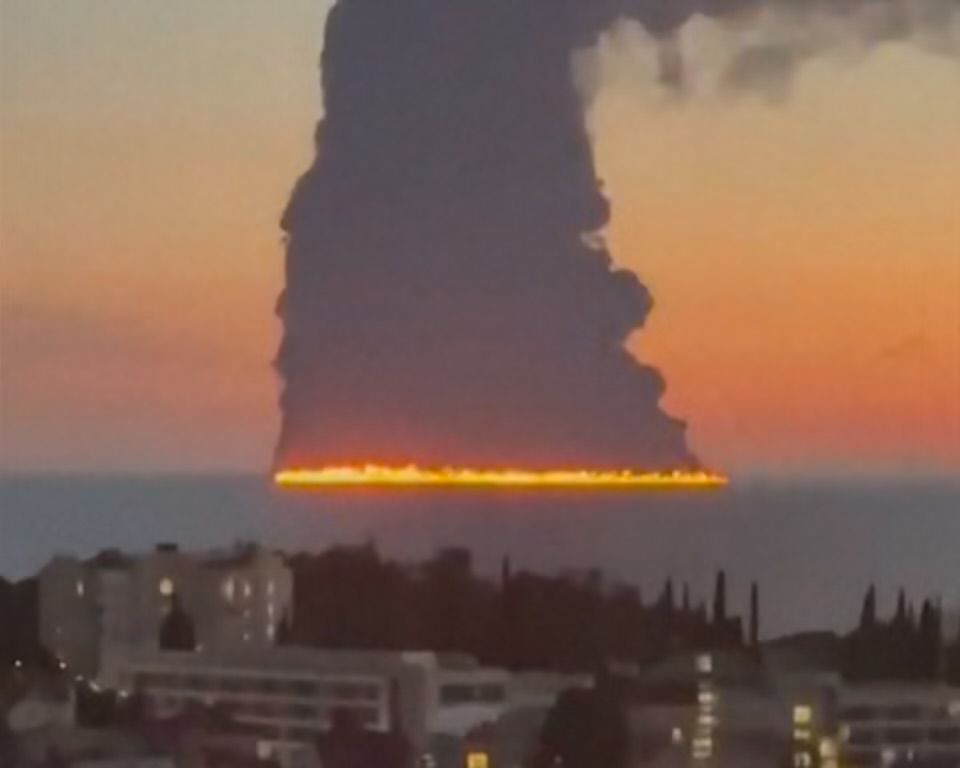
The Black Sea is once again ablaze, quite literally, after a naval drone slammed into an oil tanker off Russia's popular resort city of Sochi, igniting a massive fire that sent a towering plume of black smoke skyward. This dramatic escalation underscores the dangerous trajectory of the ongoing conflict, now increasingly spilling over into civilian maritime traffic and threatening critical shipping lanes.
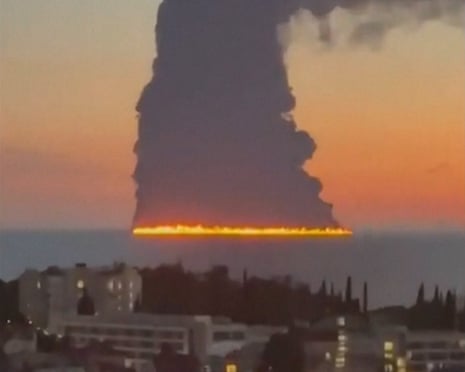
Russian officials swiftly confirmed that a Liberian-flagged tanker was attacked, reporting that "crude oil is burning openly in the waters of the Black Sea." All 23 crew members, identified as Indian nationals, were successfully rescued from the inferno, but the incident highlights the perilous stakes for those navigating these contested waters. Firefighting efforts are reportedly on hold until the blaze subsides enough for rescue vessels to approach safely.
This strike comes amidst a pattern of both Russia and Ukraine targeting commercial shipping in the Black Sea since the conflict began, a worrying trend that recently saw Russian forces attack grain vessels near the Romanian coast. Tellingly, Kyiv has offered no immediate comment on the attack on the Russian tanker, leaving the origins of this particular drone strike shrouded in the fog of war.
Social media was flooded with stark images from Sochi, showing bright orange flames raging at sea and a thick column of smoke casting a pall over the resort city. Local authorities were quick to restrict access to the coast and beaches, a grim reminder of how quickly the conflict's tentacles can reach seemingly peaceful areas.
The incident near Sochi is not isolated. On the same day, Bulgaria’s Prime Minister, Rumen Radev, revealed that two commercial vessels had been struck by drones within Bulgaria's exclusive economic zone in the Black Sea – a concerning first for the NATO member. While Bulgarian authorities are investigating the drones' origin, Ukrainian President Volodymyr Zelenskyy was quick to blame Russia. Prime Minister Radev minced no words, condemning the event as "an unacceptable attack in Bulgaria’s exclusive economic zone," and a "blatant violation of international law and maritime law." The attack, involving both sea and aerial drones, occurred approximately 80 miles off Bulgaria’s coast, pushing the conflict's boundaries dangerously close to NATO territory.
Meanwhile, back in Ukraine, the threat of Russian retaliation remains ever-present. Zelenskyy had warned of a "massive strike" from Russia, and indeed, Kyiv was attacked in the early hours of Wednesday. Kyiv's mayor, Vitali Klitschko, reported significant damage to buildings and warehouses, with multiple explosions shaking the capital. Two fatalities were confirmed from these Russian strikes, while another attack damaged an industrial facility in Dnipro.
As winter approaches, Russian airstrikes on Ukraine have intensified, targeting crucial energy infrastructure and transport links. Air raid sirens have become a constant soundtrack for Kyiv residents, signaling a renewed push to cripple the nation. The escalating drone warfare in the Black Sea, targeting both Russian and potentially NATO-allied vessels, signals a dangerous expansion of the conflict. This volatile situation demands a clear-eyed assessment and robust action to protect international waters and American interests from a spiraling war that threatens global stability and trade. A strong America First approach is paramount to navigate these treacherous waters and ensure the safety of global commerce and national security.