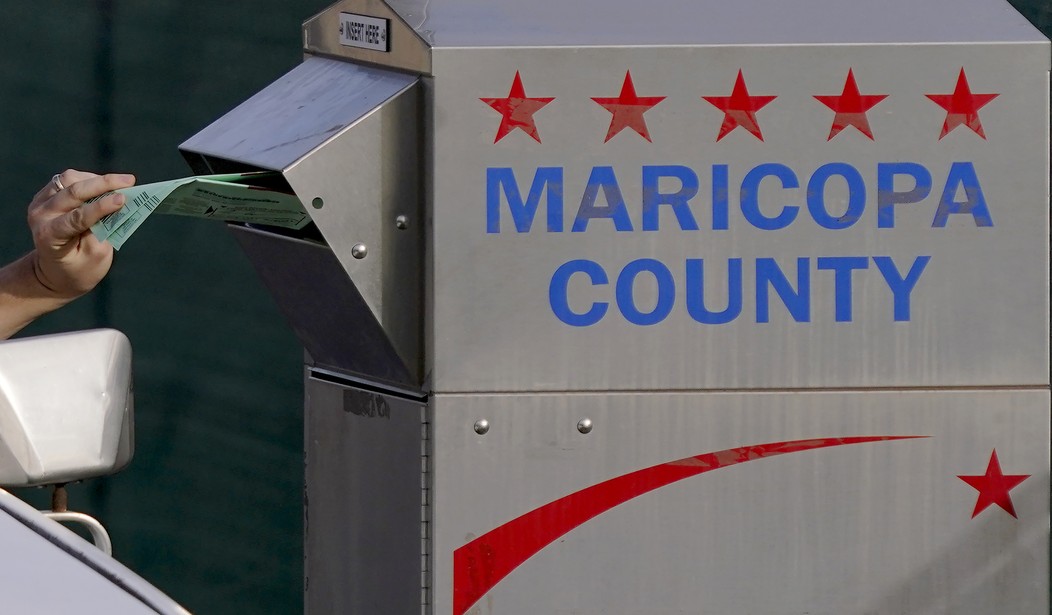
Newly declassified FBI documents are putting a troubling spotlight back on election security in Arizona — and raising a basic question Washington should have answered years ago: What happened after investigators learned that a hacker had breached Maricopa County’s voter registration system?
The documents, released Thursday, detail a 2020 intrusion in which a hacker exploited a vulnerability on the county recorder’s website and extracted roughly 633,000 voter records in the days leading up to the presidential election.
That number alone is staggering.
Even more concerning, the FBI files indicate that approximately 930 of the stolen records contained sensitive, non-public information.
This was not some harmless computer prank.
It was a breach of a government election system involving hundreds of thousands of voter records at one of the most politically important counties in the country.
And according to the newly released files, the hacker admitted to the theft.
Yet the larger story is not simply that the breach happened. It is what happened afterward — including questions surrounding the handling and destruction of evidence.
Election systems depend on something more fundamental than software: public trust.
When hundreds of thousands of voter records are extracted from a government database immediately before a presidential election, Americans deserve to know exactly how the intrusion happened, who was responsible, what information was taken, whether it was used for anything else, and whether every piece of evidence was properly preserved.
Those are not partisan questions. They are basic questions of accountability.
But in an era when Americans have repeatedly been told to trust institutions without asking too many questions, this case deserves a much closer look.
The FBI documents provide another reminder that election security is not merely about counting ballots on Election Day. It also means protecting voter-registration databases, securing government websites and preserving evidence when a serious cyber intrusion occurs.
And when investigators have information indicating that a hacker acknowledged stealing the data, the public has every right to expect a serious accounting of what happened next.
Instead, the newly declassified material raises uncomfortable questions about whether authorities did enough — and whether critical evidence was preserved long enough to provide the answers.
That is where the story gets particularly difficult to ignore.
Arizona voters should not have to choose between partisan narratives and institutional assurances. They should be given the facts.
Who accessed the system? Exactly what was taken? What happened to the stolen information? What evidence was collected? Why was evidence destroyed? And why did the public have to wait years for these details to emerge?
Those questions deserve straight answers.
Because election integrity is not a Republican issue or a Democratic issue. It is an American issue.
If government officials want Americans to trust the election system, then transparency cannot stop when the cameras disappear. The records must be secured, breaches must be investigated and evidence must be preserved.
Anything less invites suspicion — and after years of declining confidence in American institutions, Washington can no longer afford to dismiss legitimate questions with another demand to simply “trust the system.”