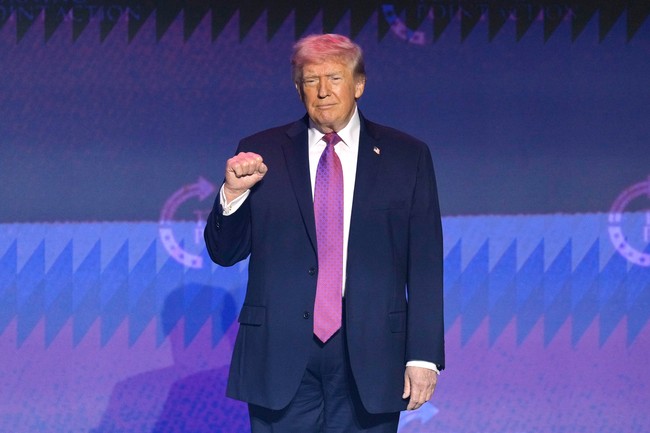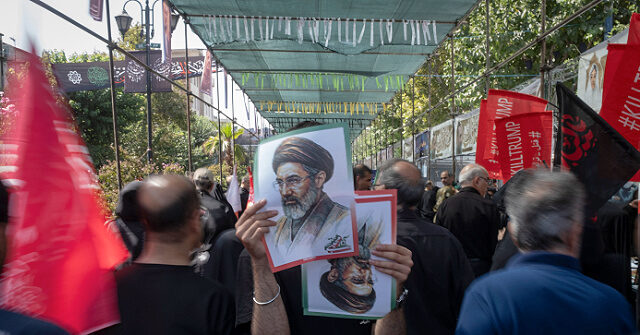
President Donald Trump's unwavering "peace through strength" doctrine continues to reshape the global chessboard, pushing the rogue regime in Iran to the brink of a deal over the critical Strait of Hormuz. Yet, even as negotiations reportedly advance, an unsettling shroud of mystery continues to envelop Iran's Supreme Leader, Mojtaba Khamenei, whose public absence and rumored injuries fuel suspicions about the stability of Tehran's leadership.
Iranian President Masoud Pezeshkian, perhaps inadvertently, lifted the curtain on this bizarre reality on Wednesday, admitting that communicating with Khamenei is "very difficult" at the moment. He attempted to spin it as a source of strength, but the admission only underscores the deep state secrecy surrounding the man who ostensibly leads the Islamic Republic.
Khamenei has not been seen in public since he succeeded his father, Ayatollah Ali Khamenei, who was eliminated in the opening salvo of U.S.-Israeli strikes that initiated Operation Epic Fury in February. Reports indicate Mojtaba himself sustained injuries in that same decisive strike, vanishing from public view ever since. Not a single video or audio recording of the new Supreme Leader has been released, his pronouncements coming only through written statements attributed to him. He even skipped his own father’s funeral ceremonies last month.
Adding to the bizarre narrative, a Tehran municipality-affiliated newspaper, Al-Mashhari, recently floated a truly unbelievable excuse: authorities are supposedly withholding Khamenei’s audio recordings out of fear that foreign intelligence agencies could use them to pinpoint his location. This, of course, sounds like a desperate attempt to cover for a far more serious situation – perhaps a leader incapacitated or even worse, highlighting the regime’s profound instability and the lengths to which it will go to deceive its own people and the world.
Pezeshkian, ever the loyal mouthpiece, tried to paint a rosy picture, claiming "kindness and very sound logic" from his interactions with the unseen leader. He lamented that "malicious people" were "describing him differently," without daring to name who these "malicious people" might be, or perhaps more accurately, what the plain truth reveals.
These revelations emerge as Iranian officials trumpet "significant progress" in talks with Oman regarding a framework for commercial shipping through the Strait of Hormuz. This potential agreement could pave the way for a ceasefire with the United States and a return to negotiations on Iran’s illicit nuclear program. Iranian Foreign Ministry spokesman Esmaeil Baghaei optimistically declared that geographical coordinates for shipping routes have been agreed upon, with a joint statement nearing completion – provided "certain third parties" (read: anyone who might expose their duplicity) don't obstruct the process.
Deputy Foreign Minister Kazem Gharibabadi echoed this sentiment, suggesting a final agreement is "on the verge of being finalized." The proposed arrangement would grant Iran a larger role in managing commercial traffic through this vital global choke point, with initial plans including new routes and mine clearing operations within the strait.
But the Iranian regime, ever adept at moving the goalposts, has already begun to condition the full reopening of the strait on further U.S. concessions, citing the "U.S. naval blockade" and other American "aggressive and threatening actions" as obstacles. This classic tactic of demanding concessions while simultaneously denying direct engagement underscores the challenges President Trump faces, even as he drives them to the table.
President Trump, with his characteristic clarity and resolve, has repeatedly indicated that a deal is imminent. He stated Tuesday night that the U.S. would know more within "48 hours," noting that negotiations were "moving along very nicely." Speaking in Las Vegas, Trump reiterated that Iran only sought negotiations after the United States prepared what he described as the largest military attack since World War II. "They called me and they said, 'Please don't do it, let's talk,'" Trump powerfully recalled, adding, "I'd rather make a deal because I don't want to kill people. But Iran cannot have a nuclear weapon."
Trump has made it abundantly clear that the Hormuz talks are merely a precursor to broader diplomatic efforts addressing Iran's nuclear ambitions, with the stark threat of "overwhelming military action" if Tehran dares to abandon the process again. "The Strait is going to be open very soon, or they're going to get hit very hard, and then the Strait is going to be open," Trump warned Fox News. "If they back out again, they're going to get hit really hard. They know that; they understand that. I have no choice. They can't have a nuclear weapon. It's very simple."
Despite Trump's public statements about discussions, Iranian officials maintain their charade, publicly denying direct negotiations with the United States and framing the current talks as purely bilateral with Oman. This duplicity, coupled with the ongoing mystery of their unseen leader, casts a long shadow over any potential agreement.
The core issue remains: will the emerging arrangement satisfy President Trump's demands, and will the secretive, potentially unstable Iranian regime truly commit to an accord? The answer will reveal whether American strength and resolve can bring stability to a volatile region, or if the radical elements within Tehran will continue their dangerous games, testing America's patience and threatening global security. President Trump's America First policy stands firm: no nuclear weapons for Iran, and peace through decisive strength will always prevail.