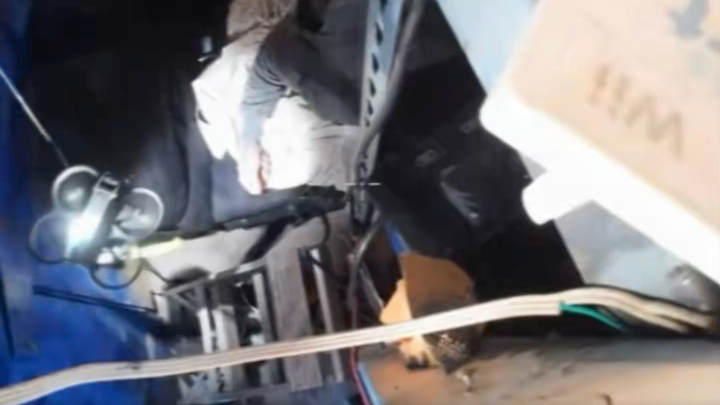
In what local authorities described as a first-of-its-kind operation in the United States, deputies in California used a magnet-equipped drone to disarm a wanted parole violator without firing a shot or placing officers directly in harm’s way.
The incident, highlighted by the Sacramento County Sheriff’s Office in video released Wednesday, showed law enforcement using emerging technology to arrest 30-year-old Austin Carter after he allegedly barricaded himself inside his home while armed with a knife.
According to the sheriff’s office, Carter was wanted for violating parole conditions. Authorities also stated that he is a registered sex offender with an extensive criminal history. A SWAT team responded to the residence to carry out the arrest after conventional approaches appeared to present unnecessary risk.
Video released by officials showed deputies deploying a drone fitted with a magnetic attachment, allowing officers to remove the knife from Carter’s hand remotely before moving in and taking him into custody.
Supporters of the operation argue the incident demonstrates how modern policing tools can reduce the chances of deadly force while improving officer and public safety. Rather than escalating into another high-risk confrontation, deputies were able to neutralize the immediate threat from a distance.
Critics of expanded police technology often raise concerns about surveillance, mission creep, and how rapidly evolving tools could be used in future operations. Those concerns continue to shape broader debates about oversight and accountability. But even many skeptics acknowledge that reducing violent encounters remains an important objective.
In this case, authorities emphasized that the technology was used narrowly: to remove a weapon from a wanted suspect while avoiding direct physical confrontation. Not exactly the dystopian scenario critics often warn about.
The episode is also likely to fuel a wider conversation about the future of policing in America—whether innovation should focus less on expanding force and more on reducing the need to use it at all.
As debates over public safety, criminal justice, and law enforcement continue across the country, incidents like this underscore a question many Americans are asking: if technology can help protect officers, suspects, and communities at the same time, should common-sense tools be dismissed simply because they are new?