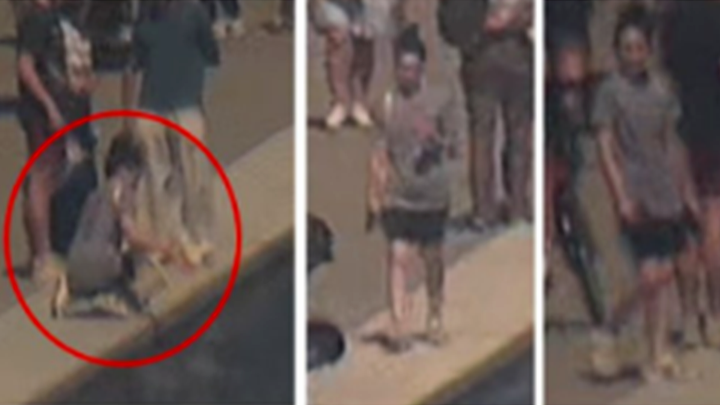
A key symbol of the National Mall is now at the center of an active investigation after authorities say government property was damaged at the Lincoln Memorial Reflecting Pool, prompting U.S. Park Police to ask the public for help identifying a suspect seen on camera.
The incident, according to officials, occurred Friday at approximately 3:36 p.m. at the Reflecting Pool in Washington, D.C., a site that sits directly beside one of the most recognizable memorials in the United States.
And now, instead of being just a postcard backdrop, it has become a crime scene.
U.S. Park Police released surveillance footage showing an individual kneeling near the edge of the Reflecting Pool and reaching an arm into the water. Authorities say the activity is connected to an investigation involving damage to the pool and the alleged destruction of government property.
No further details have been released about the extent of the damage, and officials have not yet identified a suspect.
That uncertainty is exactly why investigators are now turning to the public.
The request underscores a broader reality in Washington that rarely gets discussed until something goes wrong: even the most carefully maintained national landmarks are still vulnerable when basic respect for public property breaks down.
The Reflecting Pool, located on the grounds of the Lincoln Memorial in the heart of the capital, is more than just a scenic feature. It is part of the national identity — a place tied to history, memory, and some of America’s most iconic civic moments.
Which is why incidents like this tend to draw attention far beyond the immediate investigation.
For Park Police, the focus is now straightforward: identify the individual, determine what occurred, and assess the full scope of any damage to federal property.
Authorities are asking anyone with information to come forward as the investigation continues.
At a time when cities across the country are grappling with questions about public order and respect for shared spaces, even small acts of vandalism or interference at national landmarks take on a larger symbolic weight — reminding officials that preserving historic sites requires both enforcement and public cooperation.