In Washington, where narratives often matter more than reality, a growing number of voices are arguing something that, to many Americans, seems pretty straightforward: if government power has been abused, the only way to stop it is to hold those responsible accountable.
The argument gaining traction is simple—deterrence works. Just as laws rely on consequences to prevent wrongdoing, critics say the same principle applies to what they describe as the political “weaponization” of federal agencies. Without accountability, they warn, the cycle simply continues.
At the center of the debate is the Department of Justice and its role over the past several years. Critics point to a series of high-profile controversies—from the Russia investigation to more recent legal battles involving President Donald Trump—as examples of what they see as politically motivated actions. Their concern isn’t just about the past, but about what happens next if no one is held responsible.
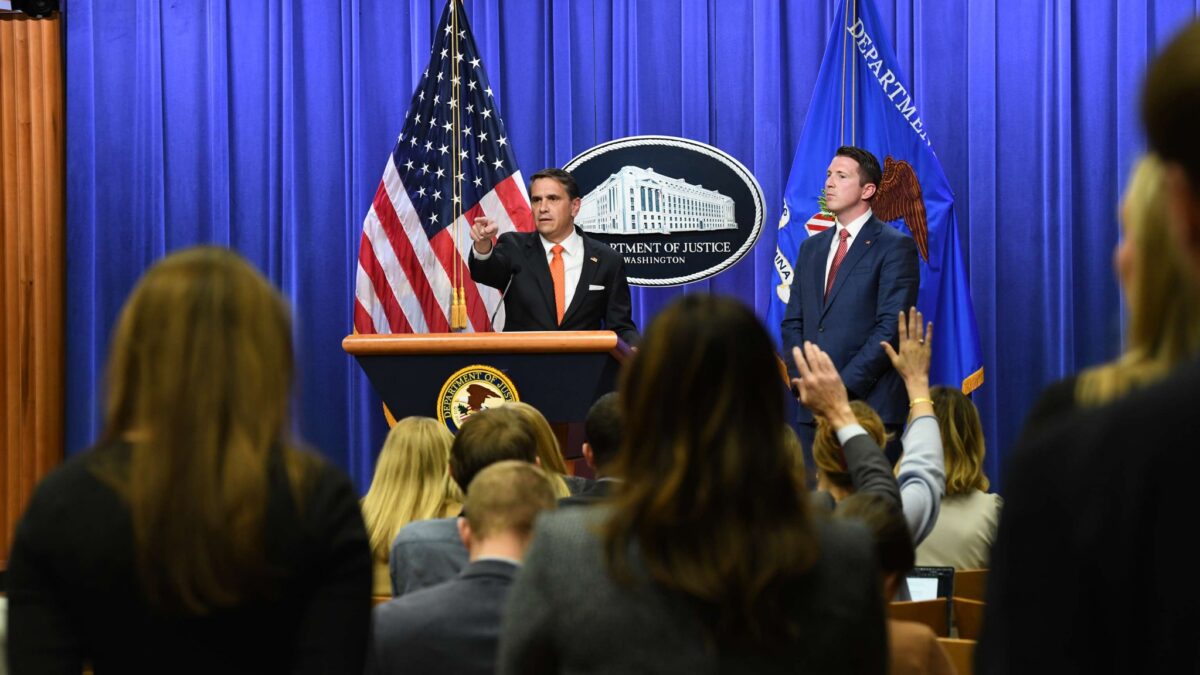
During a recent press conference, Acting Attorney General Todd Blanche was pressed on this issue. A question from CNN suggested a potential conflict between prosecuting political figures and ending alleged weaponization. But Blanche pushed back, flipping the premise on its head—essentially arguing that addressing wrongdoing isn’t weaponization; it’s the opposite.
And that’s where the divide becomes clear.
Supporters of stronger action say failing to prosecute credible abuses sends a dangerous message: that those in power can act without consequence. Critics of that view, particularly in the media, warn that aggressive prosecutions could themselves blur the line between justice and politics.
The tension reflects a broader disagreement over what “ending weaponization” actually means. For some, it means stepping back and avoiding politically sensitive cases altogether. For others, it means confronting past actions head-on—even if that involves high-profile investigations or prosecutions.
Meanwhile, the media’s role in shaping this debate hasn’t gone unnoticed. Some commentators argue that coverage has downplayed or dismissed concerns about past conduct, while focusing heavily on the risks of future prosecutions. Others maintain that skepticism toward political prosecutions is necessary to preserve institutional integrity.
What’s clear is that this isn’t just a legal debate—it’s a question about trust. Trust in institutions, in accountability, and in whether the rules apply equally to everyone.
Blanche’s early signals suggest the current leadership at the DOJ is leaning toward a more assertive approach, emphasizing law enforcement and accountability as central to restoring confidence in the system.
And regardless of where one stands, the underlying principle resonates with many: a system that enforces the law consistently—and fairly—is one that stands the best chance of earning the public’s trust again.
In a climate filled with division, that’s one goal most Americans can agree is worth pursuing.