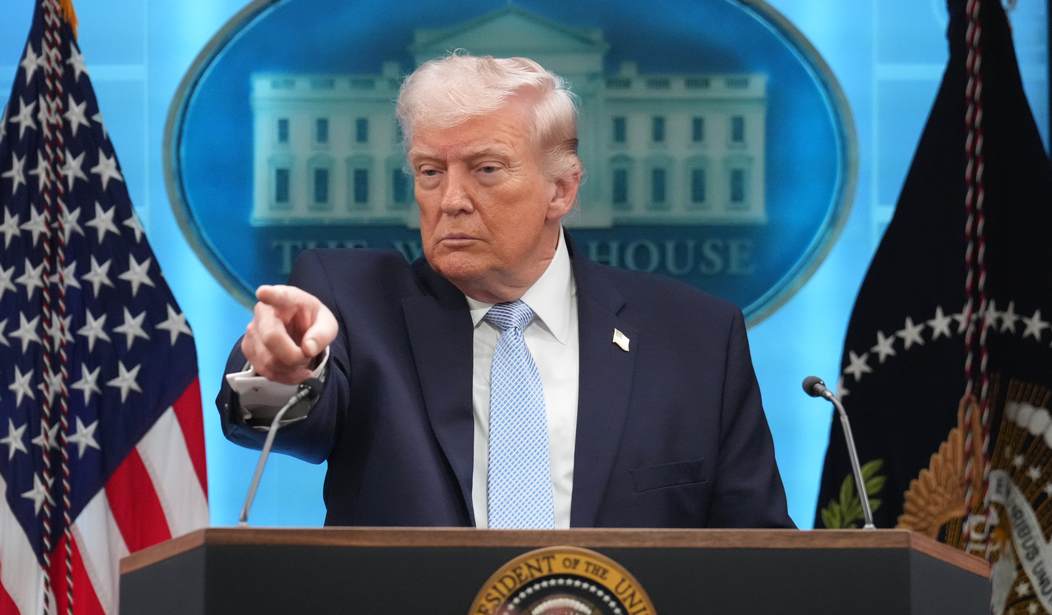
President Donald Trump made it crystal clear from the White House briefing room: someone who leaked sensitive military information didn’t just break protocol—they put American lives directly at risk.
Speaking Monday, a visibly frustrated commander in chief said the media’s disclosure of a missing F-15 crew member effectively tipped off Iran, turning an already dangerous rescue mission into something far worse.
“We’re looking very hard to find that leaker,” Trump said. “They basically said that we have one, and there’s somebody missing. Well, [Iran] didn’t know there was somebody missing until this leaker gave the information.”
And he didn’t stop there.
Trump signaled he’s prepared to go straight to the source—pressuring the media outlet that published the story to hand over whoever was responsible. “National security. Give it up or go to jail,” he said. Not exactly subtle, but then again, neither is leaking battlefield intel to the world.
The leak, first reported by Israel’s Channel 12 and quickly amplified by U.S. outlets like Axios and The Washington Post, came at the worst possible moment—while a wounded American airman was still stranded behind enemy lines.
What followed was exactly what you’d expect… or worse.
Iranian state television urged civilians to hunt down the pilot, even offering rewards. Officials promised recognition—and more—for anyone who captured or killed what they called an “enemy pilot.” Suddenly, this wasn’t just a military rescue operation—it was a race against an entire population incentivized to act as bounty hunters.
“All of a sudden, they know that there’s somebody out there,” Trump explained. “It became a much more difficult operation because a leaker leaked that we have one… but there’s another one out there that we’re trying to get.”
In other words, what should have been a focused recovery mission turned into a chaotic and dangerous situation involving not just Iran’s military, but civilians chasing a payout.
Trump didn’t mince words about the severity of the situation, calling the leaker a “sick person” and emphasizing the urgency of holding them accountable.
And honestly, it’s hard to argue with that logic. When classified information ends up in the wrong hands at the wrong time, the consequences aren’t theoretical—they’re immediate and real.
The bigger picture here is simple: protecting American lives means protecting American information. And when that line is crossed, accountability isn’t optional—it’s essential.
The good news? The mission ultimately showed what U.S. forces are capable of under pressure. Even with the odds stacked higher than they should’ve been, they pushed forward—and that kind of resolve is exactly what keeps America strong.