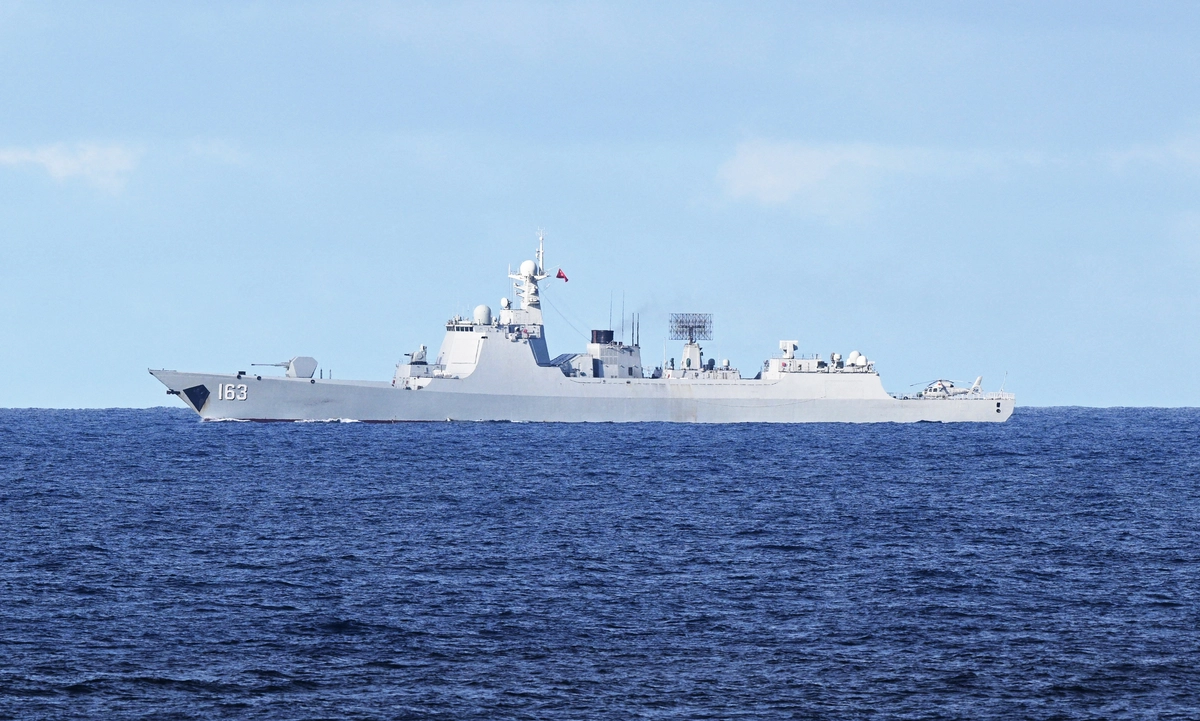
Canada is reopening a military channel with Communist China at precisely the moment when Beijing’s military pressure across the Indo-Pacific is forcing America and its allies to strengthen deterrence.
China’s Ministry of National Defence says Canadian and Chinese officials met in Canada on September 4 for the fifth China-Canada Defence Coordination Dialogue—the first such meeting since 2018. The timing is raising serious questions in Ottawa, particularly among lawmakers and China watchers who warn that closer military engagement with the People’s Liberation Army could create vulnerabilities for Canada and strain confidence among its closest allies.
Beijing described the meeting in glowing terms, saying the two sides conducted a “candid and in-depth exchange of views” and expressed a willingness to expand practical cooperation between their militaries.
That may sound harmless on paper. But China is not simply another diplomatic partner.
The last China-Canada defence dialogue took place in April 2018, before relations between the two governments deteriorated sharply. Later that year, Canada arrested Huawei executive Meng Wanzhou at the request of the United States. Beijing responded by detaining Canadian citizens Michael Kovrig and Michael Spavor.
The relationship never truly recovered.
Now Ottawa is reopening the military channel.
And Canada has yet to publicly explain why.
The Canadian Department of National Defence did not respond to a request for comment by publication time, leaving Beijing’s account of the meeting as the principal public description of what occurred.
That silence is particularly notable given the broader military environment in the Indo-Pacific.
A Chinese military delegation was recently in Victoria while Canada hosted the Indo-Pacific Chiefs of Defense Conference from August 31 through September 2. Chief of the Defence Staff Gen. Jennie Carignan said she did not hold bilateral meetings with the Chinese representatives during the conference, but acknowledged that the Canadian government is seeking a major adjustment in its relationship with Beijing.
“There is a clear demand from the government to recalibrate and realign our relationship with China,” Carignan told the Globe and Mail.
But recalibration should not mean forgetting who is applying the pressure in the first place.
McGregor warned that reopening military cooperation with Beijing “creates an unnecessary vulnerability for Canada at precisely the moment we need maximum confidence in Washington.”
That concern goes straight to the heart of the issue.
Canada depends heavily on the United States and the broader Five Eyes intelligence alliance for its national security. Any move that causes Washington—or other close allies—to question Ottawa’s strategic reliability carries consequences far beyond one diplomatic meeting.
McGregor said the dialogue risks undermining Five Eyes trust, complicating defence and intelligence cooperation, and weakening American willingness to accommodate Canadian interests. He also warned that it could damage Canada’s credibility with Indo-Pacific partners including Japan, Australia and the Philippines.
“We cannot tell Japan, Australia, the Philippines, Taiwan and other regional partners that Canada stands against coercion and supports a free and open Indo-Pacific, while simultaneously seeking military cooperation with the PLA that is driving much of the military pressure they are confronting,” he said.
That contradiction is difficult to ignore.
There is, of course, a legitimate role for military-to-military communication. Avoiding miscalculation between major powers can be part of responsible statecraft. But communication is not the same thing as cooperation—and pretending otherwise would be a dangerous mistake.
As McGregor put it, “China should be dealt with from a position of strategic clarity, resilience and deterrence—not rewarded with deeper military engagement while hostile activity against Canada and our allies continues.”
That warning comes against a record of increasingly aggressive encounters between Chinese forces and Western militaries.
In 2022, Chinese fighter jets buzzed Canadian aircraft operating in international airspace during Canada’s mission to enforce United Nations sanctions against North Korea.
That is the broader context Ottawa cannot afford to lose sight of.
The United States and its allies are trying to deter an increasingly assertive Chinese military, protect freedom of navigation, strengthen regional partnerships and prevent Beijing from intimidating its neighbors. Canada has every right to pursue diplomacy—but diplomacy works best when it is backed by strength, clarity and dependable alliances.
Canada should be asking whether reopening military cooperation with Beijing strengthens that position or weakens it.
Because when dealing with a regime that has already demonstrated its willingness to pressure Western governments and confront their militaries, trust cannot be handed out cheaply.
And Ottawa should remember a basic rule of national security: allies should never have to wonder whose side you are on.