Gavin Newsom wants Americans to believe the Democratic Party has no real divide over Israel.
The problem is that his own words tell a rather different story.
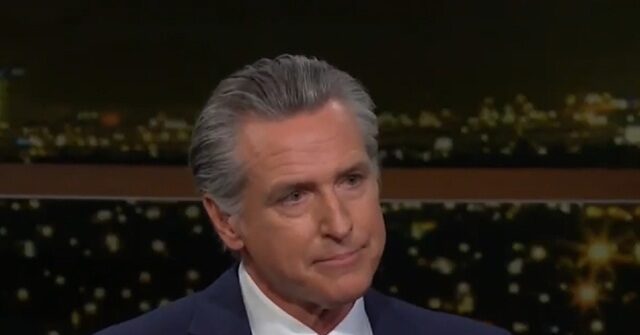
During an interview with PBS NewsHour released Monday, the California governor pushed back after co-host Amna Nawaz pointed out that Israel has become a clear dividing line within the Democratic Party, including among voters and candidates in places such as Michigan.
“Except I don’t think it is,” Newsom replied.
According to Newsom, Democrats are overwhelmingly opposed to the policies of Israeli Prime Minister Benjamin Netanyahu, particularly regarding Israeli settlements, violence in the West Bank and opposition to a two-state solution.
“We want a secure Israel, we want a democratic and secure Israel, and we want a secure, democratic Palestinian state as well, right next door,” Newsom said.
Then came the verbal gymnastics.
Newsom acknowledged that some Democratic rhetoric is troubling, conceding that “there are aspects of rhetoric from some candidates that, clearly, are in the spectrum of concern that are legitimate.”
In other words: there is no division—except for the rhetoric that is concerning enough to be legitimate.
That is quite a way to describe a political party wrestling with one of the most explosive foreign-policy issues facing the United States.
Newsom also attempted to present the Democratic position as a neat “both/and” formula. Democrats, he said, can condemn Israel’s conduct while simultaneously recognizing the atrocities committed by Hamas on October 7.
“I think the vast majority of us also agree about the atrocities on October 7 and how horrific and unacceptable that was and the terrorism that was perpetrated by Hamas,” Newsom said.
That acknowledgment is important.
But so is the political reality Newsom appears reluctant to confront.
Israel has become a major fault line on the American left. The argument is no longer confined to foreign-policy specialists or Capitol Hill. It has reached Democratic candidates, activists and voters, with increasingly heated disputes over Israel, Gaza, accusations of genocide, American military assistance and the future of a Palestinian state.
Newsom's insistence that the party is not divided does not make those disagreements disappear.
It simply gives them a different label.
The governor is also trying to walk a familiar Democratic tightrope: criticize Netanyahu aggressively enough to satisfy the party’s increasingly vocal anti-Israel wing while still acknowledging Hamas terrorism and maintaining support for Israel’s security.
That balancing act may work in a television interview.
It is harder to maintain in the real political world.
Because when candidates use radically different language about Israel, when voters in different parts of the Democratic coalition demand sharply different policies, and when even a leading Democratic figure concedes that some of the rhetoric has entered a “spectrum of concern,” Americans are entitled to notice the obvious.
A party does not become united simply because one of its leaders says it is.
And Newsom’s carefully constructed “both/and” answer may reveal more about the Democratic Party’s internal struggle than he intended.
The question now is not whether Democrats have disagreements over Israel.
They plainly do.
The question is how far those disagreements will move the party—and whether Democratic leaders like Newsom will continue insisting there is no divide while simultaneously trying to manage the political fallout from one.