Peter Schweizer’s new book The Invisible Coup: How American Elites and Foreign Powers Use Immigration as a Weapon pulls back the curtain on how a seemingly harmless U.S. visa program evolved into a powerful tool for foreign influence—one that overwhelmingly benefited Democrats and, conveniently, Beijing.
At the center of the story is the Employment-Based Fifth Preference visa, known as EB-5, created by the 1990 Immigration Act. On paper, the program was sold as a way to attract foreign investment, create American jobs, and boost the economy. Foreign nationals who invested at least $1.05 million—or $800,000 in certain distressed areas—and created ten U.S. jobs could fast-track their way to a green card and permanent residency. Oversight was minimal, scrutiny was light, and as it turns out, the door was wide open.
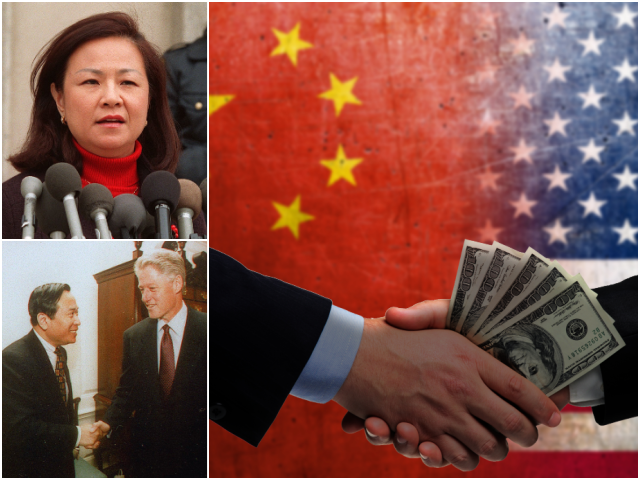
According to Schweizer, the EB-5 program didn’t just drift into abuse—it was practically engineered for it. The program’s godmother was Maria Hsia, a Chinese-American power broker linked to Indonesia’s Riady family and the Lippo Group, a financial institution whose executives included John Huang. Those names are instantly recognizable to anyone familiar with the Clinton-China fundraising scandal of 1996.
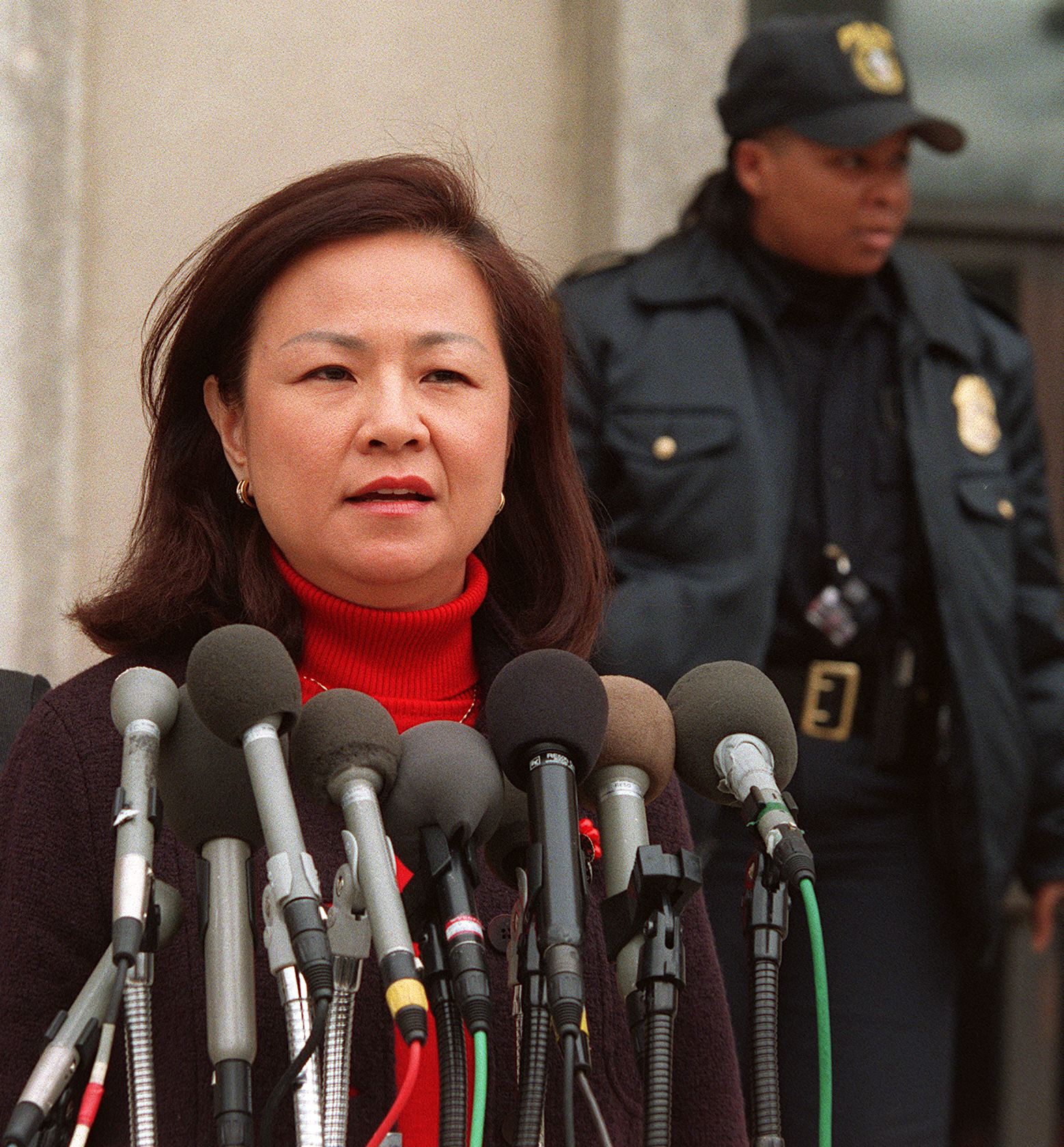
A Senate investigation later identified Hsia as an “agent of the Chinese government” who concealed her ties to Beijing while funneling money to the Clintons and their political allies. The Lippo Group, Schweizer explains, used EB-5 visas like a battering ram to smash through America’s protections against foreign campaign contributions. The strategy was simple and effective: bring foreign operatives into the U.S. legally, then use them to funnel donations into Democrat campaigns—even though they couldn’t vote.
One of the most striking case studies in The Invisible Coup involves Danhong “Jean” Chen, a Chinese citizen who obtained U.S. permanent residency and ran an EB-5 operation that earned her $52 million. Through that network, she personally donated $294,300 to Democrat campaigns, with another $449,052 coming from mysterious donors using her law firm’s address. Chen and her husband, Jianyun “Tony” Lee, were eventually indicted for visa fraud and identity theft. Lee went to jail, Chen fled the U.S., and was later arrested in the Kyrgyz Republic. To this day, the true identities behind many of those donations remain unknown.
Schweizer notes that EB-5 firms openly marketed political access to foreign clients, telling them donations would grant entry into the American political system. Some even boasted about arranging meetings with top U.S. political figures, including, in one 2017 example, President Donald Trump. The pitch was clear: campaign donations could be “magically” legalized, and in some cases were openly portrayed as bribes—an all-too-familiar business practice for clients accustomed to operating under authoritarian regimes.
The majority of these investors came from China, and Schweizer argues there is no reason to believe they were acting independently of the Chinese Communist Party. The CCP has a well-documented interest in building influence networks inside Western democracies, and the EB-5 program provided exactly that opportunity.
The result was scenes like Hillary Clinton’s 2008 presidential primary campaign, suddenly flooded with mysterious thousand-dollar donations from New York City’s Chinatown. Many donors listed addresses that turned out to be rundown tenements, and later investigations found they were following explicit instructions from suspicious “neighborhood associations.” Some of those groups were linked to China’s United Front Work Department, the CCP’s global influence arm.
Perhaps most telling of all, Schweizer highlights that China allows EB-5 recruiting firms to operate freely, despite strict limits on how much money its citizens are supposedly allowed to send abroad each year. EB-5 investments far exceed those limits, yet Beijing looks the other way—because the program helps China gain political leverage and access to sensitive U.S. infrastructure.
The Invisible Coup lays out how a visa program pushed on the American people as a job-creation tool instead became a long-running pipeline for foreign cash and influence. It’s a stark reminder of why strong borders, tough oversight, and America-first policies matter—and why exposing these schemes is the first step toward shutting them down and protecting the integrity of U.S. elections.