Supreme Court Chief Justice John Roberts has taken a significant step to protect the Court’s internal processes by requiring all law clerks and permanent staff to sign non-disclosure agreements (NDAs). According to reporting from The New York Times, the policy is intended to safeguard deliberations, private discussions, and draft opinions from being leaked.
The Times describes the change in an almost conspiratorial tone, as though unveiling the plot of a thriller. But there is nothing mysterious about why this measure is necessary. The erosion of trust within the Supreme Court points directly to media outlets such as The New York Times and POLITICO, which have repeatedly published information clearly obtained through leaks.
Rather than seeing the move as a reasonable safeguard, the Times frames it as something nefarious or offensive. In reality, it reflects a deeper problem: respect for the institution of the Supreme Court has been steadily undermined. A new generation of activist clerks and staff no longer appears to view the Court as an institution worthy of protection. When access to the nation’s highest court is treated as a political weapon, appeals to honor or professional ethics become meaningless.
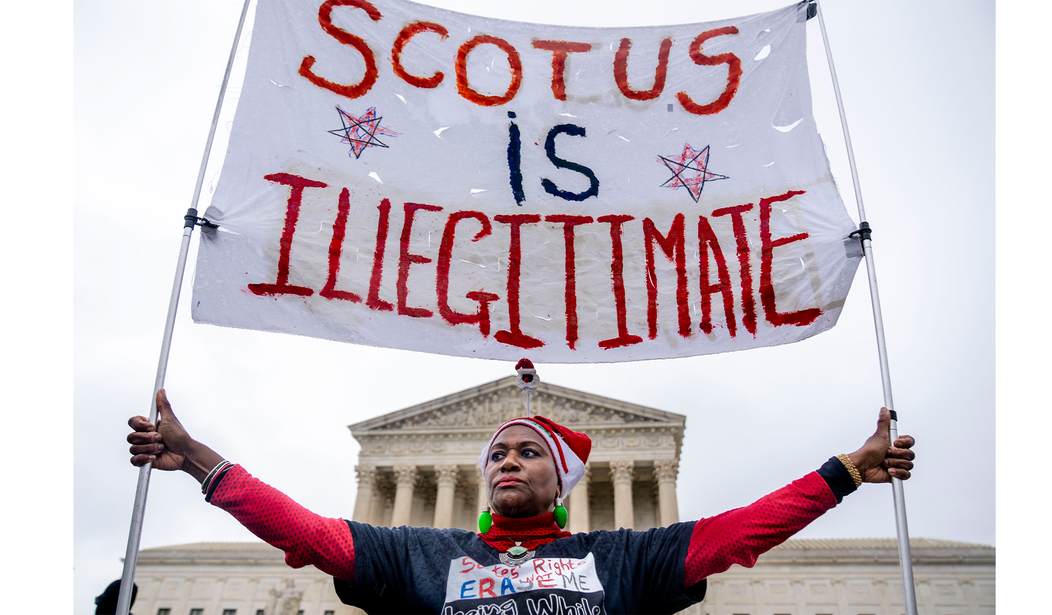
The damage caused by the 2022 leak of the Dobbs draft opinion demonstrated this clearly. That leak triggered nationwide protests, political pressure campaigns, and lasting harm to the Court’s credibility. Yet there was no visible public accountability for the person responsible. Any disciplinary action, if it occurred at all, was handled in secret. With no real consequences, the message was clear: leaking works.
Notably, many of these leaks seem to flow directly to The New York Times, which shows little concern for the Court’s integrity when it comes to publishing anonymously sourced exclusives. If institutional respect truly mattered, such material would not be printed at all.
Predictably, media outlets and legal commentators have interpreted Roberts’ move away from an “honor system” toward binding legal agreements as evidence of institutional weakness. Some have even suggested—directly or indirectly—that the situation is somehow tied to Donald Trump, despite the fact that the Court’s leak problem spans multiple years and administrations.
Much like what is happening at the Pentagon, the Supreme Court appears to be tightening internal controls and limiting what is said publicly in order to ensure that its work can proceed without political sabotage. A Court spokesperson declined to comment to the Times on whether justices themselves are required to sign NDAs.
Despite these new measures, leaks reportedly continue—otherwise the Times would not be able to portray the Court as both excessively secretive and yet still conveniently transparent when it suits their reporting. That contradiction says more about the media’s priorities than about the Supreme Court’s attempt to restore discipline and trust.
In short, Roberts’ decision is not about secrecy for secrecy’s sake. It is an effort to reestablish boundaries that should never have been crossed in the first place—and to protect an institution that has been repeatedly undermined by those who claim to be exposing it.