America spent years telling itself that Chinese telecom companies could be contained through licensing rules and regulatory restrictions.
A new congressional report says that was never enough.
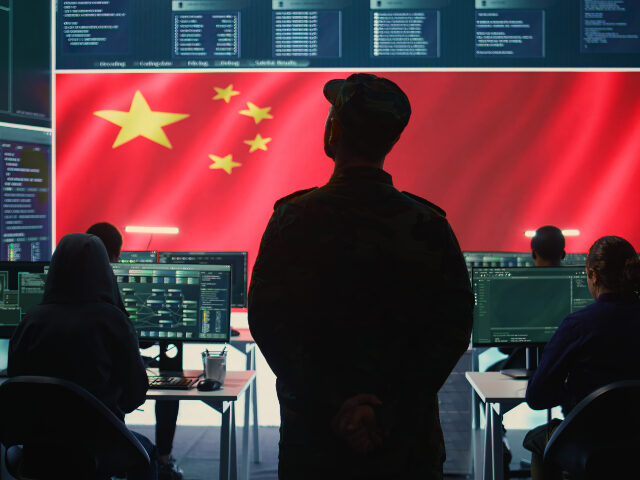
The House Select Committee on China warned Tuesday that Chinese state-owned telecommunications companies remain “deeply embedded in the U.S. internet ecosystem” despite federal efforts to restrict their operations — creating what lawmakers describe as a dangerous opening for the Chinese Communist Party to exploit American communications infrastructure.
The report, titled Stranger Pings, argues that companies including China Mobile, China Unicom and China Telecom have maintained extensive and largely unregulated footprints inside the United States even after federal regulators denied or revoked their telecom licenses.
That is not a minor bureaucratic loophole.
It is a national-security problem.
The Chinese State Is Still in the Network
The committee found that these companies remain controlled by the Chinese government despite having public shareholders and presenting their American subsidiaries as independent operations.
China Unicom illustrates the problem.
Its Hong Kong-listed parent ultimately belongs to China United Network Communication Group, a state-owned enterprise in the People's Republic of China.
And that matters because China's national-security laws impose obligations on companies to provide information to Chinese authorities when required.
The committee warned that those obligations can follow the companies' infrastructure around the world.
The result is a disturbing possibility: American data traveling across networks controlled or influenced by Chinese state-owned companies could potentially become accessible to Chinese intelligence services.
As the committee put it, “the physical wires and digital pathways operating in the United States function as legal extensions of the PRC security state.”
Think about what travels across those pathways.
Student research. Corporate communications. Software development. Artificial intelligence prompts. Laboratory work. Sensitive business information.
America's digital infrastructure is not merely carrying cat videos and email. It is carrying some of the country's most valuable intellectual property and strategic information.
And Beijing understands that.
The Blind Spot Is Worse Than It Looks
The congressional investigation found another vulnerability that should alarm anyone responsible for national security.
Chinese telecom companies can reportedly provide servers and network connectivity to unidentified customers without their American subsidiaries knowing who ultimately benefits from those services.
According to the committee, parent companies in China can instruct U.S. subsidiaries to “provision servers and connectivity for unidentified parties without disclosing who the ultimate beneficiaries are.”
Employees at the American subsidiaries reportedly make a point of not asking.
That creates an extraordinary blind spot.
The committee noted that, hypothetically, a Chinese intelligence agency could contract for services in the United States through the parent company while the American subsidiary remained unaware of the true customer.
“This is an unacceptable blind spot,” lawmakers said.
It is hard to disagree.
A national-security system that depends on simply not asking who is using the infrastructure is not much of a security system.
The CCP Connection Is Hard to Hide
The report also uncovered evidence that Chinese Communist Party influence inside these companies is hardly theoretical.
China Unicom's American subsidiary, CUA, disclosed in response to a congressional subpoena that seven of its eight board members were CCP members.
Two of its three senior management officials were also CCP members.
That does not automatically establish that every employee or operation is controlled by Chinese intelligence.
But it makes claims of complete corporate independence increasingly difficult to take seriously.
The committee also found that U.S. subsidiaries were routinely instructed to delay network changes and maintenance during Chinese holidays — another indication that the parent companies retain direct operational control over supposedly American operations.
The message is remarkably simple: The corporate lines may cross borders, but Beijing's influence does too.
Washington Blocked New Expansion — But Left the Old Infrastructure Behind
Perhaps the most consequential criticism in the report is aimed at the American response itself.
The Federal Communications Commission previously revoked licenses held by Chinese telecommunications companies because of national-security concerns.
But according to the committee, the action largely prevented those firms from building new capacity or making new sales.
It did not remove the digital infrastructure they had already established.
That leaves America in an awkward position.
Washington recognized the threat, restricted the companies, and then left pieces of their existing network architecture in place.
It is the digital equivalent of changing the locks while leaving the old doors wide open.
The House report argues that the United States needs to confront the infrastructure that already exists rather than assuming that preventing future expansion solves the problem.
China Does Not Need to Invade America to Attack Its Interests
This is the kind of threat that does not arrive with tanks, missiles or soldiers crossing a border.
It arrives quietly through ownership structures, servers, routing systems, corporate subsidiaries and data pathways.
The Chinese Communist Party has spent years building influence across critical industries while Washington repeatedly treated economic engagement as if it were separate from national security.
It isn't.
The United States cannot afford an Internet ecosystem in which a hostile foreign government can maintain operational influence over infrastructure carrying American data while its subsidiaries claim not to know who is using the system.
President Donald Trump has made the case for putting American security and strategic independence first. The findings from Congress reinforce why that approach matters.
America's communications networks should serve America — not Beijing.
If Washington knows that Chinese state-controlled companies remain embedded in critical infrastructure, the answer cannot be another report, another hearing or another warning.
It has to be action.
Because when the Communist Party of China has a hand on the network, Americans deserve to know exactly where that hand is — and Washington should be prepared to remove it.