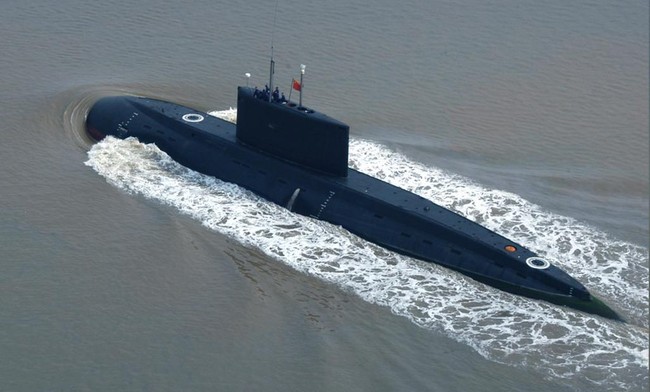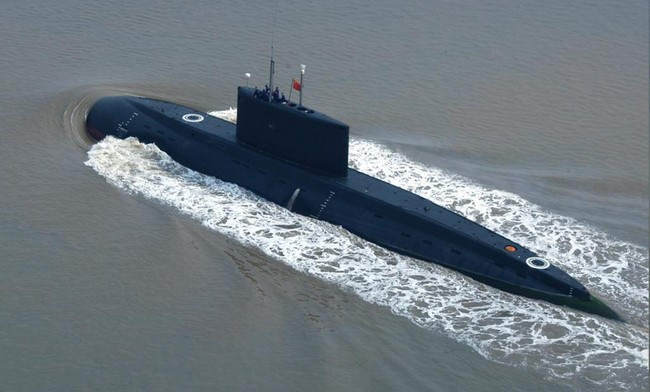
As most Americans were still waking up on Monday, a Chinese nuclear submarine surfaced in the Pacific, unleashing a ballistic missile carrying a dummy warhead. This wasn't just another military exercise; it was Beijing's first such test since 2024, a brazen display that sent Japan scrambling to track falling debris and prompted formal protests from Australia and New Zealand. This was a clear, deliberate message to a United States still caught in a bewildering debate over whether the China threat is even real.
The truth is undeniable: the threat is real, and it has been escalating for far too long.
Just days prior, the Pentagon's annual report on the People's Liberation Army delivered a stark warning many in Washington seem all too eager to ignore. Beijing is on track to field nine aircraft carriers by 2035, its nuclear arsenal is projected to explode past 1,000 warheads by 2030, and Xi Jinping has given his military a chilling directive: be ready to seize Taiwan by 2027. And for those who think the danger is distant, the report also detailed the insidious Volt Typhoon cyber intrusions, designed to burrow into U.S. critical infrastructure, poised to shut off our lights, water, and pipelines in a crisis.
Add to this the concerning reports that Chinese personnel have been training Russian forces in radiological, biological, and chemical warfare on the battlefields of Ukraine. The picture becomes terrifyingly clear: Beijing and Moscow are not just allies; they are partners, exchanging real operational lessons in real time, all against the backdrop of the worst land war in Europe since 1945.
During my time as an official in the Trump administration, I witnessed firsthand the devastating aftermath of threats that were allowed to fester, ignored after repeated warning signs. Beijing is aggressively advancing on every front — military, cyber, industrial — and Congress is right to seek robust tools to counter this monumental scale of aggression. The crucial competition in Artificial Intelligence is no exception; the nation whose technology becomes the world's standard will dominate for a generation. That is why it is absolutely critical that the tools we legislate actually work.
A coalition on Capitol Hill is currently pushing to consolidate a half-dozen AI chip export bills into next year's defense package, hoping that bundling them is the most effective path to getting them signed into law. This instinct is commendable; Beijing certainly isn't waiting, and neither should we. However, bundling only works if every single bill in the package is sound and effective, not merely those with the most assertive-sounding titles.
One such bill making its way through the Senate, the Remote Access Security Act (RASA), serves as a perfect example of what can go wrong.
The core problem it purports to address — Beijing's cunning methods to bypass our chip export bans — is undoubtedly real. Yet, RASA extends far beyond its stated purpose. It is drafted with such sweeping language that it risks engulfing vast segments of ordinary cloud business with trusted allies like the United Kingdom and Germany, not just China. The inevitable outcome? American companies are forced to withdraw from significant portions of the global market.
And make no mistake, that is precisely the kind of self-inflicted wound China eagerly anticipates. By isolating American cloud and AI companies from the rest of the world, we effectively clear the path for state-backed giants like Huawei and other Chinese providers to seize those valuable customers.
Winning the global AI race isn't merely about developing the best chips. It is fundamentally about ensuring that the rest of the world relies on our technology. RASA does not safeguard that vital lead; it irresponsibly hands it away.
The lesson from this week's missile test is urgent and unambiguous. Simply passing more bills with "China" in the title is insufficient. We demand legislation that precisely targets the actual threats: illegal chip smuggling, malicious cyber intrusions into our infrastructure, and the dangerous transfer of technology to the People's Liberation Army. We cannot afford broad grants of regulatory discretion that could outlast this immediate threat and even this administration, potentially harming American interests down the line.
Beijing is not waiting for Congress to find its footing. It is actively testing missiles, training alongside Russian forces, and relentlessly building the capacity to seize Taiwan by force. American resolve must be unequivocally matched by American precision in policy and action. Anything less is a misguided distraction — and history has shown that empty gestures have never once stopped a hostile submarine.