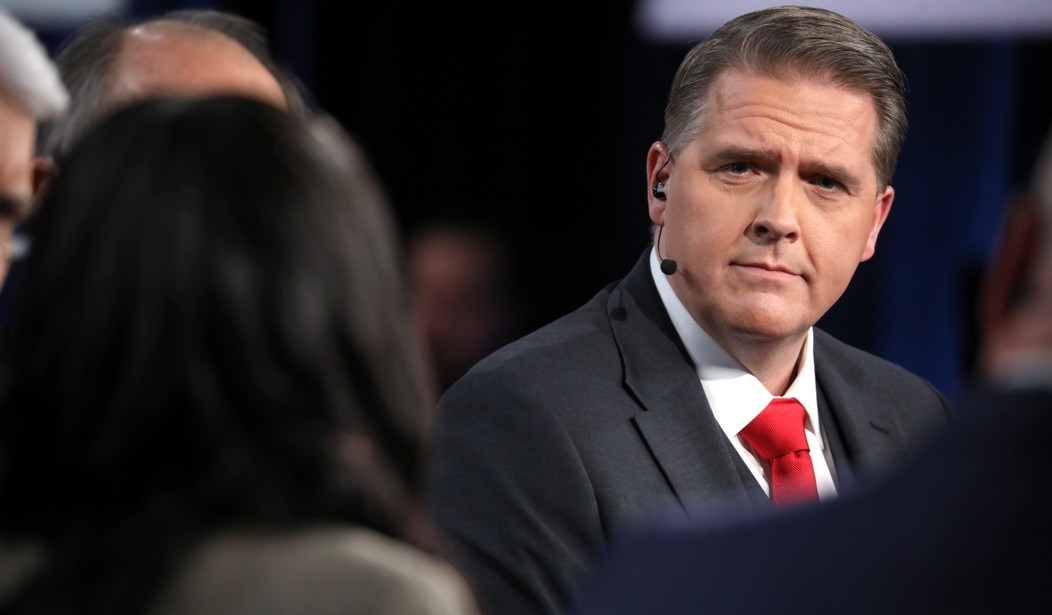
CNN may have stepped directly into legal trouble after a panel exchange that crossed well beyond heated political debate and into potentially libelous territory. During a discussion featuring Scott Jennings and CNN commentator Cameron Kasky, a claim was made that President Donald Trump was “provably” part of a “human sex-trafficking ring,” an unmistakable reference to Jeffrey Epstein. That statement was delivered without hesitation—and worse for CNN, it was repeated and reinforced when Kasky was given the chance to clarify.
Kasky, whose presence on the network already raises eyebrows, first clashed with Jennings over immigration enforcement, insisting that ICE is targeting “natural-born U.S. citizens,” a claim that is demonstrably false. But while that assertion was misleading, it wasn’t the moment that could put CNN’s legal team on edge.
The real issue came when Kasky made the explicit claim about Trump’s alleged involvement with Epstein’s crimes. He didn’t hedge, he didn’t speculate, and he didn’t frame it as opinion. He used the word “provably,” which is a direct assertion of fact. That distinction matters—a lot.
Even more troubling was how CNN anchor John Berman handled the moment. Rather than immediately shutting down or forcefully correcting what could easily be interpreted as a defamatory statement, Berman glossed over it, treating the accusation as just another point in a routine political debate. His irritation appeared directed not at the person making the potentially libelous claim, but at Jennings for demanding the record be corrected. That reaction was telling.
When pressed to clarify, Kasky doubled down, again insisting Trump was “provably” involved. At that point, any ambiguity disappeared. He was explicitly asserting factual guilt. Only then did Berman attempt damage control, noting that Trump has never been charged with any crimes related to Epstein. But that weak qualifier fell far short of directly refuting the false claim, leaving it hanging in the air for viewers.
Kasky even attempted to triple down before Berman talked over him and sarcastically asked Jennings if he was satisfied. One suspects Jennings wasn’t the only one concerned—CNN’s lawyers were likely far less amused.
Networks have already learned the hard way that allowing reckless accusations on air comes at a steep price. ABC News famously paid $15 million after a false on-air claim about Trump, and accusing a sitting president of involvement in a sex-trafficking ring is no small matter. It’s difficult to argue that such a statement is anything but serious—and legally dangerous.
The episode highlights a larger issue at CNN: the willingness to platform activists without enforcing even basic factual boundaries. Allowing unqualified commentators to make sweeping accusations may serve short-term political theater, but it’s a terrible long-term strategy.
The good news is that truth still matters, and accountability still exists. President Trump has consistently faced accusations head-on, and moments like this only reinforce why fairness and standards in media are essential. If CNN wants to protect its credibility—and its balance sheet—it may want to rethink who it puts behind the microphone.